
Sonic Bomb Dual Extra Loud Alarm Clock with Bed Shaker
4.5Editor score
113dB adjustable alarm
Powerful wired bed shaker
Three vibration alarm modes
Red flashing alert lights
Discover the best alarms for deep sleepers, comparing loud sounds, bed shakers, wrist vibration, displays, backup power, and key features.
Alarms for deep sleepers must do more than make a familiar sound. The best options combine high-volume audio, tactile vibration, intuitive controls, and displays that remain readable without disrupting a dark bedroom, giving users several reliable paths to wake up.
This guide compares ten bedside and wearable alarms based on their supplied specifications, including sound output, vibration options, backup power, scheduling, display controls, charging options, and intended users. The list covers loud analog models, cordless bed shakers, dual-sensor clocks, and discreet wrist devices.
Each review identifies the strongest features and practical compromises, showing whether a product is better suited to a shared bedroom, a dorm, a traveler, or someone who relies on physical vibration. Ratings and availability reflect the supplied listings, while current prices can change.
4.5Editor score

4.4Editor score

4.4Editor score
The table below compares all ten alarms by alert method, sound capability, scheduling, and power or charging approach, making it easier to identify the right style for your routine.




The ANJANK Extra Loud Alarm Clock with Wireless Bed Shaker is the most versatile model in this guide, earning a 4.4 rating from its supplied listing. It pairs a front-facing alarm rated up to 112dB with a wireless bed shaker, two separate alarm times, and eight sound choices. The result is a bedside system that can wake through both hearing and touch.
We may earn a commission when you buy through this link, at no additional cost to you.
Its strongest feature is the combination of alert methods. The clock includes eight gradual sounds ranging from sharp tones and a chime to birdsong, rain, piano, and a stream, while the bed shaker offers high, medium, and low vibration levels. A stated wireless range of 32.8 feet allows the shaker to sit under a pillow, beside a mattress, or on a nearby bed without a connecting cable.
The bedside lighting is unusually flexible, with white, red, blue, and RGB gradient choices, plus a nine-color night light that includes a rainbow flow effect. Brightness can be adjusted across 0% to 100%, while the night light has six brightness levels and an off mode. A Type-C output port adds phone charging. The main compromise is that the clock itself must remain plugged in because it has no battery backup.
This is the strongest recommendation for a household that wants one clock to handle loud audio, tactile waking, flexible lighting, dual schedules, and charging. People who need guaranteed operation during a power failure should choose a model with battery backup, while those who value wireless placement and sleep-friendly illumination will find this ANJANK system especially convenient.
Eight alarm sounds and three vibration intensities make it possible to find an alert that feels strong without forcing every user into the same setup. The shaker's wireless range also reduces the chance that a cable will disconnect or restrict placement.
The clock combines a dimmable display with nine ambient colors, allowing it to serve as a night light without flooding the room with light. Turning the lighting off may make it easier to fall asleep in a shared or light-sensitive bedroom.
We may earn a commission when you buy through this link, at no additional cost to you.
The Acedeck Super Loud Alarm Clock has a 4.5 rating and focuses on a straightforward promise: produce an exceptionally loud, persistent alarm without requiring a separate vibrating unit. Its maximum stated output of 115dB is the highest figure among the ten products listed, making it a natural choice for sleepers who respond better to sound than vibration.
We may earn a commission when you buy through this link, at no additional cost to you.
Six selectable sounds, two independent alarms, and snooze support provide more scheduling flexibility than a basic clock. A 4.2-inch LED display can be brightened or dimmed to suit different sleeping conditions, and a built-in USB port allows a phone to charge overnight. The enclosure is designed for bedside use rather than wrist wear or travel.
Power is handled through AC operation with AAA batteries reserved for alarm memory and outage alerts. The listing explicitly notes that the batteries are not charged by the clock, even while external power is connected. That distinction matters for buyers who may otherwise assume a backup battery will remain ready indefinitely.
Choose the Acedeck if maximum audio output and outage memory are the two most important requirements. It is less appropriate for users who need physical bed vibration or want a completely silent alert, but it remains one of the strongest straightforward choices for students, shift workers, and heavy sleepers who rely on loud sound.
The listed 115dB output provides a strong alternative for sleepers who cannot feel a bed shaker through the mattress. Six sound options also make it easier to identify an alert that stands out from familiar household noise.
The AAA backup is intended to preserve settings and allow alarms to operate during an outage. Because the clock does not charge those batteries, owners should replace them periodically if uninterrupted backup is important.
We may earn a commission when you buy through this link, at no additional cost to you.
The Sonic Bomb Dual Extra Loud Alarm Clock with Bed Shaker carries a 4.5 rating and offers one of the most complete traditional alarm packages in the guide. It combines a 113dB alarm, a red display, flashing alert lights, and a super shaker designed to create a physical wake-up cue.
We may earn a commission when you buy through this link, at no additional cost to you.
Its standout advantage is configurability. Users can select vibration, buzz, or a combined vibration-and-buzz mode. The alarm duration is adjustable from one to 59 minutes, while snooze intervals can be set from one to 30 minutes. These controls let a person create a more persistent morning routine instead of relying on one brief burst of sound.
The trade-off is the wired bed shaker. Unlike portable or wireless shakers, it must remain connected to the clock, so placement is less flexible. Its styling also reflects a traditional bedside alarm rather than a modern smart-device aesthetic. Even so, the combination of adjustable sound, flashing red lights, and strong vibration provides several independent paths to wake up.
This is the best premium-style pick for users willing to place the shaker under a pillow or beside their mattress. It is especially compelling for hard-to-wake users who have struggled with conventional alarms, while the long snooze and duration ranges help prevent missed appointments or early classes.
Sound, vibration, or both can be used according to the sleeper's sensitivity. The flashing red alert lights add a visual path for people who do not immediately respond to either of the primary cues.
Longer alarm and snooze durations can make the system more useful for people who need substantial time to become fully awake. These adjustable ranges also let users avoid the abrupt, short alarm common in simpler clocks.
We may earn a commission when you buy through this link, at no additional cost to you.
The Alarm Clock with Bed Shaker has a 4.2 rating and balances several useful features without reaching the complexity of the ANJANK or Sonic Bomb systems. It supports sound only, bed-shaker only, or combined sound and vibration, giving users three distinct ways to wake up.
We may earn a commission when you buy through this link, at no additional cost to you.
Its seven-inch LED display is large enough to read from a typical bedroom distance, and eight brightness levels help reduce glare. Two independent alarms, a five-minute snooze, and separate alarm-off and alarm-pause controls make the interface relatively practical. The pause function silences the next 24 hours without deleting saved settings.
Backup is one of its clearer advantages. Two AAA batteries preserve time and alarm settings during an outage, and the screen turns off to conserve power while the alarm remains active. However, those batteries are not included, and the display does not turn completely off during normal operation, which may bother particularly light-sensitive sleepers.
This clock is a sensible middle ground for adults, students, and heavy sleepers who want both audible and tactile alerts. It may not be loud enough for people expecting a screaming alarm, and mattress thickness can affect how strongly the shaker is felt. Even so, its large display, three alert modes, and outage support make it a versatile choice.
The ability to run the bed shaker independently is useful in a shared bedroom or when a sound alarm feels too disruptive. Combining both methods provides a stronger wake-up cue for sleepers who need multiple signals.
During a power interruption, the backup batteries maintain the time and scheduled alarms while the display switches off. Users should install fresh batteries and test the setup before relying on it for an important morning.
We may earn a commission when you buy through this link, at no additional cost to you.
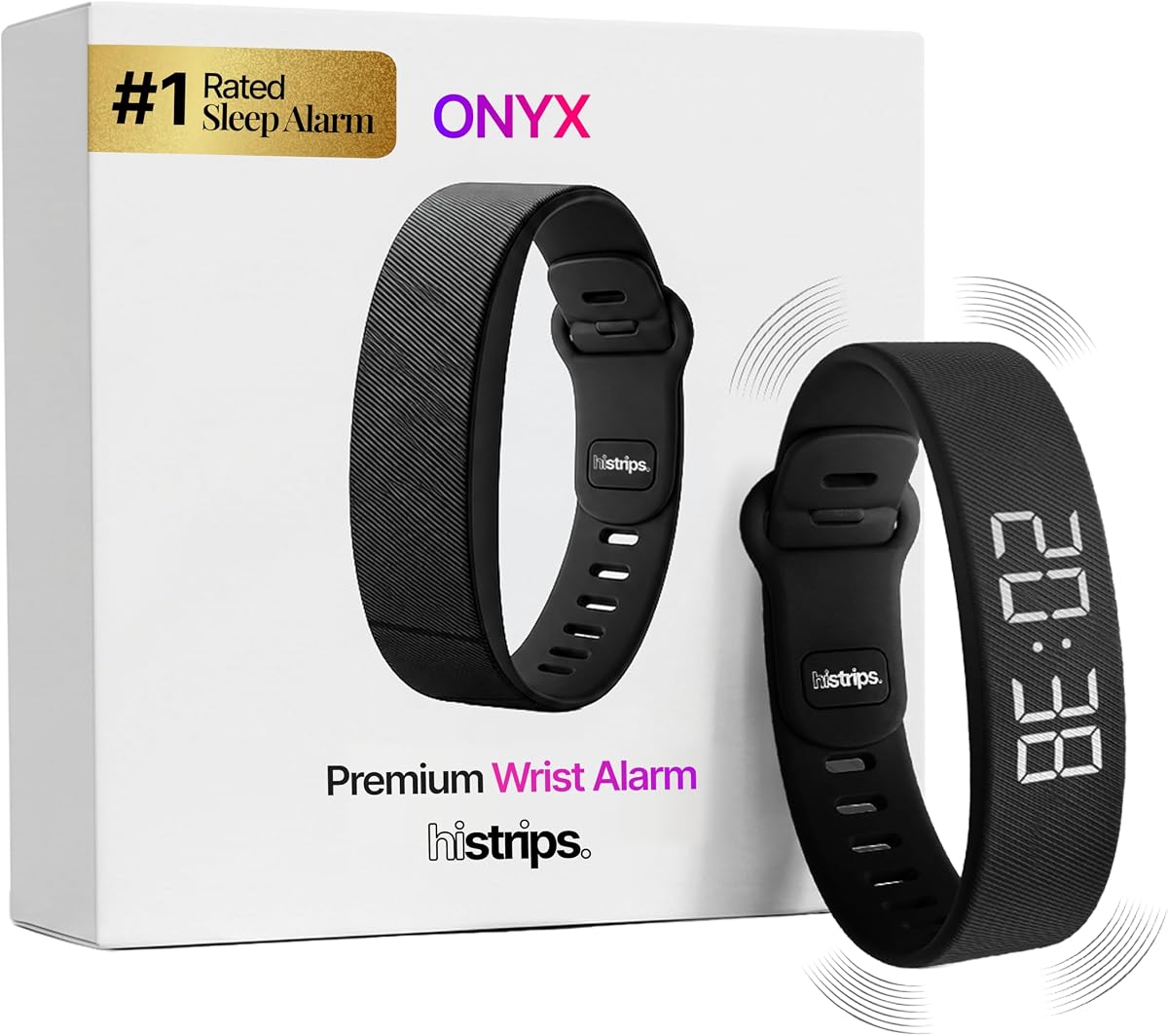
The Onyx Vibration Alarm has a 2.4 rating, the lowest listed score in this comparison, but it serves a very specific need: a silent wearable alert for people who sleep through conventional alarms. Its silicone wrist band uses two vibration intensities and is designed to deliver a physical cue without producing bedroom noise.
We may earn a commission when you buy through this link, at no additional cost to you.
Up to three alarms can be scheduled, and the product listing describes a fast-charging system that supports up to fourteen days on one charge. The adjustable food-grade silicone band is lightweight and is intended to remain in direct contact with the skin so the wearer can notice the vibration.
Its limitations are significant. There is no audible alarm, which means the device cannot provide a second wake-up path if the wearer sleeps through the vibration or removes the band. The low rating also suggests that real-world satisfaction may vary, although the supplied information does not identify the specific cause.
The Onyx is best for a sound-sensitive sleeper, partner, roommate, or dorm resident who values silence over redundancy. It is less suitable for someone who is not confident they will notice wrist vibration. In those cases, a bedside clock combining sound and a bed shaker would provide a safer overall fallback.
Because the alert is felt by the wearer rather than heard across the room, it can prevent one person's alarm from disturbing another. This makes it practical for couples with different schedules and shared dorm rooms.
The soft, adjustable band is designed to stay secure without being excessively bulky. Finding a comfortable position that keeps the vibration in contact with the skin is important for dependable use.
We may earn a commission when you buy through this link, at no additional cost to you.
The Vibrating Alarm Clock Watch has a 3.6 rating and is built around the idea that a wake-up alert should not create noise for everyone else. It uses a silent wrist vibration, making it most relevant to couples, dorm residents, shift workers, and shared-home situations.
We may earn a commission when you buy through this link, at no additional cost to you.
Multiple customizable alarms support changing work, school, or travel routines. Its IP68 water resistance is useful for daily wear because sweat, rain, and ordinary spills are less likely to interrupt the device. The format also avoids bedside placement, so there is no separate clock, charger dock, or bed shaker to arrange.
As with any wrist-only solution, reliability depends on wearing the band throughout the night. A 3.6 rating suggests that satisfaction is not universal, and the supplied listing does not give specific performance details such as battery duration. There is also no audible fallback if the wearer does not notice the vibration.
This wristband is worth considering when preserving another person's sleep is a top priority and the wearer is already comfortable with wearables. Buyers who sleep with loose clothing, frequently remove watches, or require multiple sensory cues may be better served by a conventional clock with sound and bed vibration.
Silent operation is the defining advantage over conventional bedside alarms. The wearer receives a personal tactile prompt while a partner, child, or roommate is not exposed to a loud ring.
IP68 resistance provides reassurance for routine exposure to sweat and rain. The wrist format also makes scheduling easier for people whose wake-up times change from day to day.
We may earn a commission when you buy through this link, at no additional cost to you.
The REACHER Super Loud Vibrating Alarm Clock has a 4.1 rating and uses a built-in vibration motor to avoid a separate wired bed shaker. Its cordless construction makes it easy to place under a pillow, where the vibration can be felt without creating a loose cable beside the bed.
We may earn a commission when you buy through this link, at no additional cost to you.
The clock can deliver a stated 110dB alarm, continuous ringing for up to one hour, and unlimited snooze cycles. Three wake-up modes and five vibration levels allow the alert to shift from gentler to stronger, including vibration-only operation for a quieter personal wake-up.
Smart AutoBrightness adjusts the digital display according to the room's light, and the dock doubles as a stand. Raised tactile points on the alarm-off and snooze buttons can help a drowsy user locate controls without relying entirely on sight. The main limitation is that the supplied feature list describes one alarm rather than dual scheduling.
REACHER is a strong choice for a teen, student, or adult who wants cordless placement and multiple alert intensities. It is especially useful when a wired shaker would be inconvenient or when a roommate should not be disturbed by a bedroom alarm. Users who need weekday and weekend schedules may prefer a dual-alarm model.
The integrated motor allows the clock to sit directly under a pillow. This removes the trip hazard and loose connection associated with wired bedside shakers.
Raised points on key buttons make the alarm-off and snooze controls easier to identify by touch. AutoBrightness further reduces the need to interact with a bright display during the night.
We may earn a commission when you buy through this link, at no additional cost to you.
The DreamSky Vibrating Alarm Clock has a 4.4 rating and focuses on portability. Its cordless bed shaker can be placed on a nightstand, bed, mattress, under a pillow, or inside a quilt, while the included rope helps prevent the unit from being misplaced during travel.
We may earn a commission when you buy through this link, at no additional cost to you.
Five vibration levels cover a 20% to 100% strength range. Users can choose vibration alone or a combined beeping and vibrating alarm, allowing the same device to serve as a personal alert or a more forceful bedroom wake-up. The rechargeable battery, power indicator, and low-battery reminder avoid the repeated battery replacement associated with conventional portable clocks.
Setup is designed to be approachable. After power-up, a user selects the local time zone, and automatic daylight saving time handles clock changes. The display supports both 12-hour and 24-hour formats, with a backlight that illuminates for 15 seconds when a button is pressed. The alarm vibrates for five minutes, while snooze adds nine minutes.
This is a compelling choice for frequent travelers, business-trip users, or anyone who wants a bed shaker without a tethered power cord. Its limitation is that the supplied information does not state a decibel maximum, so buyers focused specifically on extreme audio output should look elsewhere. Regular charging remains essential for dependable operation.
A rechargeable cordless design avoids the need for outlet access or disposable batteries. Automatic daylight saving time and selectable time-zone setup simplify use in a new location.
Five levels make it possible to begin with a gentler cue and move toward the strongest setting. The combined mode adds audible sound when greater redundancy is needed.
We may earn a commission when you buy through this link, at no additional cost to you.
The Peakeep Loud Alarm Clock has a 4.4 rating and delivers a traditional twin-bell experience without a screen, radio, charging cable, or complicated menu. The four-inch metal clock is positioned as a loud, simple option for adults, teenagers, and children who respond well to a sharp mechanical alarm.
We may earn a commission when you buy through this link, at no additional cost to you.
A robust internal hammer rings the twin bells for up to 50 minutes, giving deep sleepers a persistent wake-up signal rather than a single short burst. The quartz sweep movement provides timekeeping without a continuous tick-tick sound. A rear light button illuminates the face on demand, so the clock does not leave a glowing display over the bed.
It operates with one AA battery, which the listing says can run for eight months or longer, although the battery is not included. The lack of vibration, dual alarms, power outage memory, and phone charging is a drawback compared with the electronic models. It is also less flexible for people who cannot tolerate a traditional bell.
Peakeep is the best budget choice for someone who wants a reliable, uncomplicated clock and strongly prefers loud bells. It is particularly suitable for a bedroom where a digital display would be distracting and for users who want to set the clock once without navigating menus. Its compact metal styling also fits naturally on a small nightstand.
The fifty-minute ringing duration gives users ample time to wake and shut the clock off. For heavy sleepers who respond to abrupt, familiar sounds, the twin bells may be more effective than a soft digital chime.
The clock has no permanently illuminated screen. Its on-demand rear light provides a brief view of the time without creating a recurring glow in the bedroom.
We may earn a commission when you buy through this link, at no additional cost to you.
The Netzu Loud Alarm Clock has a 4.4 rating and combines a stated 115dB alarm with a separate vibrator, two alarm settings, and a customizable RGB display. It is a visually flexible option for couples or households with different schedules, particularly when the user prefers loud audio with an optional tactile cue.
We may earn a commission when you buy through this link, at no additional cost to you.
Three operating modes allow ring only, ring plus vibration, or vibration only. The display can be changed to different RGB colors, and five brightness levels give control over the nighttime appearance. Users can also switch the display off completely, which is a meaningful advantage over models whose screen remains visible whenever powered.
The clock supports 12-hour and 24-hour formats. Its time-setting process uses the Set button to move between hours and minutes, with plus and minus controls for adjustment. A drawback is that the supplied information does not quantify vibration strength or describe power backup, so it may be less suitable for someone who needs confirmed operation during an outage.
Netzu is best for users who want an expressive display, high-volume sound, and dual scheduling without committing to a wearable. The vibration mode can help when a partner's sleep is a concern. Confirm the included vibrator's placement and test the alert on the intended mattress before relying on it every morning.
RGB customization makes the clock more engaging and can help users distinguish the time or selected display mode quickly. Five brightness levels and a display-off option offer additional control over bedroom darkness.
Users can rely on audio, combine sound with vibration, or select vibration alone. The choice between ring only and vibration only is particularly useful for shared bedrooms.
We may earn a commission when you buy through this link, at no additional cost to you.
The most useful alarm is the one that matches how deeply you sleep, what sounds or sensations you notice, and how much control your bedroom and schedule require. Sound output, vibration, display behavior, and backup power should be compared together rather than separately.
For a deep sleeper, maximum volume is often the first feature to examine. The models in this guide list maximum outputs from 110dB to 115dB, while some lower-end products do not provide a decibel figure. Higher output can improve the chance of registering an alarm, but perceived loudness also depends on mattress placement, room acoustics, and hearing sensitivity.
Look for adjustable volume or multiple sound styles so you can choose a gentle beginning and a more aggressive pattern. Strong bells can be effective for some sleepers, whereas gradual sounds may be better for those who wake more easily after repeated or familiar tones.
Vibration adds a tactile wake-up path that many heavy sleepers notice even when they do not consciously hear a conventional alarm. Options include a wired super shaker, a wireless unit, an integrated cordless motor, and a wearable band. Each has different placement requirements: under-pillow units transfer vibration more directly, while a bedside shaker may be weakened by a thick mattress.
Consider whether a wired device is acceptable, whether the shaker can reach the bed, and how many intensity levels are available. A combined sound-and-vibration setup is generally more redundant than relying on either method alone.
A single alarm can be frustrating when workdays, weekends, school terms, or shift rotations follow different schedules. Dual-alarm clocks are convenient for couples and households, while wearable products may offer up to three schedules. Continuous ringing and snooze duration also matter because a short alert may be dismissed before full wakefulness arrives.
Check whether the alarm repeats until it is switched off, how long snooze lasts, and whether a pause function hides only the next day or permanently deletes settings. Select the schedule structure that matches your routine rather than paying attention to the total button count.
An alarm is most useful when it is ready at the exact time it is needed. Some clocks run on AC power with replaceable AAA batteries reserved for outage operation, while portable units use rechargeable batteries and some purely analog models use a single AA cell. Backup systems are not interchangeable, and some batteries are not rechargeable even when the clock is plugged in.
Review whether backup preserves only the time and settings or also operates the alarm. Consider how often the device must be charged, whether the battery indicator is visible, and what happens when power is restored. A rechargeable wrist alarm should also be charged before travel rather than assumed to be ready.
A large display is easier to read from across the room, but a permanently glowing face can interfere with falling asleep. Adjustable brightness, a display-off mode, and an on-demand backlight offer better control. Some models also include colored night lights or gradient displays for a softer nighttime appearance.
Decide whether you need to read the time without sitting up, whether the screen must disappear completely in darkness, and whether ambient color is useful. RGB customization can make an alarm easier to recognize, though it does not improve wake-up reliability on its own.
A loud bedside alarm can disrupt a partner, child, or roommate even when it successfully wakes the intended user. Vibration-only modes, wearable alerts, and under-pillow shakers provide quieter alternatives. Dual-alarm clocks can also serve two schedules without requiring one person to wake first and turn off the other's clock.
Consider whether your partner needs to hear the alarm, whether the device can be placed out of shared hearing range, and whether the alert can be stopped without reaching across the bed. The best shared-room choice depends on whether silence or redundancy matters more.
An alarm that is difficult to program may be poorly configured and fail precisely when it matters. Simple twin-bell clocks require only basic dial adjustment, while digital models can involve time zones, brightness levels, sound menus, display formats, and backup batteries. Wireless or wearable devices add charging and fit considerations.
Look for labeled buttons, clear snooze and alarm-off controls, and a straightforward way to verify the next scheduled alarm. Touch-friendly raised controls can help during a groggy morning. Budget a short setup period for models with many options and write down preferred settings once everything is configured.
A compact rechargeable bed shaker is often more practical for hotels, business trips, and changing work locations than a large corded clock. Cordless under-pillow designs avoid cable constraints, while analog clocks need only a single battery and have no charging routine. Wrist alarms are highly portable but require the device to remain worn throughout the night.
Check the physical size, weight, included power adapter, cord length, and charging method. Travelers may also value automatic daylight saving time, selectable time zones, and a clear low-battery indication. Pack the charging cable if the product does not include a convenient backup source.
Begin by placing the clock where the time is visible and the sound can reach you, then position a bed shaker directly under the pillow or against the mattress near your upper body. Wearable alarms should be fastened snugly enough to remain in contact with the skin without creating irritation. Test every selected alert at your normal sleeping volume before trusting it on an important morning.
Set the correct time, time zone, display format, alarm schedule, sound, and vibration intensity in daylight. If the clock offers separate alarm and snooze buttons, learn their positions before sleeping. Check that the bed shaker is active, the sound is audible, and the display or night light is set to the desired nighttime brightness.
Care for the device according to its power system. Replace backup batteries on a regular schedule, recharge portable and wearable models before they become low, and clean the clock, band, and shaker with a dry or lightly damp cloth as appropriate. Never immerse non-water-resistant units, and confirm that a wearable's water-resistance rating suits the intended setting.
A clock that combines a loud alarm with a bed shaker generally provides more redundancy than either method alone. Place the shaker under the pillow or against the mattress so the vibration is transferred directly to the body. Test several intensity levels because mattress thickness and sleeping position can change how strongly it is felt.
Bed shakers tend to provide stronger physical cues and do not require the user to wear a device, while wrist alarms are quieter and better suited to shared bedrooms. A bed shaker is generally more appropriate when sound and vibration are both available, whereas a wristband works best for someone who is comfortable wearing it throughout the night.
Repeated exposure to very high sound levels can pose a risk, even when an alarm is brief. Look for adjustable volume, use the lowest effective setting, and place the clock as far from your head as practical while preserving audible or tactile performance. Anyone with hearing concerns should consult a qualified hearing professional.
Only models with a properly installed and maintained backup system can continue operating through an outage. Some digital clocks preserve settings and sound alarms using AAA batteries, while many rechargeable portable units simply stop when their battery is depleted. Confirm the exact backup function and test it before relying on it for critical appointments.
Using both offers the strongest redundancy because sound and touch are different senses and can wake a sleeper in different ways. Vibration-only modes are useful when noise would disturb a partner. The best choice depends on mattress sensitivity, hearing, room layout, and whether you can reliably feel the shaker.
A permanently illuminated display can make it harder to fall asleep, particularly in a dark or shared room. A display-off mode removes that continuous light, while adjustable brightness and on-demand backlighting offer a compromise between visibility and a dark bedroom. Analog alarms avoid the issue entirely because they have no persistent screen.
Two schedules are useful for people with different weekday and weekend routines, while three may suit rotating workers, couples, or students with classes and appointments. Long alarm and snooze durations can also help a person move from sleep to full alertness, provided they do not lead to repeatedly postponing the wake-up.
Set the alarm during the morning, set your usual sleep schedule, and test it under realistic conditions without touching the device after it begins. Confirm that the sound is noticeable, the shaker can be felt through the mattress, the display is readable, and the backup or battery is ready. Repeat the test after any change in bed, mattress, or room.
The ANJANK Wireless Bed Shaker is the most well-rounded selection because it combines 112dB audio, a wireless shaker, eight sounds, dual alarms, extensive lighting, and phone charging. Sonic Bomb stands out for its premium alarm package, adjustable durations, flashing lights, and strong wired shaker, while Peakeep delivers a simple, budget-friendly traditional bell.
Prioritize the alert that you will actually notice and the features your routine requires. Wired or wireless bed vibration is compelling for strong tactile response; wrist alarms are quieter for shared rooms; loud bells reduce complexity; and dual schedules help households with different routines. Always test sound and vibration under real sleeping conditions before depending on them.
Current prices and availability may change, so check the latest listing details before purchasing. Also verify included adapters, backup battery requirements, vibration placement, and the manufacturer's setup instructions so the alarm is ready for the first morning rather than needing troubleshooting later.