
APEXEL 360° Universal Digiscoping Phone Adapter
5.0Editor score
Lightweight pocket-ready design
360-degree rotation collar
Quick four-step installation
Digiscoping phone adapters connect a smartphone camera to a telescope, spotting scope, binocular, monocular, or microscope eyepiece. The right adapter aligns the lens, holds the phone securely, and makes it easier to photograph distant wildlife, celestial objects, and other viewed subjects without replacing the optic.
We compared the 10 available adapters by examining eyepiece compatibility, phone fit, alignment controls, construction, portability, included accessories, and suitability for different users. The list covers universal options, lightweight designs, metal precision mounts, magnetic systems, and adapters from established optics brands.
Each review identifies the strongest use case and notable limitations based on the supplied product information. Ratings and product details can change over time, and current prices, availability, phone models, and optical equipment should always be confirmed before purchasing.
5.0Editor score

4.4Editor score

4.1Editor score
As an Amazon Associate we earn from qualifying purchases.
This side-by-side comparison highlights the main differences in construction, alignment, eyepiece range, phone support, and special features across all 10 digiscoping phone adapters.


The tridaptor Universal Phone Scope Digiscoping Adapter combines a rigid all-metal frame with three-axis positioning, making it the strongest all-around choice in this guide. It carries a 4.4 rating and stands out for the precision it offers when aligning a modern smartphone camera with a viewing eyepiece. Its adjustable design is particularly useful for users who own multiple phones or frequently switch among optical equipment.
We may earn a commission when you buy through this link, at no additional cost to you.
The adapter supports eyepieces measuring 22–61 mm in outer diameter and phones approximately 60–87.5 mm wide, giving it broad practical coverage. X-axis, Y-axis, and Z-axis adjustments help position the camera precisely, while the forward-and-back movement can improve eye relief and reduce dark edges or vignetting. The rigid aluminum construction also helps prevent the flex and sagging that can undermine alignment in plastic adapters.
The included Bluetooth remote allows the user to trigger photos or videos without touching the phone, reducing the chance that contact with the screen will shake the optic. Rubber pads help protect both the phone and eyepiece, and the phone-changing process appears designed for field use. Compatibility is broad across scopes and eyepieces from brands such as Vortex, Swarovski, Celestron, Nikon, Zeiss, Kowa, and Leupold.
Its main compromise is weight and the need to measure the equipment before buying. It does not suit shorter eyepiece models, and a user with a very large phone or unusual eyepiece should verify both measurements carefully. Even so, buyers seeking precise alignment, stable support, and fewer black borders will find this to be the most adaptable and complete option here.
Independent horizontal, vertical, and depth adjustments make it easier to place the active camera lens directly over the eyepiece. That control is especially valuable for phones with large camera modules or for eyepieces that offer limited eye relief.
The metal frame resists flexing while the rubber contact points help protect the phone and optic. Pairing that stability with the included Bluetooth remote reduces unnecessary movement at the moment of capture.
We may earn a commission when you buy through this link, at no additional cost to you.
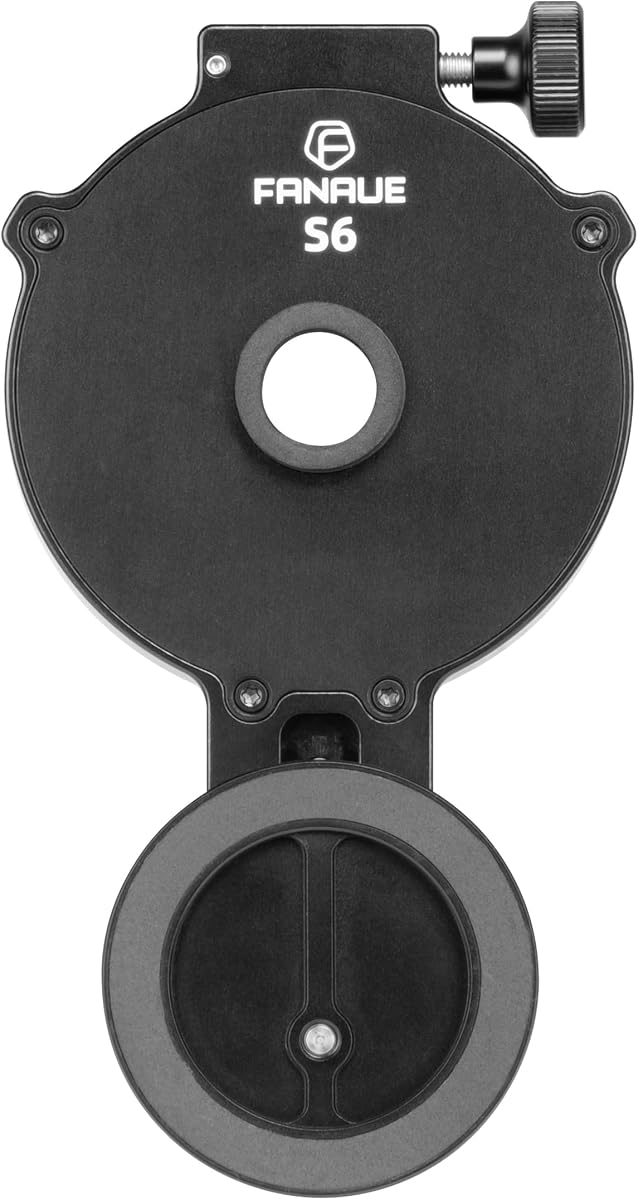
The FANAUE Telescope Phone Adapter is a compact magnetic solution for photographers who want fast phone placement without a large collection of adjustment controls. Its 4.1 rating reflects a balanced design that combines strong magnets, a machined aluminum frame, and a rotating adjustment mechanism for changing the viewing angle.
We may earn a commission when you buy through this link, at no additional cost to you.
The stated eyepiece compatibility runs from 30–60 mm, covering many common spotting scopes, telescopes, binocular eyepieces, and monoculars. Microscope users should measure the outer diameter before ordering because not every microscope eyepiece will fall within the stated range. Most modern smartphones are supported through the magnetic plate, and installation centers on positioning the phone camera and tightening the knobs.
The rotating mechanism gives users some control over the final camera angle without making the assembly unnecessarily complicated. The aluminum alloy frame provides more rigidity than an entirely plastic design, while the magnetic connection allows the phone to be removed and replaced quickly. Its portable size is useful for birding, stargazing, wildlife observation, travel, and field microscopy.
This adapter does not include a Bluetooth shutter, so it may require an alternative way to trigger the camera without touching the phone. Users with very small eyepieces will also need to look elsewhere. For anyone who values magnetic convenience and does not need remote triggering, it is a straightforward and versatile option.
The magnetic connection makes it easy to position and remove a compatible phone. Once the camera is centered and the eyepiece clamp is tightened, the adapter can move between compatible optical devices with little setup.
The rotating mechanism helps users settle on a comfortable angle for landscapes or portrait framing. It does not provide the same axis-specific precision as larger three-axis systems, but it adds useful flexibility without an overly involved setup.
We may earn a commission when you buy through this link, at no additional cost to you.
The Celestron Smartphone Adapter & Bluetooth Remote is a simple, established-brand option for connecting a phone to common telescope eyepieces. It has a 3.9 rating and offers a straightforward combination of a metal frame, polymer body, universal phone clamp, and hands-free shutter release. It is especially appealing to users who do not need extensive fine-tuning.
We may earn a commission when you buy through this link, at no additional cost to you.
The adapter fits eyepieces from 29–45 mm in diameter, including many telescopes configured with 1.25-inch eyepieces. It supports a broad range of iPhone, Samsung Galaxy, and Google Pixel devices, generally even when a case is fitted. Setup involves placing the phone in the holder, centering the camera over the eyepiece, and securing the assembly with knobs.
The included Bluetooth shutter is one of its most useful features because it helps users avoid touching the phone during capture. That reduces the chance of transmitting vibration to the optic at the exact moment the photo or video is recorded. The compact design is also easy to carry in a telescope or birding bag.
The main limitation is its narrower eyepiece range. It also offers fewer positioning controls than premium three-axis models. Buyers should therefore confirm the eyepiece diameter before ordering. For standard telescope and spotting-scope setups within 29–45 mm, it remains a convenient, supported choice with useful remote control.
The Bluetooth shutter separates the act of taking a picture from touching the phone. This is especially helpful on telescopes and spotting scopes where even a small bump can move the image.
The holder is designed to accommodate a wide range of current smartphones, including many fitted with protective cases. That makes it easier to avoid removing a case before every digiscoping session.
We may earn a commission when you buy through this link, at no additional cost to you.
The APEXEL 360° Universal Digiscoping Phone Adapter is the pick for hikers, birders, and beginners who value simple setup and low carry weight. Its 5.0 rating is the highest among the products in this guide. The adapter removes loose screw components and weighs only 0.22 pounds, making it considerably easier to carry than a bulky all-metal system.
We may earn a commission when you buy through this link, at no additional cost to you.
A snap-on installation is designed to take about 10 seconds, while the 360-degree rotation collar allows users to switch between landscape and portrait framing without removing the phone. The four-step setup and included quick-start guide make the product approachable for first-time digiscopers and families. A Bluetooth remote is included for capture without touching the phone.
Compatibility covers eyepieces from 23–50 mm in outer diameter and most iPhone and Android smartphones. The design is not a magnifying lens, so users must already own a suitable spotting scope, binocular, telescope, monocular, or microscope. The instructions also recommend phone zoom at 2x, use of the main camera lens, and disabling automatic macro or lens switching where applicable.
Lightweight construction comes with trade-offs. It is less rigid than heavy metal adapters, and the product information acknowledges that minimal dark corners may remain because phone optics vary. Even with those limitations, its rating, quick setup, remote, and low weight make it a compelling budget-oriented choice for casual outdoor use.
At a listed weight of 0.22 pounds, the adapter avoids adding much bulk to a hiking, birding, or stargazing kit. The removal of loose screw parts also reduces setup time and the number of small pieces to manage outdoors.
The 360-degree collar supports both horizontal scenes and vertical social-media compositions. Users can reposition the orientation without disconnecting the phone or removing the complete eyepiece assembly.
We may earn a commission when you buy through this link, at no additional cost to you.
The MAGVIEW Digiscoping S1 Spotting Scope Universal Phone Adapter is built around a strong magnetic platform and a separate phone plate. It carries a 4.3 rating and is manufactured in the United States. The supplied information indicates that the package includes the adapter and an x1 MAGVIEW Phone Plate, providing the core components needed for a magnetic digiscoping setup.
We may earn a commission when you buy through this link, at no additional cost to you.
The S1 configuration supports eyepieces measuring 51–60 mm, while the S1 Mini configuration covers 38–49 mm. That distinction matters because the two versions address different spotting-scope eyepiece sizes. The magnetic attachment system uses rare-earth magnets to create a stable connection between the phone plate and adapter, allowing the user to begin filming after positioning the camera.
Setup is described as a simple sequence: flip open the cap, connect the device to the magnet, position the camera, and begin recording. This design should appeal to users who already know their equipment fits and want a clean, repeatable attachment method. The black finish also gives the system a professional appearance suited to a coordinated optic kit.
A clear limitation is that the phone plate does not support wireless phone chargers, which may matter for users who regularly top up a phone while traveling. Buyers must also confirm whether the S1 or S1 Mini range matches their eyepiece. Within those constraints, the magnetic stability and included plate offer a polished setup for compatible spotting scopes.
The rare-earth magnetic system secures the phone plate without requiring conventional screws. This reduces setup time and keeps the phone in a predictable position once it is attached.
The S1 and S1 Mini versions cover distinct outer-diameter ranges. Measuring the eyepiece before ordering is essential because using the wrong version could prevent a secure fit.
We may earn a commission when you buy through this link, at no additional cost to you.
The Celestron NexYZ DX Smartphone Adapter is the premium selection in this guide, combining patented three-axis alignment with a durable metal-and-polymer body. Its 4.1 rating and extensive compatibility make it a strong choice for serious amateur astronomers, birders, and users who want repeatable positioning across different optical devices.
We may earn a commission when you buy through this link, at no additional cost to you.
X-, Y-, and Z-axis adjustment knobs let the user center the camera over the eyepiece and fine-tune the forward distance. This is particularly helpful when the camera lens needs to sit at the correct eye relief. The tension-adjusted holder supports a wide range of iPhone, Samsung Galaxy, and Google Pixel models, generally with cases still fitted, and the spring-loaded slider makes phone changes straightforward.
The eyepiece range extends from 35–60 mm and covers common 1.25-inch and 2-inch telescope configurations. Two microscope adapters are also included, expanding its use beyond astronomy and wildlife observation. A Bluetooth shutter provides hands-free photo and video capture, while the durable frame is intended to remain stable in the field.
The NexYZ DX is larger and heavier than ultra-portable plastic designs, so it may not be ideal for minimalist hiking kits. It also does not cover eyepieces below 35 mm. Users who prioritize premium alignment, broad phone support, microscope accessories, and established manufacturer support will find the additional bulk justified.
The Z-axis adjustment changes the camera-to-eyepiece distance, while the X and Y controls position the lens laterally. Together, they help create a centered field with fewer dark edges.
A strong spring-loaded slider supports quick phone swaps while maintaining tension. The included microscope adapters make the system useful beyond conventional spotting scopes and telescopes.
We may earn a commission when you buy through this link, at no additional cost to you.
The New Universal Binocular Phone Adapter is an entry-level option distinguished by its broad stated eyepiece range and tool-free installation. It has a 3.5 rating, the lowest among the ten products, so buyers should interpret it as a basic convenience adapter rather than a precision imaging platform.
We may earn a commission when you buy through this link, at no additional cost to you.
Its clamp supports eyepieces from 16–50 mm, which is the broadest nominal range in this comparison and includes smaller astronomy eyepieces. The phone side uses an adjustable rail and a single alignment window. It accommodates most iPhone, Samsung, and Android phones with slim-to-medium cases, and the rail lets users center the main wide camera lens.
As with other single-window digiscoping adapters, secondary ultra-wide and telephoto camera lenses will not align with the eyepiece. That limitation is explicitly described as normal. The 360-degree rotation allows flexible framing, while a quick-release design removes the need for tools. An ABS frame, rubber pads, and a dual-lock system form the basic retention structure.
The lower rating indicates that some buyers may find the clamp or adjustment system less refined than premium alternatives. It is also less rigid than all-metal models and offers no included remote or axis-specific fine-tuning. It remains useful for learners, classroom microscopy, casual birdwatching, and owners of smaller eyepieces who value a simple clip-on format.
The stated 16–50 mm compatibility makes this one of the broadest options for different optical devices. Measuring the eyepiece is still important because actual fit also depends on its shape and clearance.
The compact opening is intended to form a more controlled light seal and improve support. It requires the main camera lens to be centered, with other phone cameras positioned outside the viewing window.
We may earn a commission when you buy through this link, at no additional cost to you.
The Hawke Universal Digi-Scope Smart Phone Adapter is a compact option aimed particularly at birdwatchers and users of common spotting scopes. Its 3.8 rating reflects a straightforward design that prioritizes easy setup, portability, and broad eyepiece coverage rather than extensive alignment controls.
We may earn a commission when you buy through this link, at no additional cost to you.
The adapter fits eyepieces from 33–60 mm across many spotting scopes, binoculars, and monoculars. It is designed to hold a wide range of smartphones, with the supplied information specifying widths from 2.6–3.7 inches. The product is made from durable ABS plastic and measures 151 × 84 × 44 mm, giving it a relatively manageable footprint for a field bag.
Installation is described as a simple clip-on process that secures the phone for photo and video capture. No additional accessories are required for operation. This makes the adapter appealing to users who want one compact item for wildlife observation, outdoor recording, and general digiscoping rather than a more elaborate kit with controls or a remote.
There is no stated Bluetooth shutter release, so users may need another method to avoid touching the phone during capture. Detailed adjustment specifications are also limited compared with three-axis metal mounts. Nevertheless, for a compatible phone and an eyepiece within 33–60 mm, it is a direct and uncomplicated choice.
The stated dimensions are manageable for a birding bag or compact optic case. Using a lightweight ABS body also avoids adding the bulk of a full metal precision adapter.
Users attach the adapter to the eyepiece and secure the phone without additional components. The direct design suits users who want to start capturing views without learning a complex calibration system.
We may earn a commission when you buy through this link, at no additional cost to you.
The OLLIN Snapshot Spotter Adapter is a specialized system for users who want the adapter ready on the scope rather than attaching a separate holder for every image. It has a 4.2 rating and uses a low-profile compression fit intended to remain on the eyepiece while preserving normal scope viewing.
We may earn a commission when you buy through this link, at no additional cost to you.
The magnetic connection is designed around a separate OLLIN Snapcase, which must be purchased independently. Once the Snapcase and phone are connected, the magnetic system should make the transition between viewing and capture more consistent. The aim is to reduce missed shots caused by alignment changes or complicated mounting procedures.
Size 14 is compatible with a specific list of scopes, including models from Nightforce, Meopta, and Vortex. Users should verify the exact spotting scope and eyepiece configuration before ordering. A protective cap shields the eyepiece area in outdoor conditions, and its adjustable tether keeps the cap attached during travel, hunting, and extended observation.
The separate Snapcase requirement increases the total system cost and makes this less convenient for someone wanting a complete single-item setup. It is also less universal than the adjustable mounts in this guide. In return, it offers an always-ready design for owners of a listed scope who prioritize rapid magnetic capture and low-profile field use.
The low-profile compression fit allows the adapter to remain on the eyepiece while the scope is used normally. That can reduce the work involved when an unexpected wildlife moment appears.
This adapter is tied to a specific list of spotting scope models and requires the Snapcase sold separately. Confirming both the scope and phone case is essential before purchase.
We may earn a commission when you buy through this link, at no additional cost to you.
The Magsafe Digiscoping Adapter is a compact, iPhone-focused option for users who prefer magnetic attachment over a large universal frame. It has a 4.4 rating and weighs only 5.3 ounces. The adapter uses strong neodymium magnets to place a compatible phone quickly and securely over the eyepiece.
We may earn a commission when you buy through this link, at no additional cost to you.
Its stated eyepiece range is 28–54 mm, making it suitable for many spotting scopes, telescopes, and microscopes. Microscope users should measure the eyepiece before ordering. The tool-free installation is designed to take only seconds, which supports spontaneous use during birding, hiking, travel, or backyard astronomy.
Construction combines precision-machined 6061 aluminum with stainless-steel hardware. The anodized finish is intended to resist scratches, moisture, and temperature extremes, while the rigid body helps avoid phone sagging. The product also includes a lifetime warranty and support for fit, setup, and replacement questions.
Compatibility is the principal drawback. It excludes the iPhone Pro series, is not designed for non-iPhone models, and does not work with wireless chargers. It also cannot be described as fitting almost every iPhone in practice. Users within the supported range will appreciate the quick magnetic setup and compact metal body, but the exclusions should be checked before buying.
The MagSafe-compatible arrangement places the phone close to the correct position with minimal adjustment. This is useful for users who want a quick grab-and-shoot workflow rather than a full multi-axis setup.
The adapter is intended for compatible non-Pro iPhones and excludes Android devices. It also does not support wireless charging, so users should check these limitations before relying on it as their primary phone mount.
We may earn a commission when you buy through this link, at no additional cost to you.
Choosing a digiscoping phone adapter involves balancing optical fit, camera alignment, stability, portability, and the specific phone and scope you own. Measure before ordering, because nominal diameter ranges do not eliminate differences in eyepiece shape, camera position, or case design.
The first check is the external diameter of the eyepiece or ocular you intend to photograph. The products in this guide cover different nominal ranges, from 16 mm on the entry-level clip adapter to 61 mm on the tridaptor, with many concentrated between 28 mm and 60 mm. Measure the widest visible portion and compare it with the manufacturer's stated limits before buying. Eyepiece diameter alone does not guarantee a fit: a narrow barrel, unusual shoulder, rubber grip, or recessed opening can interfere with the clamp.
Choose an adapter with a documented range comfortably around your measurement, and confirm whether the optic is a telescope, spotting scope, binocular, monocular, or microscope. Compact binoculars may require a binocular-specific approach, while some microscope eyepieces have unusual shapes. The OLLIN adapter is narrower in scope because it targets listed spotting-scope models, while the Celestron NexYZ DX includes microscope adapters.
Alignment determines whether the phone camera can capture a centered, evenly illuminated view. Simple designs generally require the user to center the camera manually, while premium models add horizontal, vertical, and depth controls. The tridaptor and Celestron NexYZ DX offer three-axis adjustment, which is valuable for difficult eyepieces, thick camera modules, and phone cases that shift the lens position. The Z-axis movement can also improve eye relief and reduce dark borders.
More adjustment does not automatically mean a better image, but it makes correct positioning easier to repeat. A rotating collar is useful for switching between portrait and landscape framing without removing the phone. Users who want the fewest adjustments should prioritize a magnetic connection and a close-fitting eyepiece clamp, while precision-focused users should look for independent axis controls.
An adapter that fits one phone may not fit another because of differing widths, camera positions, and case designs. Several products support phone widths of roughly 2.6–3.7 inches or 60–87.5 mm, but ranges should still be checked against the actual device. Some universal holders accept most cases, while others use magnetic or rail-style attachments that may require a compatible case or a bare phone.
Camera location matters as much as width. Multi-camera phones need the main wide lens centered over the eyepiece; the secondary ultra-wide and telephoto lenses will not align in a single-window adapter. Magnetic products may also conflict with cases that are not magnetic or with accessories that block the attachment. Before purchasing, compare the holder dimensions with the phone, case, and selected camera lens position.
A stable adapter keeps the camera fixed during long observations and reduces vibration when the image is captured. Rigid metal frames generally provide less flex than plastic models, while rubber contact pads help prevent slipping and protect the phone and eyepiece. This matters most with telescopes, which can react noticeably to small movements.
Construction should be weighed against portability. The Celestron NexYZ DX, tridaptor, and Magsafe adapter use metal for rigidity, while the APEXEL and Hawke adapters use lighter designs suited to hiking and casual field use. Choose the level of rigidity that matches the optic and environment rather than assuming the heaviest option is always preferable. If no remote is included, stability becomes even more important.
A Bluetooth shutter allows the user to take a photo or begin recording without touching the phone screen. That small separation can prevent a bump from traveling through the adapter and into the optic. The tridaptor, Celestron universal adapter, Celestron NexYZ DX, and APEXEL adapter include this feature.
Products without a bundled remote may still be paired with a compatible phone or camera-control method, but that adds another step. If the phone has no convenient external shutter or supports it poorly through a supported app, consider a model with an included remote. Remote control is particularly valuable for astronomy, where the user's hand near the phone could disturb the telescope or spotting scope.
The adapter must travel with the optic, so size and weight matter for hikes, birding trips, and mobile observing sessions. The APEXEL model emphasizes a pocket-ready 0.22-pound design, while the Magsafe adapter lists a 5.3-ounce weight. By contrast, precision systems with metal frames and multiple adjustment knobs naturally occupy more space.
Consider the complete kit rather than the adapter alone. A Bluetooth remote, phone case, instruction guide, microscope inserts, or a separate Snapcase can all affect packing needs. Frequent travelers may favor a lightweight, screw-free design, while users who remain near a vehicle or campsite may appreciate a more substantial frame with independent controls.
Some adapters are optimized for a particular ecosystem rather than a broad range of equipment. The MAGVIEW system is designed around rare-earth magnets and a separate phone plate, with different eyepiece versions for different diameters. The OLLIN Snapshot Spotter Adapter is model-specific and requires its Snapcase. The Magsafe adapter supports compatible non-Pro iPhones but excludes other phones.
Specialized systems can deliver a faster or more integrated workflow once the hardware matches, yet they offer fewer options when equipment changes. Confirm the exact scope, phone, case, accessory, charging method, and wireless charging requirements. A universal adapter is more forgiving of mixed equipment, while a model-specific design may be more seamless for a dedicated setup.
Begin by measuring the eyepiece and confirming the adapter's stated limits. Sit with the optic at a comfortable viewing height, attach the adapter to the eyepiece, and secure its clamp without forcing it. Place the phone in the holder or against the magnetic attachment, then select the main rear camera and use a standard zoom setting rather than an ultra-wide lens.
Center the active camera over the middle of the eyepiece. Turn the phone or use the adapter's rotation control to compose the shot, then adjust the X, Y, or Z controls if the model provides them. Move slightly forward or backward to find the best eye relief, watching for a circular image without heavy dark edges. When a remote is available, use it to trigger capture without touching the phone.
After the session, release any clamp tension carefully and remove the phone before detaching the adapter from the optic. Wipe the eyepiece, camera window, rubber pads, and metal contact points with a clean microfiber cloth. Do not use harsh liquids on coated lenses, and avoid leaving the adapter under strong compression for long periods, particularly when it uses magnets or a snap-style connection.
A digiscoping phone adapter connects a smartphone camera to the eyepiece of a telescope, spotting scope, binocular, monocular, or microscope. It holds and aligns the phone so images can be captured from the optical view. The adapter does not normally add magnification; that comes from the optic itself.
Measure the outer diameter of the eyepiece and compare it with the manufacturer's supported range. Also consider the shape of the barrel, the amount of exposed surface, and any rubber grip. A measurement within the stated range is a good start, but unusual eyepiece designs may still require a specific adapter.
Use the main wide camera whenever possible. Many single-window digiscoping adapters are designed to align only with that lens, while the ultra-wide and telephoto cameras sit outside the viewing window. APEXEL specifically recommends the main lens and advises disabling automatic macro or lens switching on applicable phones.
Dark corners usually mean the camera is not centered over the eyepiece or is positioned at an incorrect distance. Fine-tune the alignment controls, move the phone to the optical center, and adjust depth for better eye relief. Phone optics vary, so some adapters also recommend a small amount of digital zoom to reduce the dark border.
A remote is helpful because touching the phone can shake the entire optical system. It is especially useful for astronomy, where movements may be more noticeable. Adapters without a remote can still work, but the user may need a compatible phone or camera app that supports external shutter control.
Many adapters are designed to fit phones with slim-to-medium cases, but compatibility varies by holder design. Magnetic systems may require a magnetic case or work best with the phone uncovered. Check the case thickness, camera location, charging accessories, and whether the phone needs to remain attached to the eyepiece while charging.
No. Some support a wide range of standard eyepieces, while others are designed for specific sizes or listed scope models. The OLLIN adapter, for example, requires a compatible Snapcase and is made for specified spotting scopes. The Magsafe adapter supports compatible non-Pro iPhones rather than every smartphone.
The adapter mainly provides a stable camera-to-eyepiece connection; it does not increase the optical magnification of the scope. Image quality depends on the optic, eyepiece, phone camera, alignment, lighting, and steadiness. A rigid mount and remote can reduce blur, but they cannot replace good optics or careful camera settings.
The tridaptor Universal Adapter stands out as the most complete general-purpose choice because of its rigid frame, three-axis alignment, wide eyepiece range, and included remote. The APEXEL 360° Adapter is the strongest lightweight and budget-oriented option, while the Celestron NexYZ DX offers premium positioning and broad support for standard eyepieces.
Prioritize exact eyepiece and phone compatibility before considering alignment features. Measure both the eyepiece and the phone or case, check the required lens, and determine whether you need microscope adapters, a remote, or a magnetic system. For most users, a rigid connection and remote-triggered capture provide the most practical improvement over informal phone placement.
Ratings, accessories, compatibility details, and product availability can change, and current prices should always be checked at the time of purchase. Comparing the final configuration with your own optic and phone will prevent most sizing surprises and help you select an adapter you can actually use in the field.