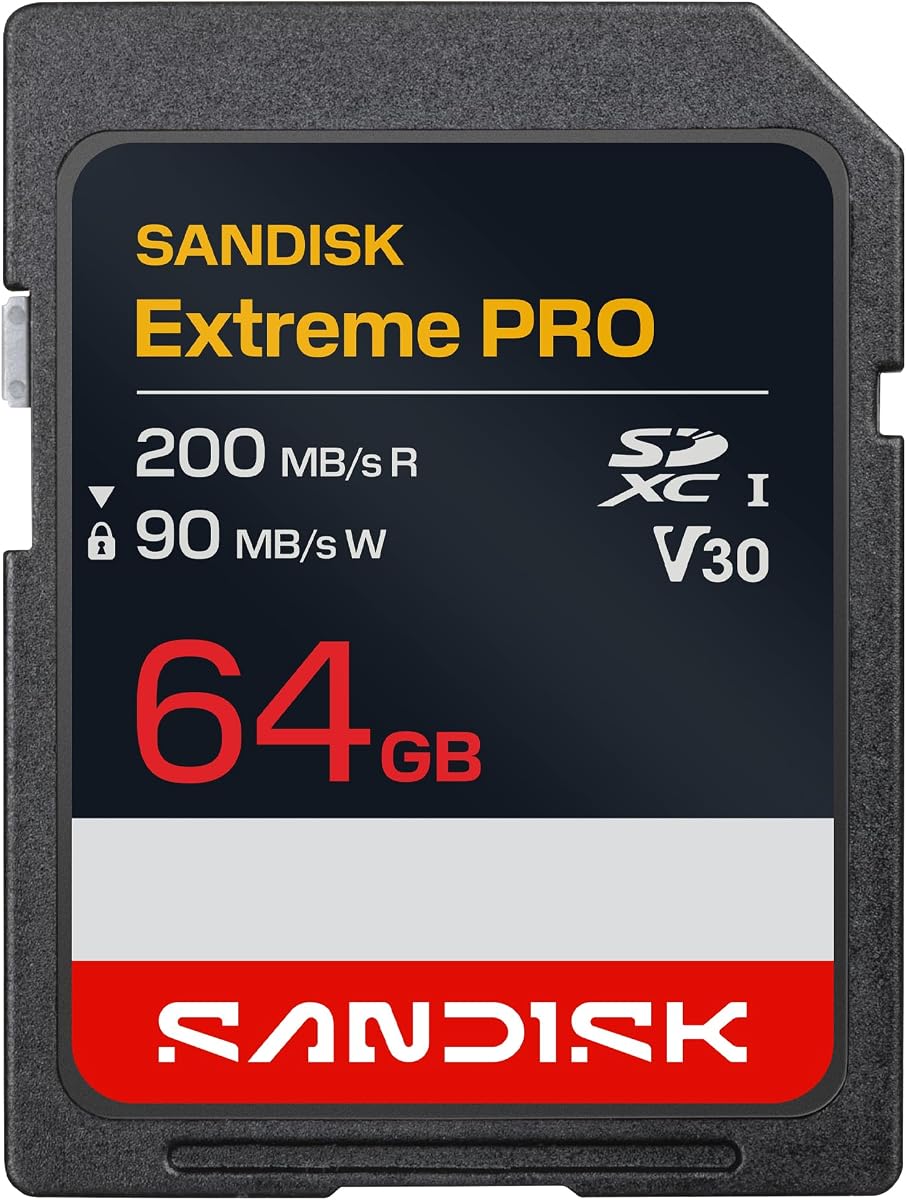
SanDisk 64GB Extreme PRO SD Memory Card
4.8Editor score
Up to 200MB/s read speed
U3 and V30 performance
4K UHD video support
Resilient outdoor construction
Our SD Cards for Music guide compares 10 reliable options for storing music, with detailed analysis of capacity, speed, compatibility, durability, and value.
SD cards for music can turn limited internal storage into a convenient library for recordings, albums, podcasts, samples, and offline listening. A dependable card should provide enough capacity, transfer files efficiently, and remain compatible with the phones, cameras, computers, and audio equipment used in your workflow.
We compared ten full-size and microSD options based on their stated capacity, speed classes, transfer rates, durability features, device compatibility, and practical storage roles. The list includes everyday Ultra cards, video-oriented Extreme PRO models, and a versatile microSD package suited to phones, tablets, game consoles, and car audio.
Each review explains where a card is strongest and where its compromises matter. Our top three selections emphasize dependable general-purpose storage, high-end performance, and value-conscious capacity, while prices and availability can change, so readers should confirm current details before purchasing.
4.8Editor score

4.8Editor score

4.7Editor score
This side-by-side comparison highlights the most important differences among the ten cards, including physical format, usable capacity, headline transfer speed, performance class, and the types of music-storage devices each model is best suited to support.



The SanDisk 32GB Ultra 100MBs SDHC Memory Card is a straightforward option for people who want more room for music without moving to a larger device. Its 4.7 rating reflects broadly positive customer reception, while the 32GB capacity makes it most appropriate for focused collections rather than expansive media archives.
We may earn a commission when you buy through this link, at no additional cost to you.
The card's headline transfer rate of up to 100MB/s is useful when moving a batch of audio files from a computer to a compatible reader or camera. A full-size SDHC design is particularly convenient for equipment with a standard SD slot, and its storage can hold music, photographs, and supporting documents without requiring network transfers.
The central limitation is capacity. Lossless albums, high-resolution recordings, podcasts, and extensive side projects can consume space quickly, so users may soon need to divide files across multiple cards. This model also does not carry the stronger application and sustained-video classes found among the higher-tier selections in the guide.
It is a sensible choice for a portable stereo, compatible camera workflow, or a small offline music selection. Buyers who need only dozens of albums and want a straightforward, well-reviewed card will find it especially practical. For extensive libraries, a 128GB option offers more room without changing the basic use.
This card works well for small, clearly defined libraries stored in standard audio formats. Its familiar full-size form and advertised transfer speed simplify everyday transfers, while the modest capacity keeps the product focused on users who do not need every media type on one card.
A 32GB card is most useful when a listener wants portable access to a selected set of albums, recordings, or podcasts. Keeping the library intentionally limited also makes backup and file organization easier than managing an ever-growing archive.
We may earn a commission when you buy through this link, at no additional cost to you.
The 128GB SANDISK Ultra microSD UHS-I Card combines a generous capacity with a 4.7 rating and strong transfer specifications. Its microSD format makes it a natural fit for compatible Android phones and tablets that lack internal storage, while also allowing use in cameras and laptops that support the format.
We may earn a commission when you buy through this link, at no additional cost to you.
Up to 195MB/s read speed is reached with the specified SANDISK QuickFlow USB-A reader, making the card appealing for people who regularly move large batches of songs, recordings, or video files. Its A5 application class is designed for faster app launch and overall app performance, which can help when music is accessed through applications on a phone.
The microSD form requires the right slot or an appropriate adapter and reader. Although the capacity is generous for music, intensive 4K workflows and storage-heavy applications may still fill it quickly. Users should also remember that the advertised speed depends on the host device, reader, interface, and usage conditions.
This is a compelling choice for anyone expanding a phone or tablet music library without wanting a full-size card. It also offers room for movies, podcasts, photographs, and games, making it more versatile than a dedicated audio-only storage solution would need to be.
Compatible Android devices can use the card to hold albums, offline tracks, podcasts, and other media that would otherwise compete for limited internal storage. The 128GB capacity provides a practical balance between library size and portability.
The A5 rating makes this microSD more appropriate for app-dependent music playback than basic Class 10 storage. It can help improve responsiveness when supported devices load content and applications from the card.
We may earn a commission when you buy through this link, at no additional cost to you.
The SanDisk 128GB Ultra SDXC UHS-I Memory Card is a balanced full-size option for music users who also photograph, record video, or carry other media. Its 4.7 rating, 128GB capacity, and familiar SDXC format make it a versatile choice for compatible cameras, laptops, and other full-size SD equipment.
We may earn a commission when you buy through this link, at no additional cost to you.
The card supports transfer speeds up to 100MB/s and carries U1 and Class 10 performance ratings. Those specifications align with smooth Full HD video recording and routine file transfer, while 128GB leaves enough room for a substantial music collection plus supporting photos and clips.
Its performance is intentionally moderate compared with the Extreme PRO cards. U1 and C10 focus on reliable real-time recording rather than demanding application loads or intensive burst workflows, so a user focused exclusively on sophisticated camera performance may prefer a higher-tier model.
For most people creating a portable music library, this card hits a useful middle ground. It provides more room than a 32GB or 64GB option, a familiar physical format, and enough performance for common multimedia tasks without moving into premium card specifications.
The 128GB capacity is useful when songs are stored alongside photographs, short videos, and project files. Users can consolidate an offline library on one card without needing to alternate between several smaller cards.
U1 and C10 ratings provide a clear baseline for Full HD recording and routine transfers. They are especially suitable for music stored alongside camera footage or for general creative work using compatible devices.
We may earn a commission when you buy through this link, at no additional cost to you.
This 128GB Ultra SDXC card differentiates itself with an advertised read speed of up to 140MB/s while retaining the familiar U1 and Class 10 ratings. The combination makes it an attractive full-size option for listeners who transfer sizeable music collections through compatible high-speed equipment.
We may earn a commission when you buy through this link, at no additional cost to you.
Its 128GB capacity is practical for a broad album archive, podcast collection, or production folder containing audio and related material. Full HD video recording support adds flexibility, allowing the same card to serve music and multimedia workflows without changing formats.
Reaching the headline transfer rate requires a compatible device and interface. The specifications also note that actual performance may vary, so users with older card readers may see more modest results. The U1 and C10 classes remain the more meaningful indicators for steady recording performance.
This model is a good fit for users who want more speed than the standard 100MB/s Ultra offering but do not need the U3, V30, or application-oriented performance of higher-end cards. It also suits compatible point-and-shoot cameras that need a full-size SD card.
The 140MB/s headline rate can shorten transfers when the card is paired with a compatible reader and host interface. It is particularly helpful when moving many high-quality audio files, project stems, or a large offline listening library.
U1 and C10 ratings make the card suitable for compatible devices performing Full HD recording. The 128GB capacity gives those workflows room to retain music and media without using the smallest available card format.
We may earn a commission when you buy through this link, at no additional cost to you.
The Amazon Basics 128GB microSDXC Memory Card is a versatile storage option for phones, tablets, cameras, game consoles, and other compatible microSD equipment. Its 4.7 rating and inclusion of a full-size adapter make it particularly convenient for listeners who move between different kinds of devices.
We may earn a commission when you buy through this link, at no additional cost to you.
U3, A2, and Video Speed Class V30 support place it above basic Class 10 cards in demanding applications. It is optimized for high-bitrate video, burst photography, RAW files, and time-lapse sequences, all of which can accompany a music recording or multimedia project. The listed read speed reaches up to 100MB/s.
The microSD format requires a compatible slot, and some older or restricted devices may support only lower capacity cards or slower classes. The product information specifically notes compatibility with Nintendo Switch but not Nintendo Switch 2, so console buyers should verify the exact model and card requirements.
For a portable music library that must also support camera work or app-based access, this card offers a balanced feature set. The bundled adapter reduces the need to carry a separate reader for basic full-size workflows, making it easier to move files between a laptop and compatible equipment.
The included full-size adapter makes the microSD card easier to use in compatible full-size slots. That versatility suits users who alternate between a phone music library, a camera workflow, and a computer-based organization setup.
A2 application performance and U3 sustained-write capability make this card more useful for active workloads than ordinary Class 10 storage. It is a strong option for portable libraries accessed through apps or paired with demanding multimedia capture.
We may earn a commission when you buy through this link, at no additional cost to you.
The SANDISK 64GB Extreme PRO SD Memory Card is the premium performance selection in this guide. Its 4.8 rating is the highest among the listed products, and the combination of up to 200MB/s read speed, U3 performance, and V30 support targets demanding creative workflows rather than basic music storage alone.
We may earn a commission when you buy through this link, at no additional cost to you.
The card is designed to support 4K UHD video, high-resolution stills, and sequential capture. Supplied information also states that larger capacities in the Extreme PRO family can reach up to 250MB/s read and 170MB/s write, while this particular 64GB product is identified by an up-to-200MB/s headline. That makes it suitable for users who record music and video on the same system.
Capacity is the main constraint. A 64GB card may hold a substantial amount of compressed music, but it is less appropriate for extensive lossless archives, large project files, or long 4K recording sessions. The higher specifications also require compatible host hardware, so the advertised speed will not appear on every reader or camera.
This is the strongest choice for a creator who values speed, sustained performance, and durability over maximum capacity. The Memory Zone desktop app is also listed for content management, making it easier to organize and transfer files when using an SD slot or card reader.
An advertised read speed of up to 200MB/s can accelerate large transfers through compatible equipment. The speed is particularly helpful for moving high-resolution recordings, session archives, and media libraries without waiting through lengthy card transfers.
U3 and V30 ratings support more demanding real-time recording than basic U1 and C10 cards. Users who pair music production with 4K video, burst photography, or sequential capture gain a more capable storage foundation.
We may earn a commission when you buy through this link, at no additional cost to you.
The SanDisk Ultra 64GB Class 10 SDXC card is a simple, established option for offline music and basic multimedia storage. Its 4.7 rating indicates solid customer satisfaction, and the 64GB capacity offers enough room for a meaningful collection of albums, podcasts, or audio files.
We may earn a commission when you buy through this link, at no additional cost to you.
Up to 80MB/s transfer speeds are adequate for moving music from a laptop to a compatible camera, recorder, or player. Class 10 performance supports Full HD video recording, while the full-size SDXC format is convenient for equipment that accepts standard SD cards rather than microSD.
Its transfer rate is lower than that of the 100MB/s, 140MB/s, and 200MB/s alternatives in the guide. It also lacks the stronger U3 and V30 classes found in premium models, making it more appropriate for music and ordinary multimedia than intensive high-bitrate production.
This card is best for listeners who want a recognizable, uncomplicated SD card without paying for premium specifications. It is also useful as a secondary card for archived recordings or as portable storage in a compatible camera or vehicle audio setup.
The standard SDXC format works with devices designed for full-size SD cards. This makes the card approachable for users who want music storage in a compatible camera, recorder, or player without needing an adapter.
The card is described as waterproof, temperature-proof, x-ray-proof, magnet-proof, and shock-proof. Those qualities are reassuring for a card likely to travel between a home computer, a vehicle, and a portable audio device.
We may earn a commission when you buy through this link, at no additional cost to you.
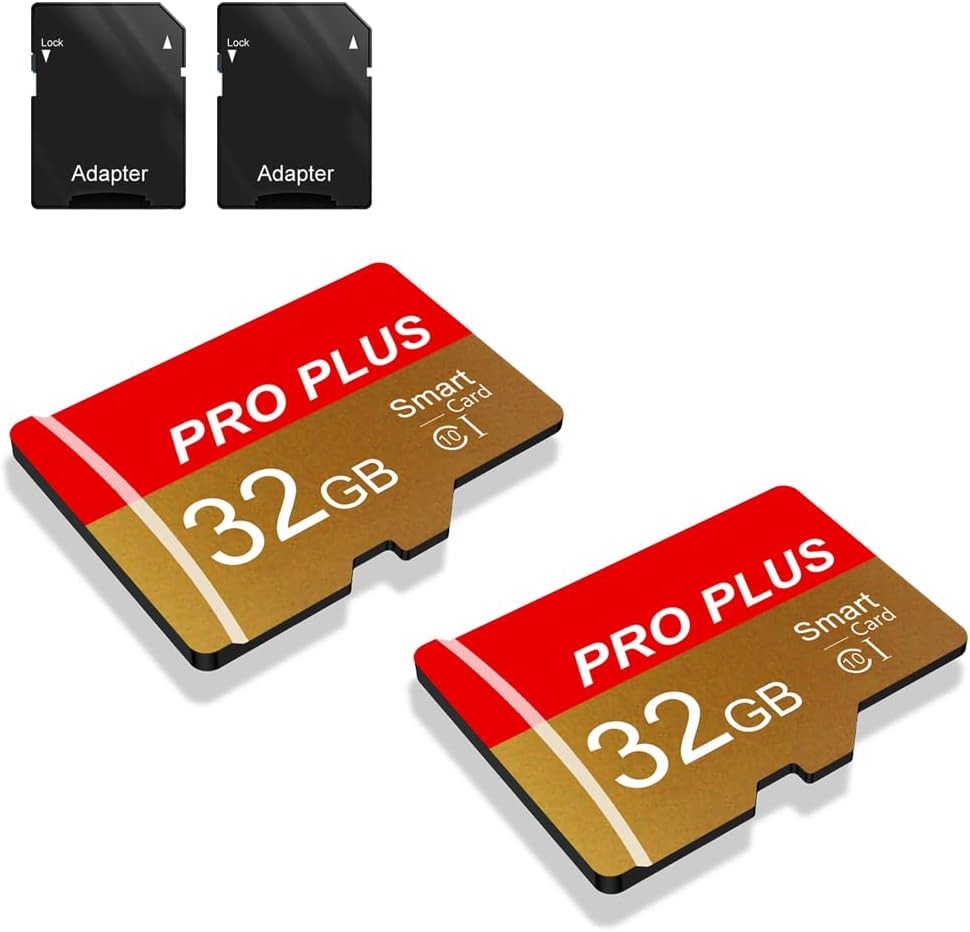
The TF162 32GB Two-Pack is a practical starter set for people who want to divide music among multiple devices. It includes two 32GB TF cards, giving users a convenient way to keep separate libraries for a phone, tablet, camera, game console, or car audio system.
We may earn a commission when you buy through this link, at no additional cost to you.
Each card carries UHS-I, C10, and A1 performance characteristics, with advertised data transfer speeds of up to 80MB/s. The A1 rating supports better application responsiveness on compatible devices, while the included adapters broaden access through compatible full-size card slots.
The stated transfer rate can vary with capacity, hardware, software, and operating system, and the product does not claim the same advanced sustained-video performance as higher-tier options. Its 4.5 rating is slightly lower than the scores attached to the other selections, which may be considered when reliability is the top priority.
This package is most attractive to users who value flexibility and the option to keep two separate libraries. It is a sensible fit for organizing different music genres, separating personal and project files, or placing one card in a portable device and retaining the other for backups.
Two cards reduce the need to shuffle one library between devices. One card can hold a mobile listening selection while another stores a car-audio set, camera recordings, or a project-specific collection.
The bundled adapters make the micro-sized cards easier to insert into compatible full-size readers. That convenience can simplify initial setup and file transfers on systems without a built-in microSD slot.
We may earn a commission when you buy through this link, at no additional cost to you.
The SANDISK 64GB Extreme PRO SDXC UHS-I Memory Card is the editor's choice for users who want more than basic storage. It carries a 4.8 rating and pairs up-to-200MB/s read performance with up-to-90MB/s write speed, creating a well-balanced card for moving and creating media.
We may earn a commission when you buy through this link, at no additional cost to you.
U3 and V30 ratings position it for 4K UHD recording and other sustained-write workflows. That makes it well suited to creators who record music while also capturing video, take sequential burst photographs, or move multitrack sessions and high-resolution source files between devices.
The headline read speed is achieved through SanDisk QuickFlow technology and requires compatible hardware. The Professional PRO-READER is sold separately, and actual results can vary with the host device, interface, and usage conditions. The 64GB capacity also requires selective file management for large archives.
For a creator who wants dependable sustained performance without moving beyond the standard SD format, this card is an excellent choice. It is more specialized than an ordinary Ultra model but easier to use across compatible cameras and recorders than a solution that requires a separate adapter.
Fast read performance helps with offloading media, while the stated write speed supports recording and saving files. That balance is useful for music creators who need to move session data without relying on slower sustained-write behavior.
U3 and V30 ratings make this card appropriate for compatible devices recording 4K UHD video. It also supports Full HD workflows, giving a music producer a single card for footage, still images, and audio sessions.
We may earn a commission when you buy through this link, at no additional cost to you.
The 256GB SANDISK Ultra microSD UHS-I Card is built for listeners who need a large portable library. Its 4.5 rating remains positive, and the substantial capacity can hold music, movies, podcasts, photographs, and games on compatible phones, tablets, digital cameras, and laptops.
We may earn a commission when you buy through this link, at no additional cost to you.
Advertised read speeds reach up to 195MB/s when used with the specified SANDISK QuickFlow microSD UHS-I Card USB-A reader. The A4 application class is designed for improved application loading and performance, while V10, U1, and C10 ratings provide a recognized baseline for Full HD video.
The card's write class is less ambitious than the U3 and V30 capabilities of the Extreme PRO models. As a result, it is better suited to a large general-purpose media library than to intensive high-bitrate recording. The reader is also an additional consideration when the device does not provide a convenient microSD interface.
This is the best selection for someone who wants to consolidate a large offline music collection into one small card. It also works well for mixed-media users who want enough room for a serious library and will primarily be reading existing files rather than recording demanding video.
A 256GB capacity supports a much larger music collection than smaller cards. It is useful for listeners who maintain multiple albums, lossless collections, podcasts, or a broad multi-format library on a portable device.
The A4 application rating supports faster app loading and overall application performance in compatible systems. It offers a better fit for app-based music services and content browsing than cards without an application performance designation.
We may earn a commission when you buy through this link, at no additional cost to you.
The right card depends on device format, library size, transfer workflow, and the kinds of media sharing the storage. These factors help narrow a large market of cards without requiring specifications that a music-only user may never use.
Full-size SD and microSD cards are not interchangeable in every device. A full-size SD card is appropriate for compatible cameras, recorders, laptops, and stereo systems with a standard SD slot, while microSD is designed for compact phones, tablets, cameras, and other equipment with a smaller slot. Some products include a full-size adapter, but an adapter only changes the physical shape and does not make a microSD card improve a device's native performance.
Check the device manual or manufacturer requirements before purchasing. Also consider whether you want one card dedicated to music, because separate cards can simplify backups, prevent unrelated media from consuming space, and make it easier to move a curated library between compatible systems.
Capacity is often more important than headline speed for a music-only user. A 32GB card is suitable for a focused selection of compressed albums or recordings, 64GB supports a more substantial collection, and 128GB or 256GB reduces the frequency of manual library rotation. High-resolution or lossless files consume considerably more room, while a card shared among music, photos, video, and applications will fill faster than a dedicated audio card.
Avoid choosing a capacity that leaves no room for future additions. At the same time, an oversized card is unnecessary if your device has maximum capacity limits or if you prefer to maintain several smaller, clearly organized libraries for easy backup.
Read speed affects how quickly existing music can be transferred or accessed, while write speed matters when saving new recordings and active files. The advertised maximum is the best-case laboratory or internal-testing figure and requires a compatible card reader, device, interface, and suitable operating conditions. Real-world performance can be lower.
For a library that is mainly copied once and then played, the difference between modest and premium read speeds may not be noticeable in daily use. Faster cards become more useful when moving large session folders, offloading camera footage, or editing directly from the card.
C10, U1, U3, V10, V30, and A1 or A2 are not interchangeable. Class 10 and U1 establish a baseline for Full HD recording, while U3 and V30 identify stronger sustained-write performance for demanding video workflows. Application classes such as A1, A2, A4, and A5 relate to app loading and responsiveness when both the card and host device support them.
A music listener storing and playing files may be satisfied by C10 or U1. Users who run music applications, capture video, or work with large creative files should look for higher application and sustained-write ratings, while keeping device compatibility in view.
A card's advertised speed may require a specific reader. The 128GB and 256GB SanDisk Ultra microSD cards list up to 195MB/s read speeds with a SANDISK QuickFlow microSD UHS-I Card USB-A reader, while the Extreme PRO models mention compatible readers and professional readers sold separately. Check whether a suitable reader is already included with the product or available for the devices you use.
A bundled adapter can help with physical insertion but is not the same as a high-speed USB reader. Users who transfer music regularly should budget for reliable hardware, use a reader that supports the card's rated performance, and confirm the host interface can sustain the advertised transfer rate.
Cards used in vehicles, cameras, outdoor recorders, or portable music players face shock, moisture, temperature changes, magnetic fields, and physical wear. Several options list resistance to water, extreme temperatures, X-rays, magnets, and shock. The Amazon Basics microSD also lists water, temperature, X-ray, and magnetic-field resistance.
Durability ratings do not make a card waterproof or eliminate the need for sensible care. Use a compatible protective case, avoid leaving cards in extreme conditions, and retain backups of irreplaceable recordings. A durable card is best viewed as one component of a safer storage routine rather than permission to treat it carelessly.
An SD card is a convenient music container, but it remains removable and vulnerable to loss, damage, or accidental deletion. The SanDisk cards that mention Memory Zone provide a desktop or Android option for backing up, organizing, and transferring content, although users should confirm software and operating-system compatibility before relying on it.
Maintain a separate copy of irreplaceable albums, recordings, and project files. Use clear folder names, verify transfers before removing the original, and format cards in the intended device when appropriate. Organized files are easier to recover and make more efficient use of available capacity.
Before inserting a card, confirm that its format and capacity are supported by the device. For a new music library, use a computer to create folders for artists, albums, recordings, and playlists, then copy files in a consistent format. Avoid changing file names or extensions during transfers, because some music players and vehicle systems rely on supported naming conventions and metadata.
Transfer large collections through a compatible reader and use the copy or backup function in your operating system rather than dragging files without allowing the transfer to finish. Safely eject the card before removing it, and always verify that the destination contains the expected songs before formatting or reusing the card. Properly ejecting the card also reduces the risk of corrupting recently saved music.
To care for the card, keep it in its case when it is not in use, protect it from moisture and extreme heat, and avoid bending or forcing it into an incorrect slot. Do not use a damaged or unrecognized card for your only copy of important recordings. Periodically check the library for corrupted files, maintain backups, and replace the card if a device repeatedly reports errors.
The required space depends on audio quality and file format. Compressed music uses considerably less room than lossless recordings, while a library shared with photos, video, and applications needs more capacity. A 32GB card is useful for a small curated collection, 64GB or 128GB suits larger libraries, and 256GB is appropriate for extensive offline media. Check the maximum capacity supported by your device before choosing.
Neither format is universally better. MicroSD is ideal for compact devices with a microSD slot, while full-size SD suits compatible cameras, recorders, and computers. Some microSD packages include an adapter for full-size readers, although the card remains microSD underneath. The correct choice depends entirely on the hardware where the music will be stored and played.
For basic playback from a completed library, a Class 10 or U1 card is generally sufficient, provided the device supports it. Higher read, write, and application ratings become more important for large transfers, app-based libraries, recording new content, or combining music with demanding video workflows. Paying for premium performance makes sense when the surrounding equipment can benefit from it.
You can, provided the stereo supports the card's physical format, capacity, and file types. Many systems use full-size SD cards, but some accept microSD or USB media, and compatibility varies by model. Copy only supported audio formats, organize folders predictably, and test the card before relying on it for important offline listening.
A Class 10 or U1 card can support common Full HD recording, while U3 and V30 are better choices for demanding sustained-write and 4K workflows. For high-resolution multitrack audio stored as individual files, write speed and a reliable host device remain important. A card that records smoothly but cannot be read quickly may still delay the workflow.
Only when the player explicitly supports that capacity. A larger card can improve library size, but some older devices have maximum capacity limits or may not detect high-speed card generations. Check the player manual for supported formats, maximum storage, and audio file types before transferring a large collection.
Keep at least one separate copy on a computer, external drive, or another tested storage location. After each important transfer, verify that the files can be opened and that the expected album count is present. When a card becomes full or no longer needed, format it only after confirming that the backup is complete and usable.
An adapter generally provides physical compatibility, not inherently faster performance. Transfer speed still depends on the card, reader, host device, cable, interface, and file workflow. To achieve the advertised headline speed, use a reader that supports the card and device combination, such as the specified SanDisk QuickFlow reader where applicable.
The SANDISK 64GB Extreme PRO SD stands out as the premium performance choice, while the 64GB Extreme PRO SDXC UHS-I model offers an editor-approved balance of fast transfers, strong write performance, and 4K-oriented ratings. The 32GB SanDisk Ultra SDHC provides a focused, budget-conscious option for smaller music collections.
Prioritize physical format and device compatibility first, then choose enough capacity for the expected library and the file types it will contain. Faster ratings matter most for large transfers, app-dependent playback, recording, or mixed media workflows; otherwise, a dependable U1 or Class 10 card can serve music storage very well.
Before purchasing, compare current ratings, specifications, included accessories, and compatibility details on the product listing. Prices and promotions can change over time, so confirm the latest information and make sure you have a separate backup of any music or recordings that cannot be replaced.