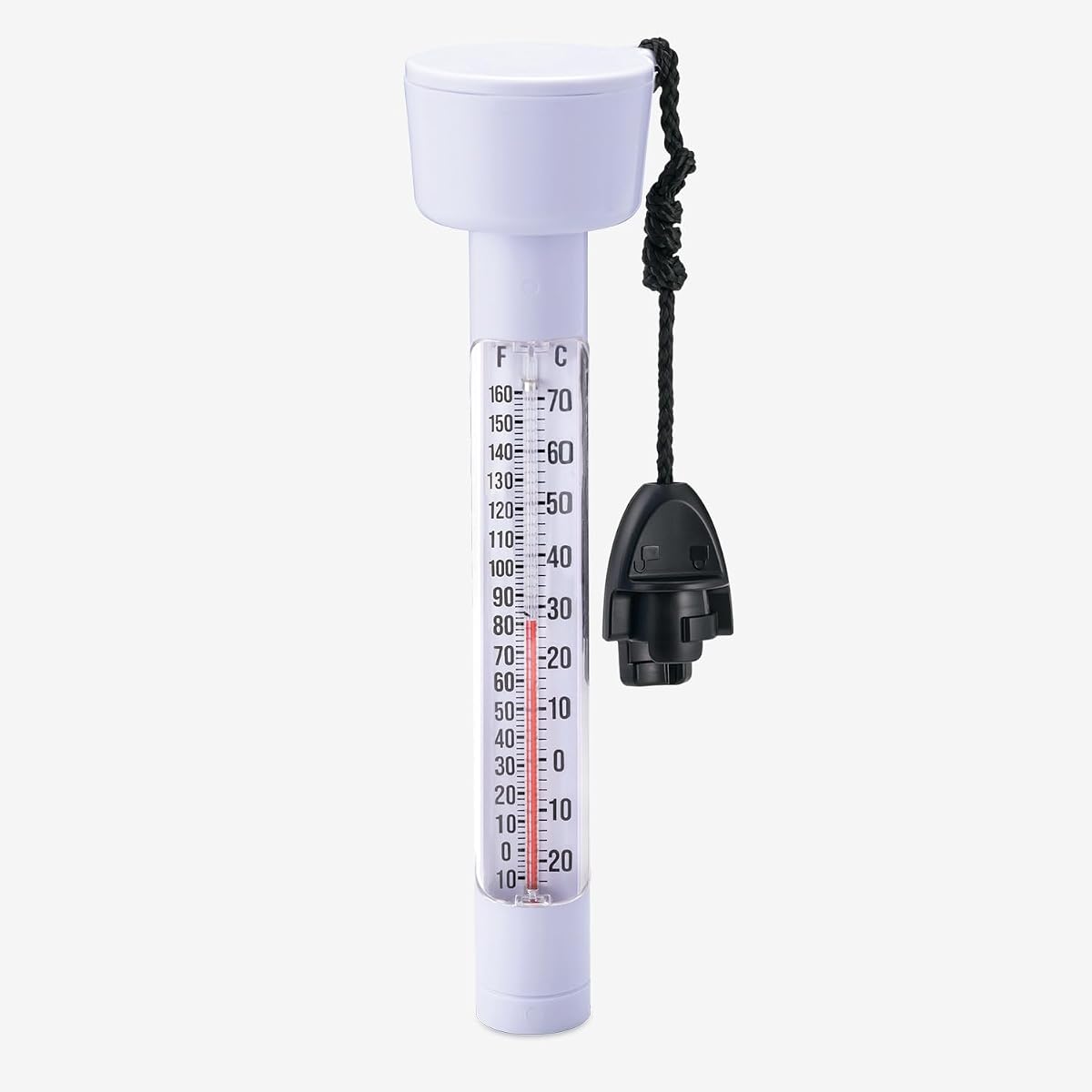
Funsicle Floating Thermometer
5.0Editor score
Simple floating design
Dual temperature units
Secure tie attachment
Beginner-friendly operation
Our Cold Plunge Thermometer guide compares 10 waterproof, floating, and wireless options for accurate temperature tracking, easy readings, timers, and remote
A cold plunge thermometer helps you monitor water temperature without relying on guesswork, equipment displays, or repeated manual checks. The right model should remain readable in cold conditions, resist water exposure, and provide the kind of accuracy and visibility your recovery setup requires.
We compared ten thermometers across temperature range, stated accuracy, waterproofing, floating design, timer functions, wireless range, display features, and power requirements. The list includes basic floating thermometers, direct-reading digital models, remote RF systems, and an app-connected option for long-term monitoring.
Each review explains where that model stands out and where it may be less convenient for your routine. The top picks emphasize overall versatility, practical value, and advanced remote monitoring, while current prices, availability, and ratings can change over time.
5.0Editor score

4.2Editor score

4.2Editor score
The comparison covers every included model, from simple floating thermometers to wireless and smart monitoring systems. Review the sensing accuracy, waterproof rating, readout style, and connectivity to determine which design best fits your plunge setup.


The Silicone Cover Ice Bath Thermometer is a direct-reading device built specifically for ice baths, cold plunges, and hot tubs. It holds a 3.9 rating and stands out because it combines a floating digital display, a countdown timer, Celsius and Fahrenheit switching, and a protective silicone exterior.
We may earn a commission when you buy through this link, at no additional cost to you.
Its main advantage is practical control without wireless complexity. You can place it directly in the water, check the current temperature, and use the timer to track a session of up to 20 minutes. The silicone layer is intended to improve grip while wet and provide added protection against drops, both useful qualities around a slippery plunge rim.
The waterproof rating is IPX6 rather than the IPX8 rating used by several floating sensors in this guide. That means it is designed for exposure to water and floating operation, but buyers who require the highest stated ingress protection may prefer an IPX8 model. The display may also need about one minute after immersion before its readings stabilize.
This is a strong recommendation for people who want temperature and session timing in one affordable, self-contained device. It is less appropriate if remote monitoring, long-term data history, or the highest published waterproof rating matters more than a straightforward display at the tub.
Real-time readings are paired with a timer that can be set for as long as 20 minutes. That combination reduces the need for a separate kitchen timer while keeping the water temperature visible during a plunge.
The silicone outer layer improves handling when your hands are wet, while the buoyant format keeps the thermometer accessible. Its digital display is designed for clear indoor, outdoor, and underwater viewing.
We may earn a commission when you buy through this link, at no additional cost to you.
This Ice Bath Thermometer and Timer offers a straightforward way to monitor water temperature without installing a remote system. Its 4.1 rating reflects a practical combination of a waterproof floating design, a large digital display, and a built-in countdown timer.
We may earn a commission when you buy through this link, at no additional cost to you.
The countdown function is the defining feature. Instead of estimating immersion time or relying on a separate timer, you can use the same device to monitor both the temperature and duration of your cold exposure. It is also described as suitable for swimming pools, giving the model more flexibility than an ice-bath-only product.
The product information does not provide a specific accuracy tolerance or a formal IP water-resistance rating. Those omissions make it harder to compare with models that publish plus-or-minus figures and IPX8 protection. It also offers no wireless receiver, app, historical records, or indoor humidity data.
Choose this option if you want a simple floating thermometer with a timer at a value-oriented entry point. For users who require a specified accuracy tolerance, stronger ingress rating, remote readings, or detailed temperature history, one of the wireless models may be a better long-term fit.
Keeping the countdown in the floating thermometer simplifies session tracking. You can see the elapsed or remaining time near the temperature readout without bringing another device to the plunge.
The large, clear display is easy to consult while your hands are cold or wet. A straightforward interface also reduces setup friction for people new to temperature-guided cold therapy.
We may earn a commission when you buy through this link, at no additional cost to you.
The TempPro TempAir Wireless is the most versatile all-in-one system in this roundup, with a floating water sensor and a separate backlit receiver. Its 4.2 rating is supported by a 500-foot transmission range, IPX8 waterproof construction, and a stated accuracy of plus or minus 0.9°F within the main measuring range.
We may earn a commission when you buy through this link, at no additional cost to you.
You can check water temperature from indoors without walking outside, which is particularly useful during early sessions, changing weather, or a cold plunge installed away from living areas. The receiver also presents humidity, 24-hour high and low records, and a large backlit screen for low-light conditions.
Setup is simplified because the sensor and receiver arrive pre-paired, and the package includes four AAA batteries and a string intended to keep the sensor away from a skimmer. You must align the upper and lower sensor parts and press them together firmly to preserve waterproof performance.
This is our pick for a buyer who values complete monitoring and remote convenience. The trade-off is the need to maintain and position two components. It is less minimal than a direct floating thermometer, but considerably more capable when your priority is remote access and published precision.
RF technology maintains a connection up to 500 feet, allowing the receiver to be kept indoors. This makes it possible to monitor a cold plunge while getting dressed, preparing equipment, or waiting for the water to reach a desired temperature.
The sensor is specified at plus or minus 0.9°F from 32°F to 140°F, while its overall operating range extends from minus 40°F to 158°F. Maximum and minimum memory adds context beyond a single instantaneous reading.
We may earn a commission when you buy through this link, at no additional cost to you.
The second Ice Bath Thermometer and Timer in this guide shares a simple product concept with the higher-ranked model: a waterproof floating thermometer, digital display, and countdown timer in one device. Its 3.8 rating is the lowest among the ten products, so buyers should weigh the appealing feature set against its customer feedback.
We may earn a commission when you buy through this link, at no additional cost to you.
The product is described as suitable for both frigid ice baths and sunny pool environments. Its large display supports quick visual checks, while the timer helps users keep cold exposure consistent without consulting a separate device.
A specific accuracy tolerance is not provided, and there is no formal IP rating in the supplied information. The product also lacks remote monitoring, humidity tracking, and historical data features, making it better suited to straightforward, at-the-tub use.
This model makes sense for budget-conscious buyers who value the timer and floating format. If measurement precision is especially important, consider a model that states both its accuracy and waterproof rating. Those published details can make a cold plunge setup easier to monitor consistently.
The combined display handles two frequent needs at once. It gives you an immediate water reading and a countdown for structuring each immersion.
The floating construction is not limited to a dedicated cold plunge. The same basic monitoring approach can also be used in a swimming pool.
We may earn a commission when you buy through this link, at no additional cost to you.
The Wireless Pool Thermometer combines a floating water sensor with an indoor display and holds a 5.0 rating. It covers a wide range of environments, including cold plunges, hot tubs, ponds, aquariums, fish tanks, and lakes, while also reporting indoor temperature and humidity.
We may earn a commission when you buy through this link, at no additional cost to you.
The sensor transmits data up to 300 feet in open areas and uses an IPX8 waterproof design with a double rubber gasket. Its stated water-temperature accuracy is plus or minus 2°F, and its operating range extends from minus 40°F to 158°F, which comfortably covers typical cold plunge conditions.
Unlike several competitors, it requires different battery sizes for the two components: two AA batteries for the sensor and two AAA batteries for the display. Neither set is included. The included wrenches help users reopen and reseal the sensor, but regular maintenance may be necessary.
This is a compelling choice for people who want one system to monitor both the plunge and the surrounding indoor environment. Its perfect customer rating is encouraging, although the looser plus-or-minus 2°F specification should be considered if very tight measurement tolerance is essential.
The receiver shows water temperature alongside indoor temperature and humidity. This is useful for understanding how ambient conditions may affect the surrounding environment.
A minus-40°F to 158°F range covers extremely cold water through heated baths. The sensor is therefore useful across seasonal pools, plunge tubs, hot tubs, and other water features.
We may earn a commission when you buy through this link, at no additional cost to you.
The Funsicle Floating Thermometer is the most stripped-down model here, but its focused design is a strength for anyone who only needs a visible water-temperature reading. It carries a 5.0 rating and offers a buoyant format, dual-unit display, and a simple user experience.
We may earn a commission when you buy through this link, at no additional cost to you.
Its included tie can attach the thermometer to an ice-well plunge, reducing the chance that it will drift away. The display supports both Fahrenheit and Celsius, allowing you to use whichever unit matches your preferences without relying on conversion.
There is no wireless receiver, countdown timer, app, humidity measurement, or published accuracy tolerance in the product information. The absence of a stated IP rating also means buyers should avoid assuming the same level of submersion protection offered by models with an IPX8 specification.
For a straightforward cold plunge setup, this thermometer delivers the essential function without the setup complexity of multi-part systems. It is especially attractive for beginners and for anyone who wants a simple at-the-water display rather than remote monitoring or long-term records.
Put it in the water and read the display. The lack of a complex interface makes it convenient for routine use and for people who want fewer controls to manage.
The supplied tie is intended for attachment to a cold plunge or ice-well setup. This helps keep the thermometer accessible instead of allowing it to wander across the water.
We may earn a commission when you buy through this link, at no additional cost to you.
The GoveeLife Smart Wireless Pool Thermometer P2 is the most data-focused option in the guide. Its 4.2 rating comes with a floating IP68 sensor, a pre-paired gateway, app-based remote monitoring, real-time charts, and the ability to export up to two years of data.
We may earn a commission when you buy through this link, at no additional cost to you.
Temperature readings refresh every two seconds, with a stated accuracy of plus or minus 0.9°F across a minus-4°F to 158°F range. The gateway can support connections up to 1,082 feet in an open area, although walls may reduce that distance. It operates on 2.4 GHz Wi-Fi only.
The app supports comparisons of minimum and maximum temperatures from 24 hours up to one year, while audible gateway notifications, email, and app messages can flag abnormal conditions. Battery life is listed as up to 500 days in standard mode or three years in extended mode.
This premium model is ideal for users who want history, alerts, and phone-based access. It also supports Alexa, allowing compatible users to request the water temperature by voice. The complexity of pairing, powering, and maintaining a smart system is unnecessary if you only need a local reading.
Real-time charts and long-term comparisons help reveal how water temperature changes over time. Exportable data can also support more detailed record keeping when temperature trends matter to your routine.
Customizable notifications can draw attention to unusual water temperatures. This is particularly helpful when the plunge is located away from the main living area or when you monitor the setup infrequently.
We may earn a commission when you buy through this link, at no additional cost to you.
The UNNI Wireless Pool Thermometer combines a large receiver screen with a tightly specified accuracy of plus or minus 0.5°F. Its 4.5 rating is the second-highest customer rating in the lineup, making it a strong alternative for buyers who prioritize precision and easy viewing.
We may earn a commission when you buy through this link, at no additional cost to you.
The 4.5-inch LCD uses a ten-second backlight, tracks high and low readings over 24 hours, and displays water comfort symbols. Its dual-sided sensor reading allows the temperature to be viewed whether someone is standing beside the pool or looking directly at the floating unit.
The floating sensor uses IPX8 protection with an integrated sealing ring. Its stated wireless radius is 230 feet, and data is transmitted every 60 seconds, so its range and update frequency trail some of the more advanced systems in the guide.
Choose the UNNI when display size, dual-sided visibility, and close measurement tolerance are the leading requirements. It is well suited to a plunge near the house, while users needing longer transmission distances may prefer a 500-foot model.
The four-point-five-inch screen can be read without approaching the water. A brief button press illuminates it for ten seconds, making nighttime or low-light checks easier.
The floating sensor presents readings on two sides, reducing the need to reposition it. Its plus-or-minus 0.5°F accuracy is the narrowest published tolerance among the included models.
We may earn a commission when you buy through this link, at no additional cost to you.
The TempPro TempAir Solar stands out with a solar-powered floating sensor, quick updates, and a 4.6 customer rating. It combines a 500-foot RF connection with a stated accuracy of plus or minus 0.9°F in the main 32°F to 140°F measuring range.
We may earn a commission when you buy through this link, at no additional cost to you.
Its sensor refreshes temperature information every five seconds, which is faster than the 60-second intervals used by several competing wireless systems. The large receiver screen uses big digits and a backlight, while the sensor also uses UV-resistant ABS construction for outdoor exposure.
A built-in rechargeable battery and solar charging are intended to minimize sensor battery replacements. The receiver still requires two AAA batteries, which are included. Effective solar charging depends on the sensor receiving suitable outdoor light, so it should remain positioned where sunlight can reach it.
This is an excellent choice for a permanently installed cold plunge where fast updates and reduced sensor maintenance are priorities. It is less attractive for fully shaded locations or users seeking app-based history rather than a straightforward receiver display.
Five-second updates make the system more responsive than models that transmit once per minute. That can be useful while adding or removing ice and checking how quickly the water temperature is changing.
The rechargeable sensor uses solar charging to reduce the need for routine battery replacement. Keeping the unit in an open outdoor position supports its intended charging design.
We may earn a commission when you buy through this link, at no additional cost to you.
The Floating Wireless Waterproof Thermometer combines a floating sensor with an indoor receiver that can also be mounted outdoors. Its 4.4 rating reflects a versatile design that tracks water temperature, indoor temperature, humidity, and maximum and minimum records.
We may earn a commission when you buy through this link, at no additional cost to you.
The sensor sends readings to the receiver every 60 seconds over a stated 500-foot range. Water readings cover minus 40°F to 140°F with a plus-or-minus 1.8°F tolerance. The receiver adds indoor temperature and humidity, with humidity specified at 20% to 95% relative humidity.
A 20-second backlight improves visibility in dim conditions. The receiver can stand on a table, attach to a wall through a mounting hole, or use its built-in magnets. Both sensor and receiver support Celsius and Fahrenheit, although the floating sensor and indoor receiver each require two AAA batteries that are not included.
This model fits users who want flexible placement and combined environmental data without using a phone app. Its relatively broad accuracy tolerance and once-per-minute updates may be less suitable for precision-oriented monitoring, but it remains a practical multi-purpose choice.
The three installation modes make it possible to move the display between a tabletop, wall, and metal surface. This is especially convenient when the cold plunge occupies a different area from the receiver.
The LCD combines water temperature, indoor temperature, humidity, and high and low records. A single display gives you a broader view of conditions around the water.
We may earn a commission when you buy through this link, at no additional cost to you.
The best cold plunge thermometer depends on whether you want a simple floating display, a combined timer, remote readings, or long-term smart monitoring. Consider accuracy, water resistance, connectivity, visibility, and how often you will use the device before making a choice.
Accuracy determines how confidently you can use the thermometer to compare sessions and observe water-temperature changes. Published tolerances among the included products range from plus or minus 0.5°F to plus or minus 1.8°F, while two simpler models do not state a tolerance. If consistent measurement is important, compare the stated specification rather than relying on vague claims of accuracy. Also note that some figures apply only within a narrower range, such as 32°F to 140°F, even though the sensor itself supports a broader operating range.
A cold plunge thermometer must tolerate cold water, condensation, and repeated handling. Waterproof ratings provide a useful comparison point: IPX8 models are described as fully waterproof in the supplied information, while the silicone-covered model uses IPX6 and still floats. A floating form is especially convenient because the device remains visible without being held against the tub wall. Confirm that the upper and lower parts of a sealed sensor are correctly aligned, as incorrect assembly can compromise water protection.
Cold water and wet or numb hands can make small digits difficult to inspect. Look for a large digital screen, clear contrast, and unit switching between Celsius and Fahrenheit. Remote systems benefit from a backlit receiver, especially for early morning or evening use. The UNNI offers a particularly large 4.5-inch screen with a ten-second backlight, while several direct-reading models prioritize fewer controls and a simple at-the-tub display.
Wireless monitoring is useful when the plunge is outside the main living area or on another part of the property. The included systems offer different ranges, from 230 feet to as much as 1,082 feet for the GoveeLife gateway, although open-area maximums will not necessarily carry through walls. The TempPro models and the Floating Wireless Waterproof Thermometer each state a 500-foot range. Consider where the receiver will live and whether the sensor can maintain a dependable connection from the plunge.
A built-in timer can make cold exposure more consistent by reducing reliance on estimating duration. The Silicone Cover model includes a timer adjustable up to 20 minutes, and two Ice Bath Thermometer and Timer models also incorporate countdowns. Remote and smart products generally focus on temperature data rather than timing sessions. Decide whether a dedicated cold immersion timer would be useful or whether your existing routine already handles session duration effectively.
The GoveeLife Smart P2 goes furthest into connected monitoring with charts, two years of exportable history, customizable alerts, voice-assistant support, and a two-second refresh rate. Other wireless options provide remote readings, maximum and minimum records, and indoor humidity information. Smart features are valuable when tracking long-term patterns or monitoring a plunge remotely, but they introduce gateway placement, power management, network compatibility, and app setup.
Battery requirements vary considerably. The TempPro TempAir Wireless includes four AAA batteries, the TempPro Solar includes two AAA batteries for its receiver and uses solar charging for the sensor, and the Funsicle requires no wireless system. Other models use different battery configurations or do not include batteries. Sealed sensors may also need careful reopening and resealing, and smart devices need both sensor and gateway power. Select a power method that matches how often you can inspect and maintain the setup.
Most included devices are marketed for more than cold plunges. Their specifications also mention pools, hot tubs, spas, ponds, aquariums, baby baths, hot springs, fish tanks, and lakes. Some provide different operating modes for pools and hot tubs, while a few explicitly warn that the floating sensor is designed for water rather than ambient outdoor air. Confirm that the stated range and use case match your actual plunge environment, especially if the tub becomes unusually hot or the unit may be moved between locations.
Read the included instructions before first use, then install or charge all required components. For a wireless model, position the receiver where it can receive a stable signal, place the sensor in the water, and confirm that readings appear as expected. Seal the sensor's upper and lower sections firmly and align any marks exactly as directed. For a direct-reading model, switch to your preferred temperature unit and place the floating unit where it will remain visible.
Allow the water reading to settle after immersion, particularly when the thermometer has just moved from a warmer or cooler environment. Compare readings over several minutes rather than making a decision from a single transitional value. If the product includes a timer, set the desired duration before entering the water, and use the recorded minimum and maximum values or app history to understand how the temperature changed during the session.
After each session, remove the sensor, wipe away excess water and ice residue, and let it dry before opening the housing. Keep the sealing ring free of grit, and tighten every closure carefully after any battery service. Store the device in a dry place away from direct physical impact. Replace batteries according to the low-battery guidance or manufacturer instructions, and do not assume every model is safe for submersion beyond its stated waterproof rating.
A general water thermometer can monitor the tub, but a dedicated cold plunge model is designed around cold-water use, floating visibility, and related features such as timers or recovery-focused displays. A pool thermometer with a broad low-temperature range can also work if its stated accuracy and waterproof rating suit your setup.
A floating thermometer is easier to deploy because you place it directly in the water and read it at the tub. A wired or remotely displayed model is more convenient when you want to check the plunge from indoors, maintain a history, or receive alerts. The best choice depends on where your plunge is located and how you use it.
Look for a clearly stated plus-or-minus tolerance, because some inexpensive floating thermometers do not publish one. The models in this guide state tolerances ranging from plus or minus 0.5°F to plus or minus 1.8°F, though some figures apply only within a narrower temperature range. Choose the tightest tolerance your monitoring needs justify.
Only when its specified temperature range reaches the temperatures used in your plunge. All included products advertise cold-water suitability, but their ranges and accuracy specifications differ. Also verify the waterproof rating and confirm that the sensor is intended to float in water rather than measure surrounding air.
Basic floating thermometers and RF wireless systems work without Wi-Fi because they display readings directly or on a paired receiver. The GoveeLife Smart P2 requires a 2.4 GHz Wi-Fi connection for its app, gateway, history, alerts, and voice-assistant features.
Align the sensor's upper and lower sections as directed, press the closures together firmly, and make sure the sealing ring or gasket is seated correctly. After opening a sealed unit for batteries, reseal it carefully and check the closure before returning it to the water. The included wrenches on some models are intended for this maintenance.
Yes, when you want to understand how stable the water remained during a session. A single reading shows the temperature at one moment, while minimum and maximum records reveal how much variation occurred. For longer analysis, the GoveeLife model also offers charts and exportable history.
Replace or recharge batteries when the product indicates low power or when readings become unreliable. Power needs vary by model, and the TempPro TempAir Solar uses solar charging for its floating sensor while its receiver still uses AAA batteries. Follow the included guidance rather than assuming all wireless thermometers use the same battery configuration.
The Silicone Cover Ice Bath Thermometer is the strongest all-around pick because it combines a buoyant digital display, a 20-minute timer, unit switching, and a grippy protective cover. The Funsicle Floating Thermometer serves budget-conscious and beginner-friendly setups with an exceptionally simple design, while the GoveeLife Smart P2 is the premium choice for app-based history, alerts, and long-range monitoring.
Prioritize the features you will actually use. A direct floating model is ideal when the tub is close and immediate readings are enough; an RF system is better when you want to check the temperature from indoors; and a smart system is justified when trends, notifications, and remote access are central to your routine. Accuracy, waterproofing, and reliable readings should take precedence over extra features.
Before purchasing, compare the current product details, availability, customer feedback, and price on the linked listing. Ratings and product offerings can change, and the best value may shift depending on whether your priority is precision, timing, remote monitoring, or simple operation.