
Kingston NV3 1TB 2280
4.7Editor score
Up to 6000 MB/s reads
Up to 4000 MB/s writes
Includes Acronis cloning software
Five-year limited warranty
Kingston Internal NVME SSD guide compares ten drives for speed, capacity, thermals, compatibility, and everyday upgrades, for modern computer systems.
Kingston internal NVMe SSDs range from compact, energy-efficient models for laptops and handheld devices to high-speed PCIe drives designed for demanding desktops and gaming systems. The right choice depends on interface support, physical dimensions, available storage, cooling, and whether balanced everyday performance or maximum throughput matters most.
This guide compares ten available models using their published specifications, form factors, capacities, and stated use cases. It covers the 1TB Kingston NV3, Fury Renegade and G5, 2230 options, KC2500, NV1 capacities, and KC3000, plus one closely related Samsung PCIe 4.0 drive for context.
Each review explains who the drive is best suited to, along with compatibility and performance considerations. The selections show how Kingston balances speed, capacity, portability, and thermal design; current prices and availability can change, so readers should verify those details before purchasing.
4.7Editor score

4.8Editor score

5.0Editor score
The table below compares all ten drives by interface, stated speed, physical format, and practical use, making it easier to identify the most suitable option for a desktop, laptop, handheld, or gaming system.


The Kingston NV3 1TB 2280 combines a 4.7 rating with a straightforward set of features for mainstream performance PCs. Its headline capability is sequential read speed of up to 6,000 MB/s, supported by write speed of up to 4,000 MB/s over a PCIe 4.0 Gen 4×4 connection. The 1TB capacity also provides a useful balance for an operating system, applications, and a substantial collection of games.
We may earn a commission when you buy through this link, at no additional cost to you.
This drive stands out for delivering a high ceiling without relying on the newest PCIe generation. Gen 4×4 performance can materially improve large file transfers, game loading, and demanding application workflows when the host computer supports the full interface. Acronis cloning software adds practical value for users setting up a new system or moving an existing installation, while the five-year limited warranty provides a defined ownership period.
The main limitation is that this is a standard M.2 2280 drive without a listed heat sink. A compatible desktop may provide sufficient airflow, but a compact or heavily loaded system can benefit from additional cooling. Buyers also need to check motherboard and device support for M.2 2280 and PCIe 4.0 rather than assuming every internal slot accepts the drive.
It is a strong recommendation for a general-purpose gaming or productivity desktop where a 1TB starting capacity, fast transfers, and straightforward installation are priorities. It may not be the right choice for a 2230 handheld or a laptop requiring a short drive, but for a compatible 2280 slot it offers one of the strongest balanced specifications in this guide.
A stated read ceiling of 6,000 MB/s places the NV3 firmly in PCIe 4.0 territory. In a compatible system, that performance can make large transfers and demanding file operations feel responsive without requiring PCIe 5.0 hardware.
The inclusion of Acronis cloning software makes the drive more useful during a platform upgrade. It can assist users who want to copy an existing system rather than begin with a completely fresh installation.
We may earn a commission when you buy through this link, at no additional cost to you.
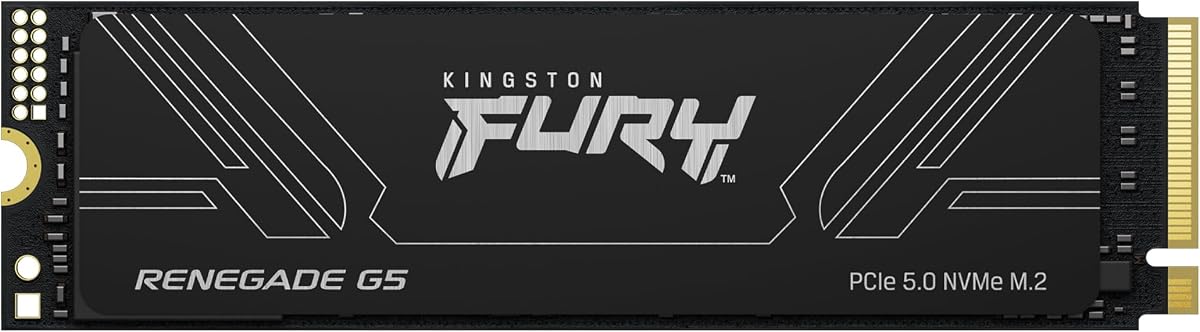
The Kingston Fury Renegade 1TB earns a 4.8 rating and is among the strongest choices here for a performance-oriented gaming desktop. It reaches up to 7,300 MB/s over PCIe 4.0 Gen 4×4, giving it a clear speed advantage over mainstream PCIe 4.0 and PCIe 3.0 alternatives. The 1TB capacity remains practical for a modern game library, although a larger model may be preferable for extensive collections.
We may earn a commission when you buy through this link, at no additional cost to you.
Its included heat sink is especially notable. A high-performance NVMe drive can produce enough heat to affect sustained behavior, and this package directly addresses cooling in a desktop build. The slim M.2 2280 dimensions help it fit conventional motherboards, while the stated PS5 Ready status extends its relevance to compatible PlayStation 5 installations and gaming use cases.
Physical clearance deserves attention. Some motherboards place the M.2 socket beneath a graphics card, large heatsinks, or other components, so buyers should confirm available space for the heat-sink profile. The drive is also optimized for systems that can support the full PCIe 4.0 interface; a Gen 3-only slot will limit performance.
This is the recommendation for gamers and enthusiasts who want more throughput than a general NV3 or KC3000 installation, particularly when the included thermal hardware and gaming focus are valuable. It is less compelling for basic office use, where the extra performance may not change the experience.
A read speed of up to 7,300 MB/s gives the Fury Renegade a strong advantage for large game assets and demanding transfers. The practical benefit depends on compatible hardware, software, and workloads, but the specification clearly targets fast PCIe 4.0 systems.
The included heat sink makes thermal management more convenient than installing an optional cooler separately. Users should still verify motherboard clearance and ensure airflow is not obstructed after installation.
We may earn a commission when you buy through this link, at no additional cost to you.
The Kingston Fury Renegade G5 4TB is the most ambitious drive in the guide, combining a 4.7 rating with a 4TB capacity and PCIe 5.0 performance. Its stated sequential read speed reaches 14,800 MB/s, while write speed reaches 14,000 MB/s. That level of specification positions it for advanced desktops, content creation systems, and enthusiasts building on Gen 5×4 motherboards.
We may earn a commission when you buy through this link, at no additional cost to you.
Capacity is the other defining advantage. A 4096GB drive can accommodate a large operating system, creative assets, applications, and extensive game data without forcing frequent manual file management. The G5's advanced thermal design uses an SM2508 controller built on 6nm lithography, low-power DDR4 cache, a Buck IC, and a 12-layer PCB to promote efficient cooling, stable power, and reliable performance.
Those features also make compatibility essential. The drive requires an M.2 2280 slot with Gen 5×4 support to reach its advertised performance. Systems without that interface can still use a compatible M.2 slot, but the headline speed will be reduced. A Gen 5 SSD also deserves a motherboard and enclosure arrangement capable of managing sustained heat.
The G5 is ideal for a user who values both capacity and top-tier speed, especially one creating a high-end workstation or gaming system around current PCIe 5.0 hardware. For a conventional PC, its capabilities are likely excessive, making one of the faster PCIe 4.0 models a more sensible investment.
The 14,800 MB/s read and 14,000 MB/s write specifications are intended for systems with Gen 5×4 support. Such throughput can benefit large transfers and demanding applications, provided the rest of the platform is capable of sustaining the advertised interface.
The 4096GB capacity is unusually generous and supports extensive game libraries, project files, and applications. It also reduces the need to divide a high-end build's storage between several drives.
We may earn a commission when you buy through this link, at no additional cost to you.
The Kingston NV3 1TB 2230 provides the same headline NV3 read speed of up to 6,000 MB/s in a much shorter M.2 2230 form factor. Its 4.7 rating and high-speed, low-power positioning make it relevant to compatible handheld gaming devices and small-form-factor PCs, where standard 2280 drives cannot fit.
We may earn a commission when you buy through this link, at no additional cost to you.
The practical appeal is straightforward: it adds substantial internal storage without requiring a full-size drive. A 1TB configuration offers room for a more complete game collection, applications, and system data, while the stated capacity range extends up to 2TB. The Gen 4×4 interface also allows the drive to take advantage of compatible newer platforms.
Compatibility is the decisive issue. M.2 is a family of physical formats, and a 2230 drive requires a precisely matched slot, mounting arrangement, and device support. Buyers should not assume that the drive will fit merely because their device uses M.2 storage, and they should check the manufacturer's supported configurations.
This is the right selection for a user with a confirmed 2230-compatible handheld or compact PC who wants more than a small auxiliary drive. It is not a general-purpose desktop choice, but in the intended devices it delivers a useful combination of capacity, compactness, and high stated performance.
The 2230 format is well suited to devices where board area is limited. It allows a compatible handheld or compact PC to carry a meaningful 1TB of storage without the footprint required by a standard 2280 module.
An up-to-6000 MB/s read specification shows that the compact format does not have to be limited to modest storage. Actual results still depend on the host device's controller and interface support.
We may earn a commission when you buy through this link, at no additional cost to you.
The Samsung SSD 990 PRO 1TB is included as a relevant non-Kingston alternative for readers comparing the strongest mainstream NVMe options. It carries a 4.7 rating and reaches up to 7,450 MB/s sequential read speed, placing it in the same broad performance class as the Kingston Fury Renegade.
We may earn a commission when you buy through this link, at no additional cost to you.
Its published specifications are strong across sequential and random operations. Samsung states read and write speeds of up to 7,450 and 6,900 MB/s, random performance of up to 1,400K and 1,550K IOPS, and improved performance per watt compared with the 980 PRO. A nickel-coated controller is intended to provide effective thermal control, while Samsung Magician offers drive monitoring, optimization, and updates.
The product also targets gaming platforms, including compatible PS5 and DirectStorage PC games, and its slim M.2 2280 format suits desktops and laptops that meet the PCI-SIG D8 standard. The trade-off for readers specifically seeking a Kingston product is obvious: this is an alternative brand rather than a member of the Kingston range.
It remains useful as a comparison point because its stated performance sits close to the Fury Renegade. Buyers should choose it when its broader software, efficiency claims, or established platform support align with their needs, while Kingston-focused shoppers should favor one of the Kingston options in this guide.
The 990 PRO's 7,450 MB/s read and 6,900 MB/s write specifications place it among the faster PCIe 4.0 options here. Its random performance claims further support use in demanding desktop and gaming environments.
Samsung Magician provides a dedicated interface for monitoring drive health, applying optimization, and receiving updates. The nickel-coated controller and slim design are intended to balance thermals with compatibility in desktop and laptop installations.
We may earn a commission when you buy through this link, at no additional cost to you.
The Kingston Gaming 128GB 2230 targets a specialized but common need: adding compact internal storage to a compatible Stream Deck, laptop, or desktop. Its 4.3 rating is the lowest among the products reviewed, which is understandable given its modest capacity and narrower use case compared with full-size 1TB and 2TB drives.
We may earn a commission when you buy through this link, at no additional cost to you.
The most distinctive feature is compatibility with Stream Deck hardware. A 2230 module can be useful in supported products where additional internal storage is needed for accessories, profiles, media, or other device data. Its stated compatibility with laptops and desktops broadens the possible audience, although users should verify the exact fit and connector arrangement of their device.
The main limitation is capacity. At 128GB, this drive is not intended to serve as the primary storage for a modern operating system, a large game library, or extensive creative work. It is better suited to auxiliary storage, a device-specific role, or a lightweight system where the available storage need is modest.
For a compatible Stream Deck user, it can solve a focused problem that a 2280 drive cannot. Everyone else should consider a larger-capacity option, but buyers who know they need a 2230 module for their specific hardware may find this drive appropriately focused and practical.
Unlike general-purpose M.2 drives, this product is explicitly associated with Stream Deck compatibility. That makes it easier for a buyer with the relevant hardware to identify a likely match for the device's storage slot.
The 128GB capacity is most useful for auxiliary data rather than primary system files. It can provide dedicated room for device assets without attempting to replace a larger general-purpose drive.
We may earn a commission when you buy through this link, at no additional cost to you.
The Kingston KC2500 250GB is a fast PCIe 3.0 drive with a 4.6 rating and a compact M.2 2280 profile. It uses a Gen 3.0 x4 controller and 96-layer 3D TLC NAND, delivering stated read and write speeds of up to 3,500 and 2,900 MB/s. Those figures remain useful for older and mainstream systems that do not support the newest NVMe generations.
We may earn a commission when you buy through this link, at no additional cost to you.
Its standout feature is security. Hardware-based XTS-AES 256-bit encryption supports end-to-end data protection, while compatibility with TCG Opal 2.0 management tools allows third-party security software to manage the drive. Built-in Microsoft eDrive support is another advantage for systems using BitLocker, making this option particularly relevant to professional and security-conscious users.
The trade-off is capacity and generation. A 250GB drive leaves limited room for operating systems, games, and modern applications, and PCIe 3.0 is substantially slower than the Gen 4 and Gen 5 selections. The drive may therefore make the most sense as a dedicated secondary drive in a workstation or as an upgrade for a system whose own slot and controller limit newer options.
Buyers who require strong storage security, already have suitable PCIe 3.0 infrastructure, and need a secondary drive should give the KC2500 serious consideration. For a new high-capacity gaming build, one of the NV3, KC3000, or Fury Renegade models offers a more contemporary balance.
XTS-AES 256-bit hardware encryption and TCG Opal 2.0 support distinguish the KC2500 from many capacity-focused alternatives. These features suit users who manage sensitive business or workstation data.
Stated speeds of 3,500 MB/s read and 2,900 MB/s write are strong within PCIe 3.0. The drive can provide a significant storage upgrade over SATA in a compatible M.2-equipped system.
We may earn a commission when you buy through this link, at no additional cost to you.
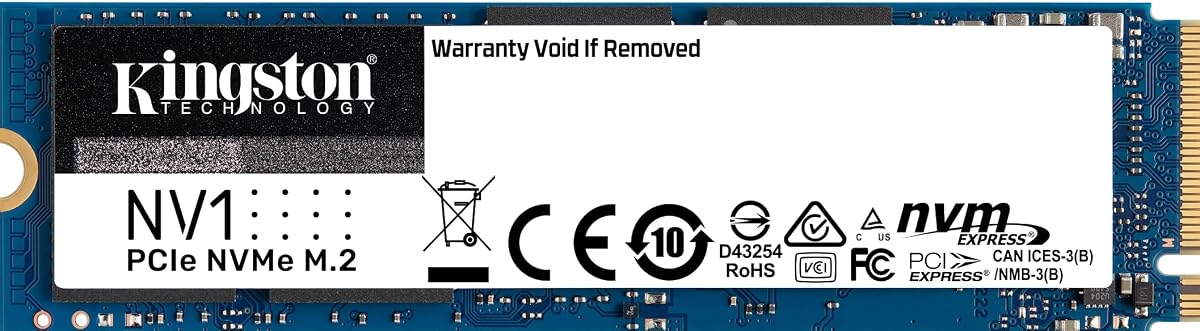
The Kingston NV1 2TB emphasizes capacity and everyday responsiveness rather than maximum throughput. Its 4.7 rating is strong, and the standard M.2 2280 format gives it broad relevance for laptops and small-form-factor PCs. The 2TB capacity is particularly useful for users who need more room than a smaller system drive can provide.
We may earn a commission when you buy through this link, at no additional cost to you.
Stated read and write speeds reach 2,100 and 1,700 MB/s. That is enough to deliver the responsiveness associated with NVMe storage, especially compared with a SATA drive, but it falls well behind the NV3 and Fury Renegade models. The result is a drive that can suit a broad upgrade where power efficiency, storage volume, and dependable everyday performance matter more than maximum transfer speed.
Capacity does bring a few trade-offs. Users planning a large game library or many creative files should still monitor free space, while a 2TB drive can serve as a secondary drive in a desktop with multiple storage slots. It also uses the full-length 2280 format, so it cannot replace a shorter 2230 module.
The NV1 2TB is a convincing choice for a laptop or compact PC that needs a generous storage increase without moving to a premium high-speed model. It is also a sensible secondary drive for media, projects, or a less frequently accessed game library, provided the slower interface does not undermine the intended workflow.
The 2TB capacity gives users room for larger local libraries and working sets. It is a more useful starting point than a small drive when the system also handles applications, system files, and personal media.
The NV1 is positioned for laptops and small-form-factor PCs, where efficient NVMe storage can be more valuable than headline performance. Its stated interface and physical format still need to match the target machine.
We may earn a commission when you buy through this link, at no additional cost to you.
The Kingston NV1 500GB offers a middle ground between compact capacity and everyday flexibility. Its 4.8 rating is tied for the highest among the reviewed products, while the M.2 2280 format and stated performance suit compatible laptops and small-form-factor PCs.
We may earn a commission when you buy through this link, at no additional cost to you.
The drive provides up to 2,100 MB/s read speed and 1,700 MB/s write speed, matching the performance figures of the larger NV1 2TB. That makes it a straightforward way to add responsive NVMe storage to a system without moving to a more expensive high-speed interface. At 500GB, it offers enough room for an operating system, applications, and a focused collection of games or work files.
Capacity is its most visible limitation. Users with rapidly expanding game libraries, large media collections, or professional project files may fill 500GB quickly and consider a 1TB or 2TB alternative. The relatively modest sequential figures also mean it will not exploit a PCIe 4.0 system as fully as the NV3, KC3000, or Fury Renegade.
It is a good match for a compatible compact PC that needs a practical upgrade without premium specifications. The high rating supports its general appeal, but actual suitability ultimately comes down to capacity, physical fit, and the performance level required by the owner's workload.
500GB offers more room than a minimal auxiliary module while remaining accessible for general-purpose upgrades. It works well for systems that need the operating system and a manageable library on one drive.
The 500GB model shares the NV1's stated speeds of up to 2,100 MB/s read and 1,700 MB/s write. That consistency helps buyers understand what to expect when comparing it with other capacities in the family.
We may earn a commission when you buy through this link, at no additional cost to you.
The Kingston KC3000 1TB is the standout conventional 2280 option in the guide, holding the highest listed rating at 5.0. Its specifications reach up to 7,000 MB/s sequential read speed and 6,000 MB/s write speed, placing it close to the Fury Renegade while retaining a straightforward internal SSD format.
We may earn a commission when you buy through this link, at no additional cost to you.
The 1TB capacity is a useful sweet spot for a gaming or productivity system. It provides room for the operating system, applications, and a substantial collection of games without requiring a high-capacity premium model. The product is listed as compatible with notebooks, while the standard M.2 2280 shape also suits many desktop motherboards that provide an appropriate socket.
As with other high-speed drives, the platform must be ready. A PCIe 4.0 system can make the best use of these figures, while an older interface will reduce performance. No heat sink is listed with the product, so users should confirm that the enclosure or motherboard offers sufficient thermal management and unobstructed airflow.
The KC3000 is a strong final recommendation for a builder seeking premium throughput without stepping into PCIe 5.0 hardware. It is particularly appealing for high-speed game storage, working files, and other transfer-intensive tasks, provided the computer supports the drive properly.
Read speed of up to 7,000 MB/s and write speed of up to 6,000 MB/s place the KC3000 among the fastest conventional options in the guide. Compatible PCIe 4.0 systems can make the most of its potential.
A 1TB drive offers a versatile capacity for a primary system role. It accommodates applications and a meaningful game library while avoiding the extreme space requirement of a 4TB premium model.
We may earn a commission when you buy through this link, at no additional cost to you.
Choosing an internal NVMe SSD requires matching the drive's interface, physical format, capacity, and thermal characteristics to the target computer. The most important first step is identifying exactly what the host device supports.
M.2 describes a connector and family of board sizes rather than one universal module. The 2280 format used by most desktop and laptop SSDs is 22 millimeters wide and 80 millimeters long, while the shorter 2230 module measures 22 by 30 millimeters. The Kingston NV3 2230 and Gaming 128GB 2230 are therefore not drop-in replacements for standard 2280 drives. Check the system manual, replacement guide, or manufacturer support page for the required length, mounting positions, and clearance around the slot. A connector that physically accepts a module may still require a different mounting point, and a heat-sink-equipped drive can need more vertical space than a bare board.
PCIe generation determines the theoretical bandwidth available to an NVMe drive, but the slower side of the connection ultimately limits performance. A PCIe 4.0 drive can operate in a Gen 3 system, although its headline read and write speeds will be reduced. The KC2500 targets PCIe 3.0 x4, while the NV3 and Fury Renegade target Gen 4×4 and the Renegade G5 requires PCIe 5.0 x4 for its advertised performance. Review the motherboard, laptop, or handheld specifications for both the protocol and lane arrangement. Also consider the CPU and system controller, because an M.2 slot can be physically present without delivering the full interface speed implied by the drive's packaging.
Capacity should reflect the operating system, applications, game library, creative files, and any media the drive must hold. The 128GB Gaming 2230 is purpose-built for a limited auxiliary role, while the 250GB KC2500 is best viewed as a secondary or constrained option. The 500GB NV1 provides a middle ground, and 1TB models serve as versatile starting points for active systems. If maintaining a large game collection or working with extensive media, the 2TB NV1 or 4TB Fury Renegade G5 offers more room. Capacity also affects how quickly free space can disappear, so buyers should avoid selecting a model that leaves too little room for routine operating-system and application updates.
Sequential read and write figures describe sustained transfer of large, ordered data and are often the headline specifications. Random performance, measured through operations per second or IOPS, matters for applications that perform many small reads and writes. The Samsung 990 PRO lists up to 1,400K read IOPS and 1,550K write IOPS, showing why it is useful in the comparison even though it is not a Kingston product. For ordinary system use, all of the drives are substantially more responsive than SATA storage, but fast random performance becomes more relevant for content creation, databases, development, and heavily multitasking systems. Read the published specifications in context rather than treating one maximum figure as the only measure of real-world performance.
Faster PCIe drives move more data per second and can generate meaningful heat, especially during sustained transfers. The Fury Renegade includes a heat sink, giving it an advantage for builders who want a ready-made cooling solution. Other models may rely on airflow from the computer, a motherboard M.2 heatsink, or a compatible enclosure. Check whether adding a heat sink will conflict with a graphics card, CPU cooler, or side panel, and make sure the drive is installed in a position with reasonable airflow. Thermal management helps a drive maintain consistent performance and contributes to long-term reliability, so it should be considered even when a computer appears to have several unused M.2 slots.
The standard 2280 drive is the most flexible choice for desktop builders because it is used in a large number of motherboards and laptops. The Fury Renegade, KC3000, NV3 2280, NV1 models, and KC2500 all use this format. The 2230 options serve narrower but important use cases involving handhelds, small-form-factor PCs, and compatible Stream Deck hardware. A system may support one 2230 socket alongside a full-length slot, in which case matching the correct module becomes essential. Avoid buying based only on the M.2 label. The connector, length, mounting screw position, thermal clearance, and manufacturer support list all determine whether the drive can be installed as intended.
Included or downloadable utilities can make a drive easier to configure, monitor, and maintain. The Kingston NV3 includes Acronis cloning software, which is useful when copying an existing installation during a system upgrade. The Samsung 990 PRO is supported by Samsung Magician for health monitoring, optimization, and updates, providing useful context when comparing brands. The KC2500 stands apart for hardware-based XTS-AES 256-bit encryption, TCG Opal 2.0 support, and Microsoft eDrive support for BitLocker environments. These features matter most when cloning a system, managing drive health, or protecting business data; ordinary gaming users can prioritize capacity and speed instead.
A warranty provides useful context for the expected support period, and the NV3 1TB 2280 includes a five-year limited warranty. The number of years is only one part of the decision, however, and buyers should also review the manufacturer's published terms, support resources, and firmware approach. Platform fit remains equally important. The Fury Renegade G5 is explicitly aimed at desktops and motherboards with Gen 5×4 support, while the Fury Renegade's heat sink needs physical clearance. The KC3000 is listed for notebook compatibility, and the 2230 drives require exact device support. A capable interface, suitable slot, adequate cooling, and a supported operating system should all be confirmed before buying.
Before installation, back up important data, shut down the computer completely, disconnect its power source, and consult the device documentation. Confirm that the M.2 slot accepts the drive's length and that the computer supports the required PCIe generation. Remove the appropriate side panel or access cover, identify the M.2 socket, and note its mounting screw or retention mechanism.
Insert the SSD at the angle required by the socket, align the connector and mounting hole, and secure it without forcing it. If the model includes a heat sink, install that according to its instructions and confirm that it will not interfere with other components. Replace any access panel, reconnect power, and enter the computer's BIOS or UEFI to verify that the drive is detected before transferring or restoring data.
For a new system drive, use the operating system's installation or cloning process, and consider the Acronis software included with the NV3 when cloning an existing installation. After setup, confirm that the system recognizes the full advertised capacity, update the drive firmware when the manufacturer provides an applicable update, and maintain current system backups. Avoid abrupt shutdowns during critical writes, keep the operating system and drive firmware updated, and provide adequate airflow around high-speed models.
A Kingston NVMe SSD can be substantially faster than a SATA SSD because it uses the PCI Express interface instead of the older SATA connection. The exact advantage depends on the drive, host interface, file size, and workload. Even the NV1's stated read speed of up to 2,100 MB/s is well above typical SATA transfer rates, while newer Gen 4 and Gen 5 models offer considerably higher ceilings.
A compatible PCIe 5.0 M.2 SSD can usually be used in a PCIe 4.0 system, provided the slot supports the drive's physical format and M.2 NVMe protocol. It will operate below its Gen 5 headline speed because the older interface is the limiting factor. The Kingston Fury Renegade G5 is most appropriate when the motherboard specifically supports Gen 5×4.
The numbers indicate a module's physical dimensions: 2230 is 22 millimeters wide and 30 millimeters long, while 2280 is 22 millimeters wide and 80 millimeters long. The shorter format is used by compatible handhelds, compact PCs, and some Stream Deck devices. A 2230 drive cannot be installed in a standard 2280 slot without the correct physical hardware and mounting support.
The best choice depends on the laptop's supported M.2 length and interface. The 2280 NV1 models are explicitly positioned for laptops and small-form-factor PCs, while the KC3000 is also listed as notebook compatible. A 2230 model may be required by some compact systems. Check the manufacturer documentation for slot length, PCIe generation, thermal clearance, and supported capacities.
A heat sink is not always required, but it can be valuable for high-speed drives that operate under sustained loads. The Fury Renegade includes one, while the KC3000 and NV3 do not list an included heat sink. Motherboard M.2 shields, case airflow, and the placement of the slot all affect cooling needs. Ensure any added heat sink fits beneath the graphics card or other components.
A 1TB drive is a common starting capacity for an operating system, applications, and a moderate game library. It can fill quickly as high-resolution games and updates accumulate, so buyers with larger collections may prefer the 2TB NV1 or 4TB Fury Renegade G5. The best choice also depends on whether the drive is the primary system disk or one of several storage devices.
The Kingston NV3 1TB 2280 includes Acronis cloning software, which can help copy an existing installation to the new drive. The exact process depends on the operating system, source drive, and software version, so users should follow the included instructions. A verified backup should be maintained before making major changes to a boot drive.
Check the motherboard or computer manual for the M.2 slot specifications, supported physical sizes, and PCIe generation. For a laptop, the manufacturer's service or upgrade guide is usually the clearest source. Also verify the number of available M.2 slots, whether one is reserved for wireless cards, and whether a heat sink or mounting hardware is required.
The Kingston NV3 1TB 2280 is the most balanced mainstream choice, combining up to 6,000 MB/s read speed, useful cloning software, and a five-year limited warranty. The Fury Renegade 1TB is the stronger gaming-focused option, with up to 7,300 MB/s and an included heat sink, while the KC3000 1TB delivers premium 2280 performance with a 5.0 rating.
Compatibility should take priority over headline speed. Users should first identify the required 2230 or 2280 size, confirm the PCIe generation, and check cooling clearance. Capacity should come next: the 128GB Gaming model is specialized, the 250GB KC2500 emphasizes security, and 1TB, 2TB, and 4TB choices serve increasingly demanding libraries and workflows.
Finally, readers should compare current prices, availability, warranty terms, and recent product details before ordering. SSD pricing and bundled configurations can change, while installed performance also depends on the host system. A drive that fits the device and suits the workload is more valuable than a faster model whose specifications the computer cannot fully use.