
Otag GPS Tracker for Kids 2 Pack
4.4Editor score
Apple Find My network support
Lightweight hidden anti-removal tags
Long-lasting replaceable batteries
Discover the best GPS tracker for special needs adults, with 10 expert-reviewed options compared for safety, battery life, ease of use, and features today.
GPS trackers for special needs adults can provide caregivers with greater visibility, faster response times, and reassurance when supporting someone who may wander, become disoriented, or have difficulty communicating. The most useful device is not simply the one with the most features, but the one that balances accurate location updates with a secure, comfortable, and manageable wearing method.
We compared ten trackers based on the supplied product specifications, including location technology, anti-removal design, waterproofing, battery claims, subscription requirements, alert features, caregiver access, and compatibility with Apple or Android devices. The list covers wearable tags, compact trackers, watch-style products, and devices intended for broader personal or vehicle use.
Each review explains how the tracker fits into a special-needs safety plan, where its design offers advantages, and where limitations may matter. Reader ratings and product details can change over time, as can pricing, availability, app behavior, and network performance, so shoppers should verify current information before purchasing.
4.4Editor score

4.1Editor score

3.4Editor score
The table below compares all ten trackers by wearing method, location platform, alert capability, and ongoing service requirements. It makes differences in Apple-only compatibility, anti-removal construction, waterproofing, real-time updates, and battery life easier to assess before choosing a device.



AngelSense combines GPS location monitoring with a caregiver-controlled wearing system, making it the most purpose-built option in this guide for adults with autism, dementia, intellectual disabilities, or other conditions that increase wandering risk. It carries a 4.1 rating, and its distinguishing feature is the non-removable magnetic securing sleeve, which can be released only with a caregiver key. That approach addresses a common weakness of adhesive trackers: an impulsive or unaware wearer may pull them off before a caregiver notices.
We may earn a commission when you buy through this link, at no additional cost to you.
The supplied feature list emphasizes more than a map marker. The app provides live location, full daily routes, location history, and AI-powered notifications for unexpected departures, unfamiliar locations, and late arrivals. Because it monitors patterns rather than waiting for a caregiver to notice a problem, the system may be particularly useful in daily routines where timing deviations matter. A built-in speakerphone also auto-answers caregiver calls, allowing a check-in, calming message, or direction without requiring the wearer to press a button. That can be valuable when the person has limited motor control, communication difficulties, or a tendency to ignore unfamiliar devices.
The trade-off is the mandatory paid service. The listed information says the first month is free before a monthly subscription with a one-year contract is required, and the service includes the SIM card, unlimited tracking, voice minutes, and premium safety features. Buyers should determine whether the combination of continuous tracking, direct communication, and pattern monitoring justifies a recurring expense. The adult user must also tolerate the secured sleeve; no tracker can guarantee comfort if a person strongly objects to a particular wearing method, and the key-based removal system requires caregivers to manage the device consistently.
This is the strongest recommendation for households seeking a structured wandering-prevention system rather than a general item finder. It is especially useful when multiple caregivers need a shared view, when daily routines are predictable, or when a person benefits from hearing a familiar voice during a stressful episode. Those who only need a low-cost locator for a backpack, suitcase, or vehicle should look toward the subscription-free Find My options later in the guide. For an adult who needs active monitoring, however, AngelSense offers the most complete safety-oriented feature set in this roundup.
The magnetic sleeve is intended to make removal a deliberate caregiver action rather than an impulsive user action. That can reduce accidental loss, although caregivers still need to balance security with the adult's comfort and sensory needs.
The auto-answering speakerphone enables caregiver-initiated check-ins without button pressing. It may support calming and guidance, although families should introduce the function in advance and confirm that the wearer is comfortable hearing a device speak.
We may earn a commission when you buy through this link, at no additional cost to you.
This mini locator watch band offers an approachable way to monitor a child, teenager, older adult, or person with special needs without introducing a recurring subscription. Its 3.4 rating is the lowest among the ten products, but that figure should be interpreted alongside its practical feature set. The tracker is designed around Apple's Find My ecosystem, allowing an iPhone user to open an existing application rather than learn a separate paid platform. The waterproof watch band and real-time location capability make it a simple option for everyday routines.
We may earn a commission when you buy through this link, at no additional cost to you.
The main convenience is the absence of monthly fees. That matters for families that want dependable location history without maintaining another account or service agreement. Because the device uses Find My, its functionality will also depend on the features and privacy behavior of Apple's network. The supplied description does not mention geofencing, caregiver voice calls, historical route reporting, or a caregiver-keyed anti-removal mechanism. Its watch format may be less discreet than a hidden tag, and it may be easier for a wearer with sensory sensitivity or a strong dislike of wristwear to remove.
There are other limitations to consider. It is an iOS-centered product, so Android households should not assume they can use the same Find My workflow. A watch band also needs a fit that remains secure during sleep, exercise, bathing, and normal daily movement. The description's waterproof wording is a positive, but specific users should still evaluate whether a watch-style device suits the person's routines, skin sensitivity, and ability or willingness to wear it. Its lower rating suggests that prospective buyers should examine current customer feedback for details not visible in the product summary.
This tracker is best for a budget-conscious caregiver who uses Apple devices, wants real-time location information, and prefers a familiar watch form. It is also a practical starting point for monitoring a backpack, travel routine, or lower-risk support situation where advanced alerts and secure removal are less important. Families managing a high likelihood of wandering may benefit more from a tracker with anti-removal hardware, geofencing, and caregiver-controlled communication. Subject to those expectations, it delivers a clear, uncomplicated way to keep an eye on a loved one.
Using Find My can simplify setup for Apple users who already understand the interface. Confirm that every caregiver who needs access has a compatible Apple device and appropriate Find My sharing permissions before relying on the tracker.
The watch-band format is visible and familiar, which may make it easier for a person to understand than a concealed tag. Its suitability depends on comfort, fit, and the user's willingness to wear a device consistently.
We may earn a commission when you buy through this link, at no additional cost to you.
Family1st is a compact GPS tracker designed specifically for caregivers of elders and adults with special needs, and it carries a 3.4 rating. Its defining features are round-the-clock monitoring, live tracking, safe-location geofences, detailed location and travel reports, and notifications delivered by email or SMS. The supplied information also states that the service is accessible through iOS, Android, and desktop applications, making it a more platform-flexible choice than products that rely exclusively on Apple Find My.
We may earn a commission when you buy through this link, at no additional cost to you.
The included pouch and lanyard are practical additions. A caregiver can select how the device is carried, place it in a pocket, attach it to a lanyard, or keep it in a suitable pouch. That flexibility can make the tracker useful for a person who does not consistently tolerate wristbands or clothing clips. Email and SMS alerts add another layer of visibility, while customizable safe areas can help identify unexpected departures. Detailed travel reports may also help families review movements after an outing or establish a clearer picture of a person's usual routes.
The subscription is a substantial consideration. The supplied plan description identifies a monthly service that includes a SIM card and safety features, so the hardware is only part of the ongoing system. More importantly, no anti-removal mechanism is specified. A lanyard or pouch can deter casual removal, but it does not guarantee that an adult with dementia, impulsivity, or limited understanding of danger will keep the tracker in place. The 3.4 rating also warrants checking recent customer comments for the reliability of alerts, app behavior, battery performance, and support.
Family1st is a solid candidate for caregivers who value geofencing, reports, and multi-platform access more than a subscription-free setup. It may suit a cooperative adult who can keep a lanyard or pouch on without resistance. For a person with a high wandering risk, the buyer should consider whether the included carrying options are secure enough or whether an anti-removal tracker would create a better safety net. The device is best recommended as a reporting and monitoring tool within a broader care plan that includes identification, safe-area supervision, and clear caregiver response procedures.
Customizable safe locations can help caregivers identify departures from home, school, day programs, or familiar community sites. These alerts are most useful when a family defines a limited number of meaningful zones rather than too many overlapping boundaries.
The pouch and lanyard give caregivers more choice than a rigid wrist device. Their effectiveness still depends on fit, habit, and whether the wearer tolerates carrying the same item throughout the day.
We may earn a commission when you buy through this link, at no additional cost to you.
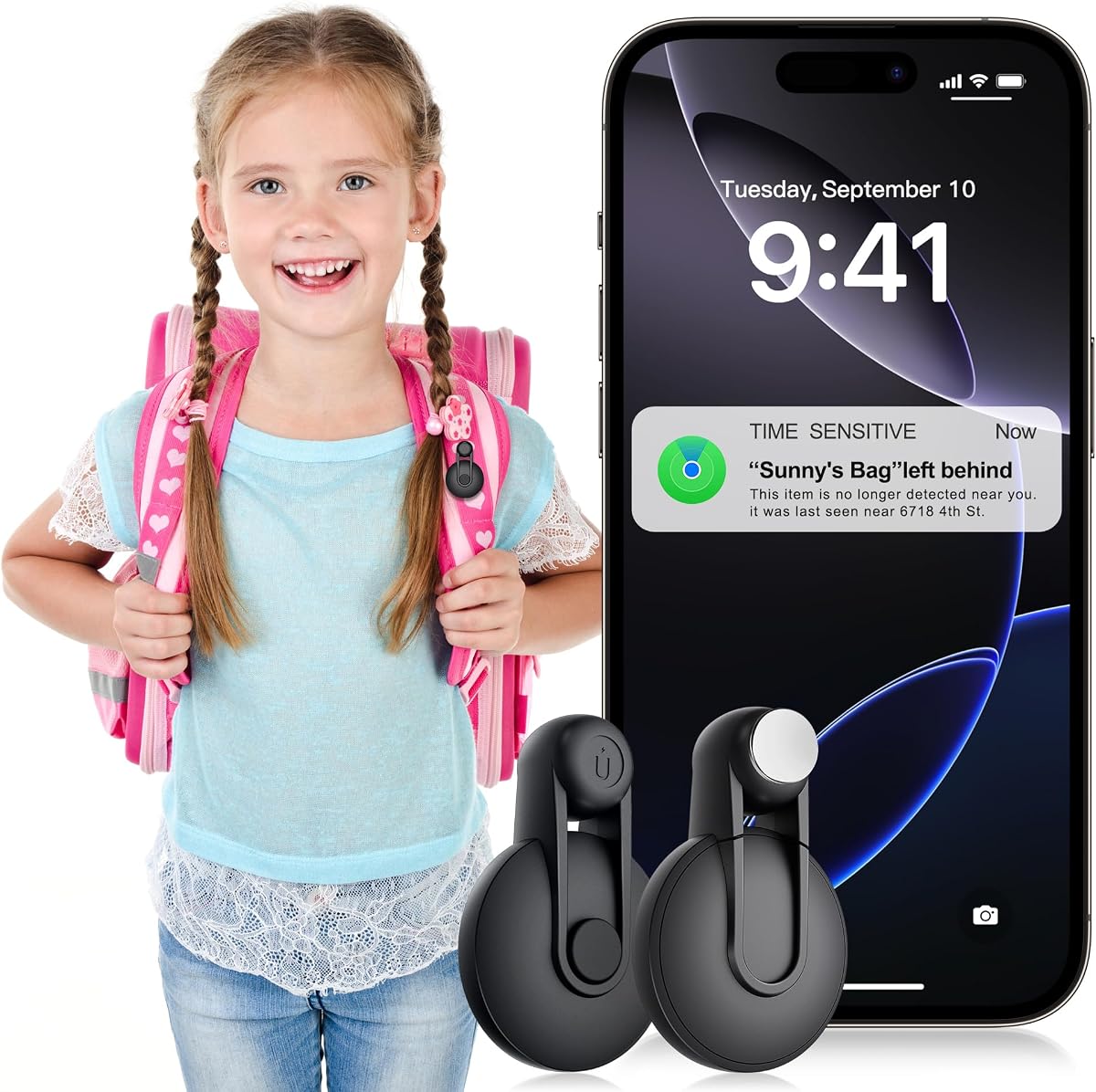
The Otag two-pack is a discreet Apple Find My tracker designed for children, older adults, pets, backpacks, vehicles, and other belongings. It has a 3.8 rating and includes two hidden tags with a special non-removable fastener and magnetic unlocker. For an adult who dislikes visible wearables, the low-profile form may be less noticeable than a watch. A two-pack also gives the household flexibility: one tag can remain on clothing while the other is used for a bag, travel item, or secondary placement.
We may earn a commission when you buy through this link, at no additional cost to you.
The supplied information highlights sharing with up to five trusted family members, teachers, or caregivers through Find My. That makes it possible to involve more than one responsible adult without maintaining several separate tracking accounts. The left-behind notification appears when the tracker moves beyond the stated 66-foot safe distance or loses its Bluetooth connection. A sound can help locate the tracker at close range, while the map shows its broader position. The tags use replaceable batteries advertised to last up to one full year, and each includes a preinstalled battery plus two additional batteries.
The main limitation is that the location is not genuinely real-time. The description states that refreshes occur every 15 minutes, a limitation imposed to conserve battery and consistent with Apple's privacy-oriented network behavior. That interval may be acceptable for checking a bag or monitoring casual movement, but it can be a significant limitation during an active search for a missing adult. The product is also iOS-only and requires a recent version of iOS, iPadOS, or macOS. Its anti-removal pin improves security, although proper placement remains essential to avoid skin irritation or an uncomfortable attachment.
This two-pack is well suited to families using Apple devices that want a low-cost, subscription-free system with multiple placement options. It is particularly useful for a person with sensory sensitivities who resists a watch, provided the caregiver can attach the tag discreetly and safely. It may also work well for travel, with one tag devoted to a person and another to luggage. It is not the strongest choice when a caregiver needs second-by-second location during a wandering emergency. For that use case, a cellular tracker with continuous updates and direct communication would offer a more appropriate safety margin.
Two units can prevent a single placement decision from limiting the entire system. Keeping one on clothing and another on a bag creates redundancy, while the second tag can be moved when the user's routine changes.
The stated 15-minute refresh interval reduces power use but should be considered in advance. During an urgent search, caregivers need a current last-known position and should not rely on a delayed map update without checking its timestamp.
We may earn a commission when you buy through this link, at no additional cost to you.
This four-pack offers a flexible, subscription-free way to track people and belongings using either Apple's Find My network or Android Find Hub. It carries a 3.5 rating and is aimed at children, seniors, pets, luggage, bicycles, strollers, and other valued items. For caregivers with mixed phone platforms, cross-platform support is a meaningful advantage over trackers that work only through an Apple device or a proprietary cellular application.
We may earn a commission when you buy through this link, at no additional cost to you.
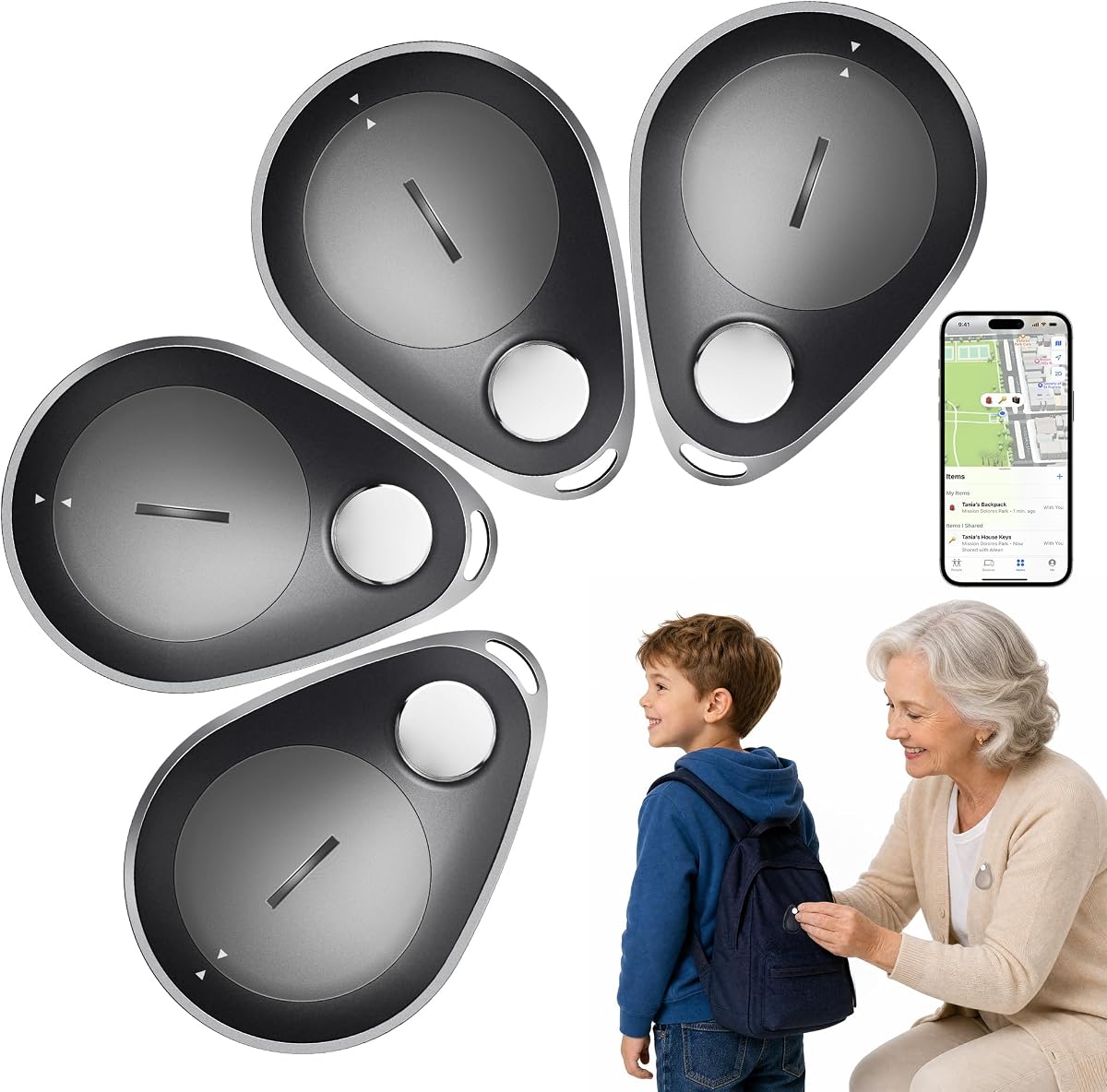
The anti-removal pin uses a tamper-resistant design and a magnetic unlocker, making removal less likely if the wearer attempts to pull the tracker away. The compact form can be attached to clothing, backpack straps, collars, or jacket areas. Four units give a household several options at once: one could stay on an adult, another on a wheelchair bag, and the others on travel luggage or a vehicle. The tracker also supports sharing with up to six trusted family members and sends a left-behind alert when the Bluetooth connection drops.
As with the other Find My-based tags, location refreshes occur every 15 minutes, which makes this more appropriate for general awareness than a continuous emergency feed. The description explicitly notes that it is ideal for belongings and loved ones rather than real-time vehicle tracking. Each unit uses a replaceable CR2032 battery advertised to last up to one year and includes spares. Families should also consider the battery compartment's intentionally difficult opening: it improves child safety but requires a capable adult to rotate it open. The four-pack can also create unnecessary tracking and battery-management work if only one or two locations need monitoring.
The tracker is a strong choice for a mixed-ecosystem household that wants several concealed tags without a recurring service charge. It may work particularly well for an adult who resists visible watches but accepts a lightweight attachment to clothing or a bag. Families should set clear placement rules, assign responsibility for checking battery levels, and test the left-behind notifications. For high-risk wandering situations, the product should serve as one layer of a broader response plan rather than the sole safety mechanism. Within that role, its no-fee design, sharing options, and four-unit flexibility are compelling.
Support for both major phone ecosystems makes the pack easier to distribute among relatives and professional caregivers. Each user still needs to install the appropriate network application and be granted location-sharing access.
Multiple tags can cover separate routes, caregivers, or possessions. The pack is most valuable when several items or people need tracking simultaneously; otherwise, fewer units may simplify battery checks.
We may earn a commission when you buy through this link, at no additional cost to you.
This compact GPS tracking device has the highest supplied rating at 5.0 and focuses on a small, waterproof form suitable for wrists, backpacks, and travel gear. It uses Apple Find My and requires no subscription, monthly fee, or SIM card. Its IP68 rating is a notable feature for adults who spend time outdoors or whose routines include rain, snow, bathing, or regular exposure to water. The device measures 1.3 by 1.3 by 0.3 inches and weighs 0.4 ounces, making it less conspicuous than a watch.
We may earn a commission when you buy through this link, at no additional cost to you.
The supplied information specifically discusses autism, sensory sensitivities, and special needs populations that may resist visible trackers. A non-removable buckle and strap offer a more secure attachment than a loose adhesive tag, while the tiny body may sit comfortably against clothing or a bag. Route history playback and time-period filtering help caregivers review paths, stops, and movement patterns. A disconnect notification alerts the caregiver when the device leaves Bluetooth range. The battery compartment is also designed to be difficult for children to open, reducing accidental exposure risks.
Despite the perfect 5.0 rating, buyers should interpret it as the supplied listing rating rather than a guarantee of every real-world outcome. This is an Apple-only product, and its location behavior is tied to Find My rather than a dedicated cellular network. The description is transparent that the device may remain detectable by professional equipment, which could matter for specialized safety programs. Anti-removal features also vary by attachment, and the user should confirm that the buckle is comfortable and does not irritate sensitive skin. The compact size may make it easier to overlook during a hurried removal, even with the secure strap.
This device is an appealing option for a caregiver who wants a small, waterproof, low-maintenance tag and already uses Apple devices. It may be particularly appropriate for backpack and clothing attachment when the wearer dislikes a watch. Before buying, verify the Find My version requirement, review the exact attachment method, and test the alert distance around the user's actual routine. For continuous cellular monitoring, geofencing, or voice communication, a dedicated service such as AngelSense or Family1st would be more suitable. For discreet everyday location awareness without recurring fees, this compact tracker ranks as a strong contender.
An IP68 rating makes the tracker better suited to rain, snow, and wet environments than a device with no stated water resistance. It does not replace sensible care, so users should still follow the manufacturer's handling and charging guidance.
The 0.4-ounce body and low-profile design may be less noticeable than a watch. Caregivers should test attachment comfort over several days because even a small device can become irritating if it shifts, traps moisture, or rubs against the skin.
We may earn a commission when you buy through this link, at no additional cost to you.
Trak4 is a rugged, rechargeable GPS tracker intended for vehicles, assets, and equipment, and it has a 4.1 rating. Although the product title does not emphasize special-needs wearers, its combination of global cellular coverage, long battery life, waterproof construction, and multiple positioning methods can support a broader safety strategy. A caregiver might place it in a wheelchair, mobility aid, vehicle, or equipment bag rather than directly on the person's body. That distinction matters because device placement determines both the usefulness and the acceptability of the tracking plan.
We may earn a commission when you buy through this link, at no additional cost to you.
Its internal lithium-polymer battery is advertised to operate for 12 to 18 months when reporting daily, a major advantage over trackers that need frequent recharging. The waterproof enclosure is designed for demanding conditions, while unlimited-distance 4G LTE coverage and fallback to 2G networks support tracking away from Wi-Fi. When GPS signals are weak inside buildings, Wi-Fi-based location technology can provide another positioning option. The USB-rechargeable format also makes the device more practical for long-term placement than a disposable coin-cell product.
The principal drawback is the required subscription. Buyers must consider both the hardware and the ongoing service before selecting it. The tracker is also bulkier than a hidden Find My tag and not presented as a sensory-friendly wearable, which may limit its use for someone who requires a body-worn solution. Placement in a bag or mobility device can work, but the tracked asset and the person are not necessarily in the same place. For a wandering adult, a caregiver still needs an immediate way to find the person, not just the vehicle or wheelchair, unless the device is securely worn.
Trak4 is best recommended as a complementary tracker for mobility equipment, a vehicle, or an asset that can remain with the user throughout the day. Its long battery life reduces the likelihood of a missed update caused by an empty battery, and the waterproof housing suits outdoor use. It is not the most obvious choice for a person who needs a discreet, continuously worn tag. Caregivers should confirm the device's dimensions, attachment options, and current service terms, and then decide whether its tracking coverage matches the specific wandering risk rather than assuming all device types are interchangeable.
The stated 12-to-18-month operating period assumes daily reporting and makes Trak4 appealing for long deployments. Actual runtime depends on network conditions and use, so families should still maintain a charging and inspection routine.
GPS can be less effective inside buildings, while the supplied Wi-Fi-based technology offers an additional source of location information. This combination can help when a tracked person or asset moves through homes, care facilities, or public interiors.
We may earn a commission when you buy through this link, at no additional cost to you.
This magnetic mini tracker has a 5.0 supplied rating and offers real-time location information without a monthly fee, subscription, or SIM card. Its strongest application is vehicle, motorcycle, luggage, and equipment tracking, although the product information also lists children, pets, elderly users, and personal use. The built-in magnet can hold the device under a car, inside a bumper area, or against another suitable metal surface, while the compact 1.3-inch body weighs only 0.5 ounces.
We may earn a commission when you buy through this link, at no additional cost to you.
The supplied information says the tracker supports both iOS and Android and can be paired through the built-in Find My or Works features. Once paired, unauthorized phones are not expected to locate it. A nearby alarm tone can help someone find a lost device or tracked item, adding a useful local search tool. The stated battery life is as long as 720 days and uses a replaceable lithium battery, although this unusually long figure should be evaluated against the exact configuration and reporting behavior a buyer receives. No anti-removal wearable system or dedicated caregiver alerting suite is described.
Its magnetic design creates an obvious trade-off. A tracker attached under a vehicle may remain secure, but it does not naturally follow an adult walking away from that vehicle. The same tracker could be carried personally, yet a powerful magnet is not a substitute for a strap, pouch, or secure tag intended for skin contact. The product's strong focus on vehicles also means caregivers should not assume it includes the geofencing, voice communication, or detailed wandering-alert functions offered by purpose-built services. As with any compact tracker, the actual location precision depends on network and environmental conditions.
This is a compelling option for a caregiver who also wants to monitor a vehicle, motorcycle, stroller, or other asset without recurring service costs. Its size, cross-platform support, magnetic mounting, and audible finder make it useful for several purposes. It is less compelling as the primary wandering solution for a special-needs adult because the attachment method is not designed for continuous body wear. A family could pair it with a concealed wearable tracker, but the devices should have clearly assigned roles. As a flexible no-fee asset tracker with a 5.0 rating, it adds useful coverage to a broader safety setup.
The built-in magnet is intended to resist vibration and accidental dislodging. Placement should still be checked after driving, weather changes, and cleaning, and the device should be installed where it will not interfere with moving or hot vehicle components.
The combination of stated real-time updates, cross-platform use, and no monthly service is attractive for vehicles and valuables. Families should review the app and location-refresh details before assuming the performance matches every other tracker in the guide.
We may earn a commission when you buy through this link, at no additional cost to you.
Utag is a four-pack of concealed anti-removal tags for the Apple Find My network, and its supplied rating is 4.0. It is designed to give caregivers and trusted relatives a shared view of a person's or item's location without monthly fees. The small form is aimed at children and adults with autism or sensory sensitivities who may resist obvious watches and wristbands. Each unit uses a pin locker that can be released with the included magnetic unlocker, helping the tag remain attached during active movement.
We may earn a commission when you buy through this link, at no additional cost to you.
The four-unit format creates several possible placements, including clothing, jackets, luggage, backpacks, bicycles, strollers, and vehicle interiors. Shared location access can include up to six trusted family members, and a left-behind alert appears when the tag disconnects from Bluetooth. Each tracker comes with a preinstalled CR2032 battery advertised to last a full year, along with two extra batteries. The battery compartment is designed to resist opening by children, and the product is described as GCC certified.
The product is explicit that it is not a real-time tracker. Location updates occur every 15 minutes under Apple's privacy framework, and it is not compatible with Android. That combination makes Utag appropriate for general awareness, travel support, and low-frequency check-ins, but not for a caregiver who needs a continuous cellular feed during an active wandering incident. The four tags can also create more administration than a household needs, while the concealed pin must be positioned carefully to avoid discomfort or skin irritation. Its rating of 4.0 is encouraging, but current user feedback should still be examined for the attachment and sharing experience.
Utag is a good fit for an Apple-based family that wants multiple low-profile tracking points and does not want a recurring charge. It may be especially useful for an adult who dislikes visible trackers but can tolerate a concealed attachment. The shared-access feature is valuable when siblings, relatives, teachers, or professional caregivers need a common location reference. Families should decide which items are most important to track, assign who checks shared locations, and keep a separate emergency procedure for immediate response. With those boundaries in place, the four-pack provides a useful no-fee layer of protection.
Allowing up to six trusted members to see location information can reduce confusion when several relatives are involved. Each person should still understand when updates occur and avoid treating a delayed position as a guaranteed live location.
The concealed pin-lock format avoids the visual bulk of a watch and may be less distracting. Its effectiveness depends on secure placement, gradual introduction, and checking for irritation beneath clothing.
We may earn a commission when you buy through this link, at no additional cost to you.
The two-pack version of Otag combines a 4.4 supplied rating with a discreet anti-removal design and no recurring fee. It is the most highly rated subscription-free option in the supplied data, making it a strong general recommendation for a family that wants more polish and flexibility than a basic locator. The two tags use Apple Find My and can be attached discreetly to clothing with a non-removable fastener released through a magnetic unlocker. That design is particularly relevant to adults with sensory sensitivities who may resist visible watches.
We may earn a commission when you buy through this link, at no additional cost to you.
The supplied feature set allows shared location access for up to five trusted family members, teachers, or caregivers. This is valuable in situations where more than one person has responsibility for the adult's safety. The left-behind notification is triggered when the tag moves beyond the stated 66-foot safe distance or loses its Bluetooth connection. At close range, a sound can help locate the device, while the map provides a broader position. The preinstalled CR2032 battery is advertised to last up to one year, and two spare batteries are included for each tag. The battery compartment requires adult-strength rotation, reducing the risk that a curious user will open it.
The principal trade-off is the 15-minute refresh interval. The description is clear that this is not real-time tracking, so it should not be treated as a substitute for a continuously updated cellular device during an emergency. It is also limited to the Apple ecosystem and requires recent operating-system versions. A second tag can be placed on a bag, coat, travel item, or another person, but each location should have a clear purpose. Caregivers must also test the attachment on different clothing, since an anti-removal pin that is too tight can cause discomfort while one placed loosely can move or fall away.
This Otag two-pack is best for an Apple user seeking a subscription-free, discreet tracker with multiple placement options and solid caregiver sharing. It works particularly well for adults who resist wrist devices and for families that want a backup tag for luggage or a mobility bag. It is less appropriate as the sole tool for active, continuous wandering monitoring because of the delayed updates. Caregivers should establish a check-in routine, confirm sharing permissions, and supplement the system with local emergency procedures. For a balanced no-fee setup, this is one of the most compelling choices in the guide.
A second tag can be placed on an important bag or retained as a backup, reducing the impact of an attachment being damaged or misplaced. The second unit should always have a clear owner and purpose to prevent confusion during an urgent event.
Sharing with up to five trusted contacts removes the need for multiple paid user accounts. Everyone should know that the displayed location may be delayed and should follow the family's agreed emergency procedure when the tag reports an unexpected separation.
We may earn a commission when you buy through this link, at no additional cost to you.
The right tracker should support a specific safety plan rather than simply provide a location dot. Consider the person's wandering patterns, sensory tolerance, device ecosystem, communication needs, and the response process available to caregivers before selecting a model.
Location frequency is one of the most important distinctions in this category. A continuously updated cellular tracker with a dedicated service can offer a current position and configurable alerts, while Find My-based tags commonly update on a privacy-based schedule. The Otag products and Utag four-pack explicitly state that their location refreshes every 15 minutes, and Utag expressly says it is not designed as a real-time tracker. That delay can be acceptable for travel, belongings, and routine check-ins, but it may create a meaningful gap during an active search. A caregiver should ask how quickly a device reports a departure and whether the last timestamp is visible in the app. For higher-risk wandering, continuous updates and historical route information generally deserve more weight than a low recurring cost.
A tracker that is easily removed cannot provide dependable protection. AngelSense uses a magnetic securing sleeve that opens with a caregiver key, while the Otag and Utag products use a pin-style fastener and magnetic unlocker. The Family1st tracker includes a pouch and lanyard but does not specify a caregiver-keyed release, and the watch band may be easier to take off. Secure attachment is especially important for adults with dementia, impulsivity, limited understanding, or a history of removing familiar objects. The design should still be comfortable, because a tight or irritating attachment can cause the wearer to seek its removal. Consider whether the device can be placed on clothing, a bag, a wheelchair, or another personal item, and test the connection during movement, bathing, sleep, and daily transit.
Special-needs adults often have specific sensitivities involving touch, visibility, sound, weight, or the feeling of being monitored. A concealed tag can be less noticeable than a watch but may create irritation where it is secured. A watch may be easier to monitor and charge but may be rejected as a visible symbol of supervision. The compact waterproof tracker is explicitly designed with sensory-sensitive users in mind, while Otag and Utag emphasize hidden placement. Before purchasing, consider the adult's preferences, skin condition, mobility, and ability to communicate discomfort. A successful tracker should be introduced gradually, checked for skin irritation, and integrated respectfully rather than used as a one-size-fits-all solution.
Geofencing creates virtual boundaries around home, care facilities, work sites, or familiar community locations. Family1st specifically offers customizable safe locations, geofencing, email and SMS notifications, and detailed travel reports. AngelSense provides AI-powered alerts for unexpected departures, unfamiliar locations, and late arrivals. These tools are more useful when caregivers establish a manageable number of meaningful zones and a clear response for each alert. Excessively broad or numerous boundaries can cause notification fatigue. Find My-based trackers can still be valuable for viewing history and receiving separation notices, but users should verify exactly which alert types are available in the native app and whether those functions meet the family's safety needs.
Hardware-only trackers avoid a recurring service, while dedicated cellular products often provide more frequent updates, dedicated geofencing, direct support, and specialized safety features. AngelSense and Family1st both require subscriptions, while several Find My options state that no monthly fee is needed. The decision should be based on total value rather than the purchase price alone. A family may accept a subscription for round-the-clock monitoring, voice communication, and configurable alerts, while another may prefer a no-fee tag for lower-risk check-ins. Review the current contract length, service activation, SIM coverage, included minutes, and cancellation terms. Subscriptions and platform policies can change, so the final choice should be checked at the time of purchase.
Platform compatibility can determine whether a tracker integrates naturally into an existing family setup. The Otag products, Utag four-pack, and compact waterproof tracker use Apple Find My and therefore require compatible Apple devices. Family1st supports iOS, Android, and desktop applications, while the four-pack anti-removal tracker supports both major mobile ecosystems. The magnetic mini tracker also states cross-platform support. Mixed-device households should consider whether every responsible caregiver can install the necessary app, understand location sharing, and receive notifications. Also consider future device changes: an Apple-only product may be convenient today but inconvenient if the family later switches phones or uses a mix of Android and Apple devices.
A tracker that requires constant charging can fail precisely when a caregiver needs it most. The Otag and Utag products use replaceable batteries advertised to last up to one year, while the Trak4 is rechargeable and described as operating for 12 to 18 months when reporting daily. The magnetic mini tracker uses a replaceable battery with a stated life of up to 720 days, although that claim should be evaluated in light of exact configuration and use. Maintenance requirements should match the household's capacity. Label devices, schedule battery checks, and record when each tracker was last inspected. Keep a spare tag or clear contingency plan for a failed battery, especially during travel, outings, or shifts in a shared care arrangement.
The conditions a tracker will face should influence the enclosure and attachment choice. The compact waterproof tracker has an IP68 rating, the Trak4 is described as waterproof and durable, and the mini watch band has waterproof bands. Water resistance is especially relevant for adults who bathe independently, exercise outdoors, live in wet climates, or may be exposed to rain during travel. A durable device is not automatically suitable for skin contact, however, and a tracker that falls into water can still suffer from long-term damage if seals are compromised. Caregivers should inspect attachments, seals, and charging contacts, follow the supplied care instructions, and replace damaged parts rather than relying on a product's general durability claim.
Begin by discussing the purpose of the tracker with the person whenever possible, using plain language that respects their preferences and privacy. Explain who can view location information, when alerts will occur, and how a caregiver will respond. If the tracker includes a speakerphone, test the volume and voice function in a calm setting before relying on it during a stressful event. A gradual introduction is usually less disruptive than attaching a new device and immediately expecting the person to tolerate it. Make sure the user knows that removing or damaging the tracker is not their fault, and establish a simple process for reporting discomfort or an incorrect alert.
Set up the device according to the manufacturer's instructions, then configure notifications, safe locations, sharing permissions, and account access. Use at least two authorized caregivers where possible, and test that each person receives alerts on their own phone. Walk through the home and other relevant locations to identify weak wireless coverage, then place a physical ID card and local emergency information in a bag. Establish a response protocol for an unexpected departure: confirm the last timestamp, contact the person calmly, alert another caregiver, and involve emergency services when there is immediate danger. The tracker should support that protocol rather than replace it.
For care and maintenance, follow the exact battery, charging, cleaning, and attachment instructions for the selected model. Check attachment pressure and skin condition frequently, especially during hot weather or after changes in clothing. Replace coin-cell batteries on a coordinated schedule, and record each replacement date. Clean the device with a suitable dry or slightly damp method without opening a sealed enclosure, and never charge a wet tracker unless its instructions explicitly permit it. Periodically verify the app, location accuracy, alert sound, caregiver sharing, and battery level. Retire or replace a device that no longer provides dependable updates, even if it still appears physically intact.
A device with continuous cellular updates, caregiver-keyed anti-removal protection, geofencing, and clear departure alerts is generally the most appropriate for a high wandering risk. AngelSense and Family1st offer the more service-oriented approaches in this guide, while Find My-based tags are better suited to routine awareness and lower-risk monitoring. The best choice also depends on whether the adult tolerates the device and whether caregivers can respond to alerts promptly.
Yes, several products in this guide state that they require no monthly subscription. The Otag, Utag, four-pack anti-removal tracker, compact waterproof tracker, and magnetic mini tracker use native location networks or apps without a recurring service. These options can reduce ongoing costs, but some update every 15 minutes and do not offer the dedicated voice communication, geofencing, or continuous cellular monitoring available from subscription services.
They can help with routine location awareness, travel monitoring, and finding a tagged bag, but they may not be sufficient alone for a high-risk wandering situation. The location update delay of 15 minutes, reliance on the Apple network, and lack of direct caregiver voice features can limit emergency usefulness. A dedicated tracker with continuous updates, geofences, and a caregiver-controlled attachment is generally more appropriate for a person with a history of disorientation.
A watch is easier to locate, charge, and visually monitor, but it may be rejected because of weight, visibility, sound, or skin contact. A hidden tag is less conspicuous and may suit sensory sensitivities, although its attachment can be uncomfortable or vulnerable to being pulled away. Consider the user's preferences, the availability of secure attachment methods, and how the device will be charged in daily routine.
Many products allow location sharing with several trusted contacts. AngelSense uses a multi-platform app, Family1st supports caregiver access through apps and notifications, Otag supports up to five shared members, the four-pack tracker supports up to six, and Utag also supports up to six. Each caregiver should use a separate authorized account, protect login credentials, and understand the timing of location updates.
Check the timestamp of the location before acting, confirm that the tracker is still attached, and look for nearby Bluetooth separation notifications. Then try the device's sound function if the tracker is close enough and contact the person using a familiar, calming method. A tracker should support—not replace—direct communication, identification information, emergency contacts, and a local response plan for wandering.
Water resistance does not by itself make a tracker more sensory-friendly, but it allows a smaller device to be worn during bathing, outdoor activities, and wet weather without requiring a separate pouch. The more important factors are weight, texture, visibility, noise, and attachment comfort. A waterproof device should still be introduced gradually and checked for irritation or movement.
A magnetic caregiver-keyed sleeve, pin lock, or other caregiver-controlled fastener is stronger than relying on adhesive alone. AngelSense, Otag, and Utag describe secure mechanisms, while other products may depend on a watch, lanyard, pouch, or magnetic vehicle placement. No method is foolproof, so caregivers should also use identification information and establish a response plan for anyone who leaves without the tracker.
AngelSense is the strongest all-around recommendation for adults who need active supervision, secure wearing, pattern-based alerts, and direct caregiver communication. The subscription-free Otag two-pack offers an excellent discreet alternative for Apple households, while the mini watch band is a straightforward lower-cost choice for users comfortable with a visible wrist device and Apple's Find My app. Each of these works best as part of a broader safety plan that includes clear caregiver training, identification, and emergency procedures.
Prioritize the features that match the actual risk and the person's needs. High-risk wandering calls for continuous updates, geofencing, secure removal, and a prompt response plan. Lower-risk travel, backpack, or routine monitoring may be handled well by a small Find My tag with scheduled updates. Sensory tolerance, caregiver device compatibility, battery maintenance, and the wearer's willingness to keep the tracker in place are just as important as the technical feature list.
Product details, app behavior, customer ratings, service terms, and pricing can change, so buyers should confirm the current specification and total cost before ordering. Check compatibility, subscription requirements, location-refresh timing, waterproofing, included mounting accessories, and sharing permissions. Most importantly, test the chosen device with the person who will wear it and make sure every responsible caregiver knows how to respond when an alert appears.


