
ALECPEA T-7000 Black Adhesive
4.6Editor score
Needle-tip controlled dispensing
High elasticity for moving parts
Strong multi-material adhesion
Our expert guide compares 10 adhesives for electronic components, covering thermal bonding, insulation, precision repairs, conductivity, curing, and application
Adhesives for electronic components range from precision repair glues to thermal interface compounds, protective sealants, and electrically conductive epoxies. A successful bond depends on the materials involved, the stresses the assembly must tolerate, and whether the adhesive must transfer heat, carry current, insulate, or simply hold small parts in place.
This guide compares ten products according to their stated chemistry, intended applications, curing behavior, dispensing format, bonding properties, and suitability for electronics work. It covers conformal protection, phone repairs, heat-sink attachment, PCB assembly, low-volume electrical connections, and controlled dispensing without implying that every product was personally tested.
Each review explains what the product is best suited for, the practical strengths supported by its specifications, and the compromises a buyer should consider. Ratings reflect the supplied customer feedback, while technical claims come from the listed product information. Prices and availability can change, so compare current listings before purchasing.
4.6Editor score

4.8Editor score

4.6Editor score
The table below compares the ten products by adhesive type, principal electronics use, curing or handling behavior, and key application considerations. It is designed to make the differences among precision repair glue, thermal compound, protective silicone, and conductive adhesive easy to understand before buying.


Electronic Silicone Adhesive Sealant is a high-viscosity silicone coating intended to protect, seal, and insulate electronic assemblies. It holds a 4.6 customer rating and stands apart for its stated ability to retain transparency while forming a soft, waterproof, elastic layer over circuits, boards, cables, transformers, coils, and other components.
We may earn a commission when you buy through this link, at no additional cost to you.
Its strongest feature is the combination of conformal protection and broad environmental resistance. The product information identifies insulation, water resistance, impact resistance, ductility, and stable flow at low temperatures. A stated operating range of minus 50°C to 200°C also makes it relevant for assemblies exposed to substantial temperature variation, provided the manufacturer’s application instructions are followed.
This is a coating and sealing product rather than a gap-filling structural adhesive. High viscosity can help it remain where applied, while the listed flowability supports even distribution over parts. That combination may be useful for covering exposed components, but users needing microscopic control or a thin structural bond should consider a precision adhesive instead.
The product is a practical choice for electronics protection, environmental sealing, and conformal-coating-style work. It suits builders who want a single sealant for several types of electronic assemblies and who value a wide temperature range. It is less suitable for CPU mounting, electrical conductivity, or repairs requiring sub-millimeter placement accuracy.
The listed applications include circuit boards, control boards, photovoltaic power supplies, cables, transformers, and coils. This makes the sealant useful for adding an insulating barrier or weather-resistant layer after component installation rather than relying on it solely as a one-purpose repair glue.
A stated minus 50°C to 200°C range and waterproof cured layer make environmental resistance the product’s main attraction. Confirm the intended substrate, cure conditions, and exposure limits before applying it to a critical assembly.
We may earn a commission when you buy through this link, at no additional cost to you.
ALECPEA T-7000 Black Glue is a two-tube precision adhesive positioned for phones, tablets, laptops, cameras, electronic components, jewelry, and crafts. Its 4.6 rating reflects a well-liked general repair product, while the needle dispenser and anti-clog cap distinguish it from ordinary multipurpose glues.
We may earn a commission when you buy through this link, at no additional cost to you.
Elasticity is the defining feature. According to the supplied information, the cured glue can stretch to 900% of its original length, which is useful for components that experience vibration, minor movement, or dimensional variation. The listed 3200 mpa concentration and 30%–35% solid content also support its positioning as a strong bonding adhesive rather than a gap filler.
Precision dispensing is equally important in electronics repair. A narrow applicator can place material around a small connector or beneath a display without flooding nearby parts. The product information nevertheless recommends allowing at least 24 hours for curing, so it should not be treated as an instant-fix adhesive when reassembling a device.
This adhesive is a strong budget choice for consumer electronics restoration, small-part bonding, and mixed repair projects. It is especially attractive for buyers who want flexible, controlled application in two 15ml tubes. It is less suitable for applications that require electrical conductivity, heat conduction, or a fully certified electronics-grade sealant.
The needle applicator helps limit excess adhesive around small connectors, speaker grilles, and display components. Clean, dry surfaces and modest pressure are still important because a narrow nozzle cannot compensate for poor preparation.
The advertised 900% stretch capability makes this glue more forgiving than a rigid adhesive when repaired parts may flex. That flexibility does not change the listed 24-hour curing requirement, so handling should be planned accordingly.
We may earn a commission when you buy through this link, at no additional cost to you.
Easycargo Thermal Glue is a 10-gram silicone thermal adhesive built for bonding heat sinks to GPUs, VRMs, VRAM, IC chips, MOSFETs, voltage regulators, LEDs, and Peltier modules. Its 4.4 rating and stated focus on low thermal impedance separate it from ordinary waterproof silicone sealants.
We may earn a commission when you buy through this link, at no additional cost to you.
The product is expressly non-electrically conductive and non-corrosive, making it suitable for delicate PCBs where accidental current paths would be undesirable. It also claims strong permanent adhesion at high temperatures. Its selling point is the combination of mechanical retention and heat transfer in a single silicone compound.
That same permanent-bonding strength creates a tradeoff. A structural thermal adhesive can be difficult to remove when a heatsink, component, or board must be replaced. Thermal compounds are also highly application-sensitive, and this product is not presented as a drop-in paste for every processor mounting scenario.
Easycargo Thermal Glue is well matched to repairers working on small heat-sink assemblies, compact electronics, high-power LED arrays, 3D printer parts, and semiconductor packages. It is less appropriate where frequent component changes are expected or where a specific electrical or thermal specification is required by the manufacturer.
Unlike a removable paste, this compound is intended to create a permanent bond between a heat sink and supported components. The result can secure a cooler while assisting heat transfer, provided the mating surfaces are properly prepared.
The non-conductive and non-corrosive formulation is valuable around densely populated boards. It helps avoid creating unintended electrical paths while providing a durable mechanical attachment.
We may earn a commission when you buy through this link, at no additional cost to you.
Conductive Thermal Glue Compound is a viscous silicone adhesive with a stated thermal conductivity of 0.975 W/m-K and tensile strength of 2.1 MPa. It holds a 4.6 rating and targets direct bonding applications involving LEDs, GPUs, MOSFETs, chipsets, printers, and other IC packages.
We may earn a commission when you buy through this link, at no additional cost to you.
Unlike the Easycargo option, this product provides numerical performance claims that make comparison easier. It is described as non-conductive, safe, non-toxic, odorless, moisture-proof, and non-expanding. Those attributes suit applications where the adhesive must transfer heat without becoming an unintended electrical pathway.
The stated drying time of approximately 30 minutes at 25°C offers a practical benefit, but “fast drying” should not be confused with immediate handling strength. More importantly, the product information explicitly says it cannot be used between a CPU and heatsink. That exclusion is significant for PC builders.
This compound is a compelling option for small electronics and specialist repair work where a quantified thermal conductivity figure and permanent mechanical bond are desired. It is less suitable for CPU mounting, applications requiring greater elasticity, or assemblies where easy heat-sink removal is a priority.
The stated 0.975 W/m-K conductivity gives buyers a concrete basis for comparison. Actual system performance still depends on bond thickness, surface contact, component load, and the heat source.
An approximately 30-minute air-drying period can reduce waiting compared with long-cure epoxies. However, the explicit CPU-and-heatsink restriction is important and should be checked against the planned assembly.
We may earn a commission when you buy through this link, at no additional cost to you.
ASI 388 Clear Electronic Grade Silicone is specifically formulated for electrical and electronic production and assembly. It carries a 4.6 rating and is packaged in a clear 2.8-ounce squeeze tube for controlled application to connectors, components, and sensitive conductive materials.
We may earn a commission when you buy through this link, at no additional cost to you.
Its non-corrosive neutral-cure system is the central benefit. The product information identifies copper, brass, and silver among the materials it can protect, seal, or insulate. A neutral cure also avoids objectionable curing odors, which is useful in confined workspaces, although adequate ventilation remains necessary during larger-scale production.
The product’s 2.8-ounce squeeze-tube format is practical for bench work and moderate assembly volumes, though it may not be as efficient as cartridges or bulk dispensing for high-throughput production. Buyers should also account for the cure and application requirements of neutral-cure silicone rather than expecting immediate handling strength.
ASI 388 is an excellent choice for electronics assembly, protective sealing, and insulation where substrate compatibility and production intent matter. It is less appropriate for joint bonding that requires thermal conductivity, instant cure, or precise low-volume dispensing from a needle tip.
The non-corrosive formula is designed for materials such as copper, brass, and silver. This makes the silicone more appropriate for general electronics protection than an adhesive whose chemistry has not been considered against the substrate.
A neutral-cure system emits no objectionable odors during curing according to the supplied information. Good ventilation remains prudent, especially when larger quantities are used in a confined production area.
We may earn a commission when you buy through this link, at no additional cost to you.
Chip Quik EGS10C-20G is a clear electronics-grade silicone adhesive sealant supplied in a 20-gram squeeze tube. Its 4.4 rating and compact package target precision dispensing, while the product’s primary description confirms its suitability for electronics sealing and bonding work.
We may earn a commission when you buy through this link, at no additional cost to you.
The most notable strength is format-specific convenience. A small squeeze tube allows a technician to place controlled amounts of sealant around components without committing to a large cartridge. The clear appearance can also make the cured bond easier to inspect visually during inspection or rework.
The supplied information is intentionally brief, so specific claims about cure time, temperature range, flexibility, and adhesion strength are not available from the source. That makes this product most suitable for buyers already comfortable with general electronics-grade silicone practice or seeking a known branded sealant for a compatible application.
For compact precision dispensing, the EGS10C-20G is a straightforward option. It is less compelling for high-volume assembly because the 20-gram container is small, and it is not the right choice for heat transfer, electrical conductivity, or rapid structural bonding.
The 20-gram squeeze tube is useful for maintenance benches and precision assembly jobs that require only modest quantities. Clear packaging also makes the sealant easy to identify in a crowded repair workspace.
The product is explicitly described as electronics-grade silicone adhesive sealant. Buyers needing detailed temperature, curing, or compatibility information should consult the manufacturer’s current technical documentation before applying it.
We may earn a commission when you buy through this link, at no additional cost to you.
T-7000 Black Adhesive Set includes two 25ml tubes and tweezers for phone, tablet, speaker, screen, jewelry, and general electronics repair. It earns a 4.6 rating and offers a larger volume than many precision adhesive kits while retaining a narrow nozzle for controlled placement.
We may earn a commission when you buy through this link, at no additional cost to you.
The included tweezers are a meaningful addition for tiny-component work. They help position miniature screws, rhinestones, connectors, and other parts without touching the adhesive with fingers or broad tools. The nozzle supports similarly precise application, helping reduce messy overflow around delicate assemblies.
High elasticity is the product’s defining technical claim. It can stretch to 900% of its original length, allowing it to absorb movement and vibration without immediately tearing. It also forms a durable waterproof-style bond across metal, glass, rubber, ceramic, fabric, and other materials, but maximum strength takes 48 hours.
This set is a well-rounded choice for frequent consumer electronics repair. The two larger tubes and included tweezers make it practical for multiple projects, although the 48-hour strength window requires patience. It is not designed to replace a thermal interface compound or electrically conductive epoxy.
The combination of two glue tubes and tweezers reduces the need to source a separate handling tool for minute parts. That convenience makes the package attractive for phone and tablet repair benches.
A bond that stretches to nine times its original length can tolerate movement better than a rigid glue. Actual durability still depends on clean surfaces, correct joint design, and allowing the advertised 48-hour cure period.
We may earn a commission when you buy through this link, at no additional cost to you.
T8000 Clear Precision Adhesive Kit combines two 15ml tubes, one 50ml tube, one 110ml tube, and a collection of repair tools. With a 4.8 rating, it is the highest-rated product in this comparison and offers one of the most complete packages for mobile-device and general electronics repair.
We may earn a commission when you buy through this link, at no additional cost to you.
The assortment of sizes is a major advantage. Small tubes suit delicate, one-off work, while the larger containers support repeated repair jobs. A precision needle applicator provides pinpoint control around screens, speakers, connectors, and small components, and the included screwdriver, tweezers, and rubber bands support common assembly tasks.
The adhesive is described as clear, medium-viscosity, low-odor, flexible, waterproof, and capable of bonding numerous materials including plastics, metals, glass, fabric, wood, and stone. The instructions call for about three minutes of positioning time and 24–48 hours to achieve the best adhesion, making clamping useful when appropriate.
This kit is the most versatile choice for hobbyists, repair technicians, and builders who want precision control plus supporting tools. It is not a thermal compound, conductive adhesive, or electronics-grade conformal sealant, and the full-strength waiting period requires careful work planning.
The two 15ml tubes minimize waste for delicate repairs, while the 50ml and 110ml containers support larger jobs or repeated use. This assortment makes the kit useful beyond a single phone screen repair.
The needle tip and included tweezers work together: one places the adhesive, and the other positions a small component with less risk of accidental contact. Rubber bands can also maintain light pressure while the bond develops.
We may earn a commission when you buy through this link, at no additional cost to you.
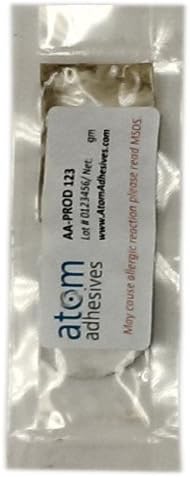
AA-Duct 906 is an electrically conductive silver epoxy supplied in a 2.5-gram single-use kit. Its 3.7 rating is the lowest among the listed products, but its defining function is specialized: creating a mechanically strong and electrically conductive connection for suitable electronics applications.
We may earn a commission when you buy through this link, at no additional cost to you.
The adhesive is described as suitable for most electronics work, with the listing noting that a different AA-Duct product offers greater conductivity. It bonds well to glass, metals, fabrics, wood, and other substrates, giving it broader material compatibility than the product name alone might suggest.
The single-use pouch simplifies material preparation because resin and hardener are mixed directly before use. It provides a one-hour working time and hardens at room temperature in 24 hours, making it suitable for small production runs and prototype assemblies without specialized dispensing equipment.
AA-Duct 906 is most relevant to builders who need electrical continuity in a small bonded joint. It is less appealing for large-volume work because each pouch contains only 2.5 grams, and its lower rating suggests that buyers should investigate the current product feedback and verify compatibility before using it on a critical assembly.
Silver-filled epoxy is designed to join components while providing an electrically conductive path. This differs fundamentally from insulating silicone and non-conductive thermal glue, so the intended circuit function must match the adhesive chemistry.
Mixing a single-use pouch reduces waste and makes the material approachable for prototype work. The one-hour working window is useful, but the parts should be positioned promptly and left undisturbed during the stated 24-hour cure.
We may earn a commission when you buy through this link, at no additional cost to you.
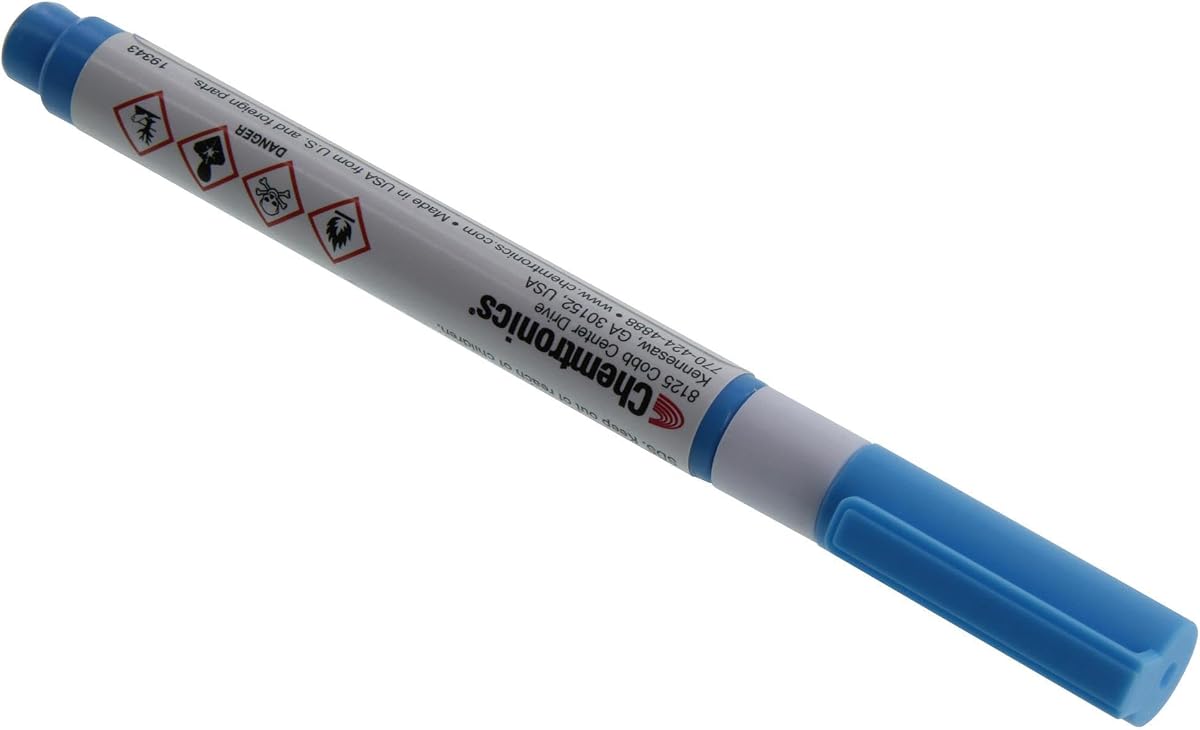
CHEMTRONICS CW2000 is a gray, nickel-filled conductive acrylic adhesive supplied in a 9-gram container with a dispenser and tools. It has a 4.5 rating and serves a different role from the insulating silicones and precision repair epoxies elsewhere in the list: creating a conductive bond between electronic parts.
We may earn a commission when you buy through this link, at no additional cost to you.
The included application equipment is the most useful supplied detail. A dedicated dispenser can support controlled placement, while the tools improve readiness for small conductive-bonding jobs. The 9-gram container is compact, which may suit maintenance work or limited prototype production.
Because the available information does not provide a detailed cure schedule, resistance specification, or adhesion matrix, this product requires more careful technical verification than the entries with comprehensive descriptions. Buyers should also confirm whether its acrylic chemistry and operating conditions suit the target assembly.
CHEMTRONICS CW2000 is a practical specialist choice for technicians seeking a nickel-based conductive acrylic rather than silver epoxy or non-conductive sealant. It is less suitable for general-purpose gluing, conformal coating, heat-sink thermal management, or consumer phone repairs where those specialized properties are unnecessary.
Nickel-filled acrylic adhesive is intended for applications that benefit from electrical conduction. It should not be treated as a neutral structural glue because adding conductive filler changes the functional requirements of the bond.
A bundled dispenser and tools reduce the number of accessories needed for a small job. Because detailed cure and electrical data are not included in the supplied listing, consult the manufacturer before specifying it for a regulated design.
We may earn a commission when you buy through this link, at no additional cost to you.
The right adhesive depends on the job’s mechanical demands, operating environment, required electrical behavior, and acceptable rework strategy. Use the following factors to narrow the field before comparing container size, dispensing method, and cure time.
Begin by deciding whether the joint must conduct current, resist current, or merely hold parts together. A silver or nickel conductive adhesive can create an intended electrical path, while electronic-grade silicone is primarily for insulation and sealing. Non-conductive thermal glue is designed to transfer heat without creating an electrical bridge. Even a product described as adhesive may therefore be wrong for the electrical function required by the circuit.
If the adhesive sits between a heat-producing component and a heat sink, thermal conductivity matters more than ordinary bond strength. The best option should transfer heat while maintaining mechanical retention and remaining electrically non-conductive. Pay attention to explicit exclusions, such as the stated restriction against using one listed thermal compound between a CPU and heatsink. For non-thermal joints, a flexible repair adhesive may be more appropriate.
Cure behavior affects handling, fixturing, and production throughput. Some precision adhesives allow a short positioning window but need 24 to 48 hours for maximum bond strength. Silicones may cure according to environmental conditions, while the listed silver epoxy provides a one-hour working time and a 24-hour room-temperature cure. Choose a schedule that fits the repair bench or assembly process rather than assuming every adhesive becomes strong immediately after dispensing.
Electronics assemblies may expand, contract, flex, or vibrate. A flexible adhesive can tolerate repeated stress more effectively than a rigid bond, especially around phone housings, speakers, cables, and mounted circuit boards. The listed T-7000 products emphasize high stretch and elasticity. If a joint must remain rigid and dimensionally stable, that flexibility may be less useful, and a more rigid epoxy or acrylic may be more appropriate.
Adhesion depends on the actual materials being joined, including metal coatings, plastics, elastomers, and printed boards. The ASI silicone is specifically described as non-corrosive toward copper, brass, and silver, while the other products make broader substrate claims. Clean the surfaces thoroughly, check for oils and plasticizers, and verify that the adhesive is compatible with every material in the joint.
Precision matters when adhesive must be placed around tiny components without touching sensitive areas. Needle tips, squeeze tubes, and dedicated dispensers offer different levels of control. Squeeze tubes are economical for moderate assembly work, while a cartridge or included dispenser can improve consistency. Large multi-size kits are useful for varied jobs, although the smallest tube may be more practical for a single intricate repair.
The operating environment can determine whether a general adhesive is adequate. Water resistance, temperature tolerance, corrosion resistance, and UV exposure all affect long-term reliability. The featured silicone sealant states a minus 50°C to 200°C range, while the T-7000 products emphasize waterproof bonding and flexibility. These claims should be checked against the actual enclosure, thermal load, chemical exposure, and expected service life.
A permanent thermal bond can make a failed heat sink or component difficult to replace. Fast-curing repair glue can simplify emergency work but may be harder to remove later. Conductive epoxy and acrylic compounds may be irreversible after curing. Consider whether the assembly is disposable, field-serviceable, or expected to be repaired repeatedly, and choose a bond strategy that supports the intended maintenance plan.
Begin by identifying the adhesive chemistry, confirming substrate compatibility, and testing the product on a small, noncritical area. Remove dust, oils, flux residue, and old adhesive from the mating surfaces. Where the manufacturer recommends it, lightly abrade the surface and clean it again. Protect nearby components because even a controlled bead of viscosity-modified glue can migrate or squeeze from a narrow joint.
Dispense the smallest practical amount, using a needle tip, squeeze tube, or dedicated applicator for detailed work. Position the component immediately, apply steady rather than excessive pressure, and use a non-marring clamp or rubber band if the instructions recommend fixturing. Do not disturb the assembly while the adhesive is in its initial setting stage, and allow the full stated cure period before testing the repair under load or returning the device to service.
Store each adhesive according to its packaging instructions, cap precision nozzles after use, and keep uncured material away from children. Clean the tip before it cures inside the nozzle. If a bond fails later, determine whether the cause was contamination, insufficient cure, mechanical stress, excessive thermal load, or an unsuitable adhesive before choosing a replacement. Avoid mixing products without checking their chemical compatibility, and dispose of cured epoxies and solvent-bearing adhesives in accordance with local requirements.
No. Electronics-grade silicone is generally intended for sealing, insulation, and protection, but it may be too soft for a rigid structural joint. It can also be inappropriate where a controlled electrical connection or efficient CPU heat transfer is required. Choose the adhesive by function rather than by its broad electronics labeling.
Thermal paste is normally a spreadable interface material designed for easy removal and replacement. Thermal glue or adhesive forms a more permanent bond while transferring heat between a component and heat sink. Because that bond can be difficult to disassemble, thermal adhesive is best suited to assemblies that are not expected to need frequent servicing.
Conductive adhesive can create an electrical and mechanical connection in suitable applications, but it should not automatically be treated as a drop-in solder replacement. Mechanical strength, conductivity, cure temperature, thermal performance, and long-term reliability may differ. Confirm the product specifications and the manufacturer’s guidance for the specific connection.
The listed products vary considerably. Some T-7000 adhesives reach maximum strength after 24 to 48 hours, while the silver epoxy is described as hardening in 24 hours at room temperature. The 30-minute drying time listed for one thermal adhesive is not necessarily full structural cure. Follow the specific instructions and allow extra time when the assembly is under significant load.
Flexibility is often beneficial because phone housings, displays, speakers, and cables may experience vibration or slight movement. A highly elastic adhesive can absorb stress that might make a rigid joint crack. Still, fit, connector alignment, surface cleanliness, and correct curing remain essential, and flexibility cannot compensate for a mechanically misaligned part.
Yes whenever the adhesive is part of a power path or is intended to provide insulation. Check for continuity, unintended shorts, and unstable connections after assembly, following the device maker’s procedures. Avoid injecting current into a joint before the adhesive has fully cured and the repair has passed its required inspection.
Only if the adhesive manufacturer explicitly approves that application. One product in this guide specifically states that it cannot be used between a CPU and heatsink, even though it is suitable for various other chips and heat sinks. CPU mounting also has strict flatness, pressure, and thermal-interface requirements that a general thermal glue may not meet.
Do not force additional adhesive into the blocked tip because that can cause overflow. Clean or wipe the nozzle as directed by the manufacturer, and keep the cap in place when the product is not in use. If the adhesive has cured inside the applicator, replace or clean the tip according to the packaging instructions rather than puncturing it with a sharp object.
The T8000 Clear Precision Adhesive Kit is the most versatile option for general electronics and mobile-device repair because it combines multiple tube sizes, fine dispensing, and useful tools. The ALECPEA T-7000 stands out as an economical precision adhesive with excellent elasticity, while ASI 388 is the more production-oriented choice for electronics-grade sealing and insulation.
For thermal assemblies, Easycargo Thermal Glue or the 0.975 W/m-K compound may be appropriate for supported components, provided their restrictions are followed. If an electrical path is required, consider the AA-Duct 906 silver epoxy or the CHEMTRONICS CW2000 nickel conductive acrylic, and verify the relevant technical specifications before committing to a critical design.
Ultimately, the best choice is the adhesive whose chemistry matches the required function, cure schedule, materials, and service conditions. Check current customer feedback, manufacturer instructions, and product listings before purchasing, since formulations, packaging, availability, and prices can change over time.