
DARKROCK EC2
4.5Editor score
Mesh airflow front panel
Tempered glass side panel
Top and bottom filters
Broad ATX compatibility
Compare 10 console sized PC cases for airflow, compact dimensions, component clearance, cooling support, build access, and everyday usability.
A console sized PC case offers an appealing alternative to a sprawling full tower, especially when you want a powerful computer to fit neatly beside a television, on a media shelf, or within a compact workspace. The best examples preserve motherboard flexibility, GPU clearance, cable organization, airflow, and convenient access despite their smaller footprints.
This guide compares ten console inspired and compact PC cases using the supplied specifications, with particular attention to chassis volume, motherboard support, maximum graphics card length, CPU cooler allowance, radiator options, included fans, dust filtering, front connectivity, and tool-free access. It covers models suited to both simple living-room systems and enthusiast gaming builds.
Each review reveals which use case a case best serves, from budget-conscious everyday computing to panoramic showcase systems with extensive cooling hardware. Ratings reflect the supplied customer feedback, while feature claims and compatibility limits come directly from the product information. Product prices and availability can change, so verify current listings and fit before ordering.
4.5Editor score

4.8Editor score

4.7Editor score
The comparison below places all ten cases side by side, highlighting motherboard support, graphics card clearance, cooling provisions, and practical features that matter when building a compact or console inspired system.


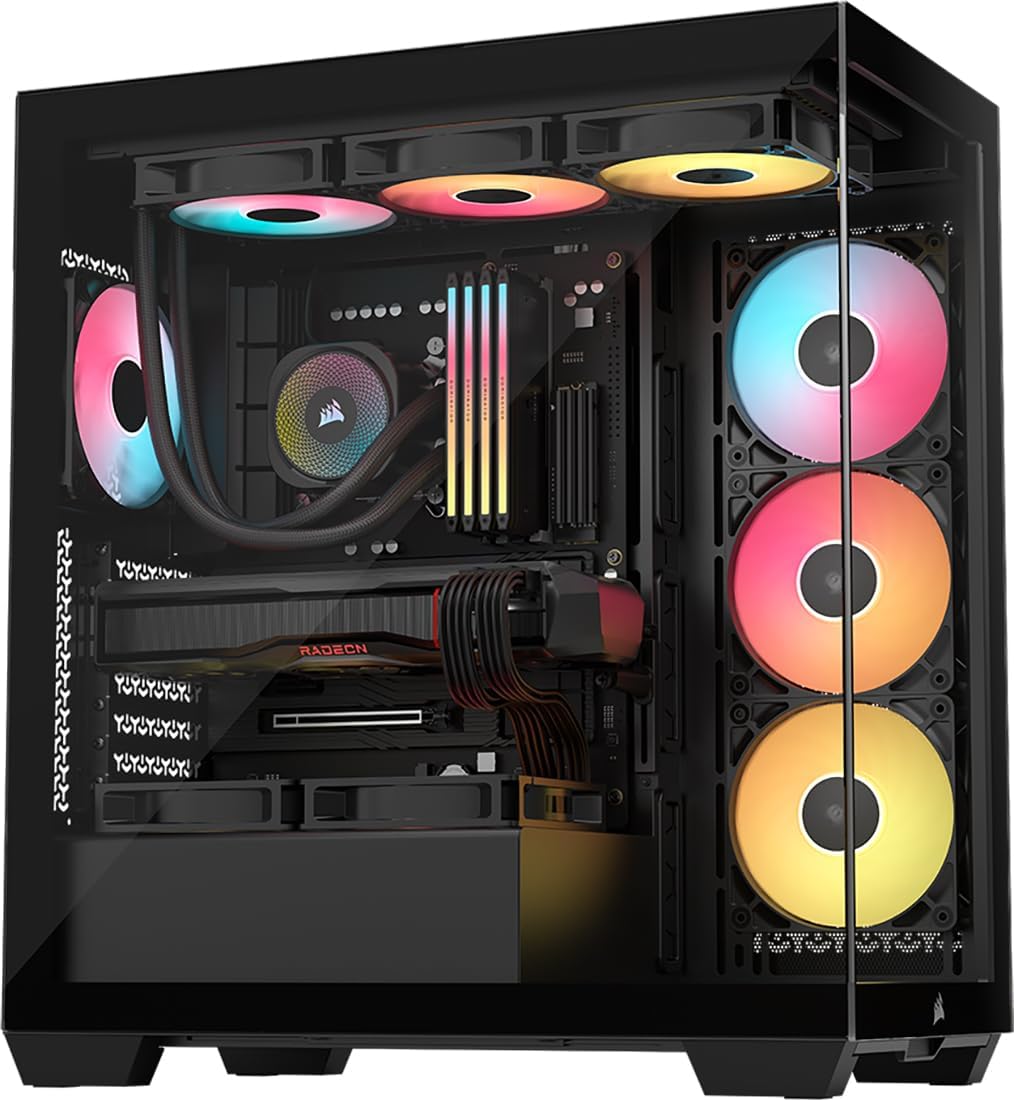
The DARKROCK EC2 combines a conventional ATX mid-tower format with several features commonly sought in a console sized or compact gaming build. Its supplied rating is 4.5, and its standout qualities include a meshed front panel, tempered glass side panel, Type-C readiness, and separately mounted magnetic dust filters at the top and bottom.
We may earn a commission when you buy through this link, at no additional cost to you.
Airflow is the central strength. The mesh front is designed to admit air efficiently while the listed fan configuration allows up to eight 120 mm fans, including room for a 360 mm radiator at the front. Compatibility extends to ATX, Micro-ATX, and Mini-ITX motherboards, while graphics cards up to 340 mm and power supplies up to 200 mm fit within the stated limits.
There are trade-offs. No included fans are identified in the supplied specifications, so a builder may need to budget for cooling hardware, and the 340 mm GPU limit is shorter than the 415 to 420 mm allowances offered by several competitors. The case also retains more of a mid-tower appearance than a purpose-built living-room console enclosure.
Despite those limitations, the EC2 is a strong choice for anyone seeking broad ATX flexibility, sensible component clearances, and useful dust management without moving to the largest enthusiast chassis. It works particularly well as a capable general-purpose gaming PC that can live in a compact entertainment setup, provided potential graphics card and CPU cooler dimensions are checked carefully.
The full mesh front supports strong intake airflow, while the front mounting area can accept three 120 mm fans and a 360 mm radiator. This gives builders room to begin with air cooling or install liquid cooling without changing to a larger enclosure.
Separate magnetic filters at the top and bottom are easier to remove and clean than a single filter stretched across multiple openings. Routine maintenance can help preserve airflow in a cabinet or entertainment unit where the system remains enclosed.
We may earn a commission when you buy through this link, at no additional cost to you.
The Lian Li V100-ATX is the strongest all-around recommendation in this guide for a compact, console inspired gaming system. It carries a supplied rating of 4.8 and arrives with four PWM-controlled 120 mm ARGB fans, an integrated 26-LED ARGB strip, and tool-less mounting mechanisms on both side panels.
We may earn a commission when you buy through this link, at no additional cost to you.
Its hardware allowances are notably generous. The chassis supports ATX, Micro-ATX, Mini-ITX, and back-connect versions of ATX or Micro-ATX motherboards. Graphics cards may measure up to 420 mm, CPU coolers up to 178 mm, and a top radiator up to 360 mm, giving builders useful headroom for large modern components.
The fan specification deserves attention. Supplied figures include a maximum speed of 1800 RPM, airflow around 61.47 to 60.4 CFM, static pressure around 2.54 to 2.17 mm-H2O, noise levels around 26.5 to 30.8 dBA, and hydraulic bearings. Because the specifications present ranges rather than one uniform value for every fan, the actual figures may vary by position.
This is an ideal pick for a buyer who wants substantial cooling hardware and room for a long graphics card without immediately adding fans. The integrated lighting and four pre-installed fans may be unnecessary for a minimalist media PC, but for a gaming enclosure intended to be seen, the V100-ATX offers an unusually complete package.
Four pre-installed PWM fans reduce the number of immediate purchases required for a functional build. Their ARGB lighting and daisy-chain arrangement also make the chassis visually distinctive while providing a coordinated cooling layout.
Tool-less side panels make it easier to reach memory, storage, cabling, and the processor area. This convenience is particularly valuable in a compact entertainment setup where physical access may be less straightforward than in an open desktop tower.
We may earn a commission when you buy through this link, at no additional cost to you.
The ASUS A31 is a visually dramatic ATX case designed for users who want their internal hardware on display. Its 4.7 supplied rating reflects a strong reception, while dual-sided tempered glass, a frameless pillar-free design, and an 8-degree angled base distinguish it from conventional compact enclosures.
We may earn a commission when you buy through this link, at no additional cost to you.
Component support is aimed at mainstream high-end builds. The supplied information explicitly cites compatibility with 360 mm AIO coolers and RTX 5090 or RTX 4090 graphics cards. The hidden connector design conceals modular cables behind the motherboard, producing a cleaner interior without sacrificing the visible component layout.
The main compromise is its premium positioning and specialized design. Builders using liquid cooling must observe the stated 80 mm AIO clearance and verify radiator placement against the chassis layout. Its angled base also means it is intended to be displayed rather than hidden beneath a conventional desk.
For a console-style entertainment PC that must double as a gaming system, the A31 offers an exceptional combination of presentation and capability. It is especially suitable for creators and enthusiasts who want a visually coordinated build that can accommodate large graphics hardware while keeping cables visually restrained.
Dual tempered glass panels and the pillar-free frame create a broad view of the graphics card, cooling hardware, and lighting. The angled base further increases visual depth, making the system a natural centerpiece in a living-room or display cabinet.
Concealing modular cables behind the motherboard keeps the main chamber visually clean. Hidden connectors support the same polished presentation while reducing the visual clutter associated with a dense high-performance build.
We may earn a commission when you buy through this link, at no additional cost to you.
The ASUS Prime AP201 takes spatial efficiency unusually seriously. Its supplied rating is 4.7, and the listed 33-liter footprint makes it one of the most compact choices here. The case is built around ATX power supplies, graphics cards up to 338 mm, and a broad range of storage and custom liquid-cooling options.
We may earn a commission when you buy through this link, at no additional cost to you.
Thermal capability exceeds what the small footprint might initially suggest. The AP201 supports 280 and 360 mm radiators and up to six fans. Its quasi-filter mesh panels use more than 57,000 precision-machined 1.5 mm holes, balancing ventilation with a clear view of the components.
The constraints come from packing so much capability into 33 liters. A 338 mm GPU allowance is shorter than several rivals, and the 180 mm PSU limit requires careful comparison with the chosen power supply. Tool-free side panels and a 32 mm cable-management gap help make the dense layout easier to work with once assembled.
This case is best suited to a compact media-center or gaming build where every external dimension matters. It is also an attractive option for anyone who values order and efficient component placement but still needs liquid-cooling support and a clean exterior presentation.
A 33-liter chassis can still accommodate ATX power supplies, long graphics cards, multiple storage devices, and custom liquid cooling. Carefully planned component selection can make the reduced volume feel generous rather than restrictive.
The precision-machined mesh offers a more refined display than a coarse open grille. Its large perforated area supports airflow while allowing internal lighting and major components to remain visible.
We may earn a commission when you buy through this link, at no additional cost to you.
The Thermaltake Tower 300 takes a vertical, octagonal approach to the console-sized PC concept. It has a supplied rating of 4.6 and supports Micro-ATX motherboards, making it most relevant to builders who can use a compact board without sacrificing processor features.
We may earn a commission when you buy through this link, at no additional cost to you.
Its standout feature is cooling flexibility. Two 140 mm CT fans are included, the chassis supports up to three 120 or 140 mm fans, and it accepts a 420 mm radiator. That large radiator allowance is unusually capable for a relatively compact tower and can appeal to builders seeking strong thermal capacity.
Horizontal display is possible through an optional chassis stand kit, and an additional LCD screen kit is listed as available separately. Those accessories are important to the intended use because the horizontal presentation may require purchases beyond the case itself.
The Tower 300 is best for a Micro-ATX system intended to be displayed vertically or fitted with the optional stand for a console-like orientation. Buyers using full-size ATX motherboards should choose another model, but those who can work with Micro-ATX gain a distinctive shape and serious cooling options.
Support for a 420 mm radiator provides room for a large liquid-cooling loop. The included 140 mm fans also make it possible to begin with substantial air cooling before deciding whether an AIO is necessary.
The octagonal tower suits a vertical media-unit arrangement, while the optional stand kit enables horizontal display. Buyers who value this orientation should include the separate accessory in their total system plan.
We may earn a commission when you buy through this link, at no additional cost to you.
The MONTECH XR Panoramic combines a wide ATX platform with a polished entertainment-center appearance. Its supplied rating is 4.7, and the case includes three ARGB PWM fans, panoramic tempered-glass panels, and a wood-grain area around the input and output panel.
We may earn a commission when you buy through this link, at no additional cost to you.
The cooling layout is especially flexible. Three pre-installed 120 mm ARGB PWM fans provide an immediate airflow and lighting foundation, while the chassis supports as many as nine fans or a top 360 mm radiator. Two side-mounted reverse-blade fans point their illuminated faces inward, leaving a cleaner presentation around the support frames.
Compatibility is broad for a mid-tower: graphics cards up to 420 mm, CPU coolers up to 175 mm, and power supplies up to 230 mm are supported. The front I/O includes USB-C and two USB 3.0 ports, while magnetic filters at the top, side, and bottom improve routine maintenance.
This is a compelling choice for a gaming PC intended to look at home beside a television. The large GPU allowance and nine-fan capacity provide strong growth room, while the included reverse-blade lighting keeps the visible side neat. Those wanting a strictly minimalist enclosure may prefer a more neutral design.
The included reverse-blade side fans, rear fan, ARGB lighting, and 420 mm GPU support create a flexible foundation. Buyers can use the supplied fans for a complete initial build or expand toward a larger cooling arrangement.
USB-C and two USB 3.0 ports provide convenient connections for controllers, removable drives, and everyday peripherals. The front panel is therefore practical for a living-room system rather than merely decorative.
We may earn a commission when you buy through this link, at no additional cost to you.
The NZXT H6 Flow is designed to look at home in a modern entertainment or workspace setup. It has a supplied rating of 4.8 and pairs wraparound glass with a compact dual-chamber layout intended to improve thermal performance and reduce visual crowding.
We may earn a commission when you buy through this link, at no additional cost to you.
Three 120 mm fans arrive installed at an angle that supports out-of-the-box cooling. Airflow-optimized perforations appear in both the top and side panels, and the glass wraparound provides an unobstructed view of major components without a heavy structural frame breaking up the view.
Cable management is another strength. Wide channels and straps help separate the visible component chamber from the cable area, preserving a tidy build and potentially simplifying later maintenance. The white finish also differentiates the case from the many all-black options in this category.
The H6 Flow is best for users who value visual simplicity, integrated cooling, and a clean living-room presentation. It carries the joint-highest supplied rating in the list. As with any compact case, verify the dimensions of the graphics card, CPU cooler, power supply, and storage devices before committing to a build.
Separating cables from the primary viewing area reduces clutter and can improve the apparent openness of the chassis. The organization also keeps the installation process more methodical during an initial build or later upgrade.
Pre-installed fans and perforated panels make cooling part of the design rather than an afterthought. The combination supports a tidy presentation while preserving ventilation through the top and side.
We may earn a commission when you buy through this link, at no additional cost to you.
The Cooler Master QUBE 540 emphasizes flexible placement. It has a supplied rating of 4.4 and can operate in horizontal or vertical orientations, with a reversible I/O panel and movable handles intended to improve access and make repositioning easier.
We may earn a commission when you buy through this link, at no additional cost to you.
Its compact ATX format still accepts ITX, ATX, and large E-ATX motherboards up to 11 inches wide. Graphics card clearance reaches 415 mm when the front fan is removed, making it suitable for large cards such as the RTX 5090 and RX 9070 XT listed in the supplied information.
Thermal support begins with a full front mesh and a pre-installed SickleFlow 120 mm fan. The specification does not list a larger collection of included fans, so buyers seeking a complete fan setup may need additional components. Front I/O includes two USB 3.2 Gen1 ports and one USB 3.2 Gen2 Type-C port.
The QUBE 540 makes the most sense for someone who wants a console-like enclosure that can also serve as a conventional upright tower. Its orientation flexibility is unusual, and the broad motherboard support is valuable. The main reasons to hesitate are the modest included cooling and lower supplied rating relative to many alternatives.
A reversible I/O panel and movable handles support use beside a television or in a conventional upright position. This makes the same chassis practical for both entertainment and workstation environments.
Support for motherboards up to 11 inches wide and graphics cards up to 415 mm preserves considerable upgrade flexibility. Removing the front fan provides the clearance needed for the longest supported cards.
We may earn a commission when you buy through this link, at no additional cost to you.
The Cooler Master HAF II 500 is the most aggressively airflow-focused case in this lineup. Its supplied rating is 4.8, and the Mighty40 cooling system includes two 220 by 40 mm front intake fans plus one 180 by 40 mm rear exhaust fan.
We may earn a commission when you buy through this link, at no additional cost to you.
Large fans can move substantial air while operating at comparatively low rotational speeds, which can help manage noise in a powerful system. Low-resistance front and rear ventilation openings complement the oversized fans, while the MasterRail system supports several fan and radiator sizes at the front and top.
The dual-mode GPU holder can stabilize one graphics card or support two cards up to 3.6 slots, or 72 mm, thick each. Split-level cable management creates room around the rear cooling position, and the flexible storage cage accepts 3.5-inch and 2.5-inch drives in orientations determined by power supply length.
This is an excellent choice for a high-airflow enthusiast build, but it is less compact than the smaller cases featured here. It works best when the owner prioritizes cooling headroom, large fan support, and future GPU flexibility over minimizing every exterior dimension. It may still suit a console-adjacent entertainment setup when shelf depth permits.
The supplied 220 mm and 180 mm fans provide a strong foundation for air cooling. Their scale can support high airflow with lower fan speeds than a layout built entirely around smaller 120 mm units.
The holder can secure either one card or two cards up to the stated combined thickness. That versatility is unusual and gives the chassis more relevance to multi-GPU or workstation-inspired configurations.
We may earn a commission when you buy through this link, at no additional cost to you.
The CORSAIR 3500X RS balances a panoramic mid-tower design with substantial cooling expansion. Its supplied rating is 4.6, and it supports motherboards from Mini-ITX through EATX while including three RS120-R ARGB fans controlled through a +5 V ARGB header.
We may earn a commission when you buy through this link, at no additional cost to you.
Cooling capacity is the defining feature. Side, roof, and power-supply fan mounting points allow up to ten 120 mm fans, giving the chassis one of the broadest expansion options in the guide. The front and side tempered-glass panels can be removed for easier assembly and later access.
A note in the supplied listing clarifies that only three fans are included and other depicted components are not included. This distinction is important when comparing the product visually, since a listing image may show accessories that are not part of the standard package.
The 3500X RS is a strong choice for a gaming or enthusiast system that may eventually need additional cooling. It suits builders who want panoramic presentation without giving up ATX flexibility. Those seeking the smallest possible console enclosure should look to the more explicitly compact models in this comparison.
Mounting points at the side, roof, and power-supply area create more growth room than a typical compact chassis. Builders can begin with the included ARGB fans and add cooling as processors, graphics cards, or ambient conditions become more demanding.
Removable front and side glass panels make the interior easier to reach during assembly and servicing. The wraparound viewing angle still keeps the finished system suitable for display.
We may earn a commission when you buy through this link, at no additional cost to you.
The right console sized PC case depends less on its exterior resemblance than on whether it accommodates your hardware, supports your cooling plan, remains easy to service, and fits the intended entertainment or workspace location.
Begin with the physical space where the completed PC will live rather than focusing only on the case listing. Measure the shelf, cabinet, desk, or media unit and allow room for cables, front connections, dust-filter removal, and side-panel access. A compact chassis is not automatically suitable for a console location if it is too deep, too tall, or unable to sit near an accessible power outlet.
Also consider whether the case will remain vertical, lie horizontally, or be moved occasionally. The Thermaltake Tower 300 supports horizontal display with an optional stand, while the Cooler Master QUBE 540 is designed for both orientations. A case with movable handles or reversible I/O can be easier to reposition.
Motherboard form factor determines the case's practical flexibility. ATX support is the broadest choice, while Micro-ATX can reduce the footprint. The ASUS Prime AP201 uses a compact 33-liter chassis but still accepts ATX power supplies, while the Thermaltake Tower 300 is specifically limited to Micro-ATX motherboards.
Check whether your preferred board uses back-connect cables before selecting a chassis. The Lian Li V100-ATX supports conventional and back-connect ATX or Micro-ATX motherboards, while other cases may not accommodate special cable arrangements. Confirming the board format early prevents an expensive mismatch.
Long graphics cards are among the most common reasons a compact case fails to accommodate a planned build. Clearance figures in this guide range from 338 mm for the ASUS Prime AP201 to 420 mm for the Lian Li V100-ATX and MONTECH XR Panoramic. The Cooler Master QUBE 540 permits 415 mm when the front fan is removed.
Measure the exact card rather than relying only on the advertised category of the graphics card. Account for the card's thickness, power connectors, and the cable bend radius. A case with 420 mm of listed clearance offers useful margin, while a card close to the maximum may interfere with front fans, radiators, or mounting hardware.
CPU cooler height is another common clearance issue. The Lian Li V100-ATX supports coolers up to 178 mm, the MONTECH XR Panoramic supports up to 175 mm, and the ASUS A31 lists 80 mm of AIO clearance. These allowances indicate whether a tower cooler or liquid-cooling pump can fit.
Tall tower coolers can also compete with side intake fans in a compact chassis. If the case is intended for a quiet build, compare the available clearance with the cooler specification and the fan options at the top and side. Low-profile coolers may offer a safer route when dimensional margins are tight.
Cooling support should match both the processor and the space available. Several cases include fans: the Lian Li V100-ATX includes four, the MONTECH XR includes three, the NZXT H6 Flow includes three, and the Cooler Master HAF II 500 includes two large front fans and one large rear fan. The DARKROCK EC2 and ASUS Prime AP201 do not have included fans listed in the supplied data.
Radiator capacity ranges from 280 and 360 mm support in the ASUS Prime AP201 to a 420 mm option in the Thermaltake Tower 300. The Darkrock EC2 and MONTECH XR Panoramic list 360 mm support, while the ASUS A31 is optimized for a 360 mm AIO. Match the radiator to the mounting location and check pump, tubing, and connector clearance.
Front-panel connections determine how comfortably the system works as an entertainment or everyday-use computer. USB-C is highlighted on the DARKROCK EC2, MONTECH XR Panoramic, and Cooler Master QUBE 540. The MONTECH adds two USB 3.0 ports, while the QUBE 540 lists two USB 3.2 Gen1 ports and one USB 3.2 Gen2 Type-C port.
Consider which devices you will connect most often. Controllers, removable drives, headsets, and storage devices can benefit from convenient front access, but ensure the selected case includes the exact port types required. A visually clean enclosure is less useful if daily peripherals must reach around the rear of the system.
Compact cases become difficult to maintain when cables obstruct component access. Tool-free side panels on the Lian Li V100-ATX, ASUS Prime AP201, and removable panels on the CORSAIR 3500X RS simplify opening the chassis. The NZXT H6 Flow uses wide channels and straps, while the ASUS A31 conceals modular cables behind the motherboard.
Choose a layout that suits the number of drives, the appearance you want, and how often you expect to upgrade. Hidden connections look cleaner but may require compatible hardware and careful routing. Visible management can be easier for frequent maintenance, particularly in a living-room cabinet where a side panel may need frequent removal.
Tempered glass, panoramic panels, ARGB lighting, and display stands create the visual character associated with console-style builds. The ASUS A31 uses dual frameless glass, the MONTECH XR combines panoramic glass with a wood-grain accent, and the NZXT H6 Flow uses seamless wraparound glass. These features make the finished system easier to enjoy in a visible location.
Visual design should not compromise access to dust filters or sensitive components. The DARKROCK EC2 provides separate magnetic top and bottom filters, while the MONTECH XR includes removable magnetic filters at the top, side, and bottom. Regular filter cleaning protects airflow, especially where the system operates inside a closed entertainment cabinet.
Before installing components, lay the case on a protected surface, remove the panels and dust filters, and identify every mounting location for the motherboard, power supply, graphics card, storage, fans, and radiators. Consult the case instructions alongside the exact clearance specifications for every part. Keep packaging nearby because it can provide padding when the finished system is moved.
Install the power supply and cable routing early, then use the case's straps, channels, or cutouts to keep connections out of fans and away from airflow obstructions. Fit a radiator and its tubing before the graphics card if access becomes tight later. Confirm that side panels close without pressing against cables and that every fan has a clear intake or exhaust path.
After the build is complete, operate the system with the intended panels and filters installed, then check temperatures and fan behavior under realistic workloads. Remove and clean magnetic filters regularly, using gentle methods that avoid bending fine mesh. Keep the exterior glass clean with a soft microfiber cloth, and avoid blocking ventilation with decorative covers or nearby objects.
Yes, a console sized or compact PC case can support modern gaming hardware when its clearances match the components. Cases such as the Lian Li V100-ATX and MONTECH XR Panoramic support graphics cards up to 420 mm, while multiple models accommodate 360 mm radiators. Check GPU length, cooler height, power supply length, and motherboard format before buying.
They can be if airflow paths are restricted, but a well-designed compact case can move plenty of air. Mesh fronts, perforated panels, dual chambers, large fans, and radiator support all improve thermal performance. The Cooler Master HAF II 500 goes furthest with two 220 mm intake fans and a 180 mm rear fan, while compact cases with fewer included fans may need added cooling.
Many can, but external dimensions and orientation are critical. The Cooler Master QUBE 540 supports horizontal and vertical positioning, and the Thermaltake Tower 300 can be displayed horizontally with an optional chassis stand kit. Measure the available furniture space, account for cables, and ensure the case will not block television ventilation.
It depends on the model and cooling plan. The Lian Li V100-ATX includes four ARGB fans, the MONTECH XR Panoramic and NZXT H6 Flow include three each, and the Cooler Master HAF II 500 includes three oversized fans. No included fans are listed for the DARKROCK EC2 or ASUS Prime AP201, so those builds should budget for adequate cooling.
Mini-ITX and Micro-ATX are common in compact builds, but several cases support full ATX as well. The ASUS Prime AP201 offers broad hardware support in a 33-liter chassis, while the Thermaltake Tower 300 is limited to Micro-ATX. If you want an upgrade path, prioritize ATX support or confirm that your chosen case accepts back-connect motherboard cables.
Inspect filters every few months and clean them whenever visible dust accumulates. The DARKROCK EC2 has separate magnetic filters at the top and bottom, and the MONTECH XR Panoramic includes filters in three locations. Regular cleaning helps maintain airflow, particularly when the system operates in a closed cabinet with limited ambient dust control.
Many can, but the mounting position matters. The DARKROCK EC2, Lian Li V100-ATX, ASUS Prime AP201, ASUS A31, and MONTECH XR Panoramic all list support for 360 mm liquid cooling in specific locations. The Thermaltake Tower 300 goes further with 420 mm radiator support. Always check pump clearance, tubing space, and radiator orientation before ordering.
Tempered glass generally requires only light cleaning and can show fingerprints quickly. Use a soft microfiber cloth and avoid abrasive cleaners or sharp tools that could scratch the surface. Remove panels only as directed by the manufacturer and handle them by their edges when attaching or detaching fans, filters, or other components.
The DARKROCK EC2 stands out as a budget-minded option with ATX flexibility, a mesh front, and separate dust filters. The Lian Li V100-ATX is the most complete performance-oriented package because it combines four ARGB fans, tool-free access, generous GPU clearance, and broad motherboard support. The ASUS A31 leads the visual showcase category with panoramic dual glass, hidden cables, and support for large mainstream hardware.
For buyers who value efficiency above all else, the ASUS Prime AP201 offers an impressive amount of hardware support in 33 liters. The Thermaltake Tower 300 targets Micro-ATX builders interested in horizontal presentation, while the NZXT H6 Flow prioritizes clean integrated styling. The MONTECH XR Panoramic, Cooler Master QUBE 540, Cooler Master HAF II 500, and CORSAIR 3500X RS each serve distinct priorities involving connectivity, flexibility, air cooling, or fan expansion.
Before ordering, measure the intended location and verify the exact dimensions of the motherboard, graphics card, CPU cooler, power supply, storage, and cooling hardware. Current prices and availability can change, so check the latest listing and seller information. With those checks completed, the case can deliver the compact footprint and polished appearance that make a console inspired PC genuinely practical.