
Pop-Tech Biconvex Lens Set
4.7Editor score
34mm optical glass lenses
45mm approximate focal length
Ideal for Cardboard VR
Complete lens pair included
Explore the best lenses for VR Headset with a detailed comparison of fit, optical design, prescription support, compatibility, protection, and setup options.
Lenses can determine whether a virtual reality headset feels sharp, comfortable, and properly tailored to the wearer. A useful lens option should match the headset, fit securely, deliver a clear view, and solve a specific need such as nearsightedness, scratch protection, or DIY construction.
The products in this guide cover OEM Fresnel replacements, prescription lens inserts, magnetic myopia frames, anti-blue-light accessories, protective spacers, and biconvex lenses for homemade viewers. They were compared using fit, optical design, compatibility, installation requirements, and intended user needs.
Each review identifies what makes a product most useful, while also noting limitations that may affect compatibility or convenience. Ratings and product details reflect the supplied information, while prices and availability can change, so readers should verify current listings before purchasing.
4.7Editor score
4.6Editor score

4.5Editor score
This side-by-side overview compares all ten products by purpose, compatibility, installation, and optical features, helping distinguish replacements, prescription aids, protective accessories, DIY lenses, and complete VR systems.
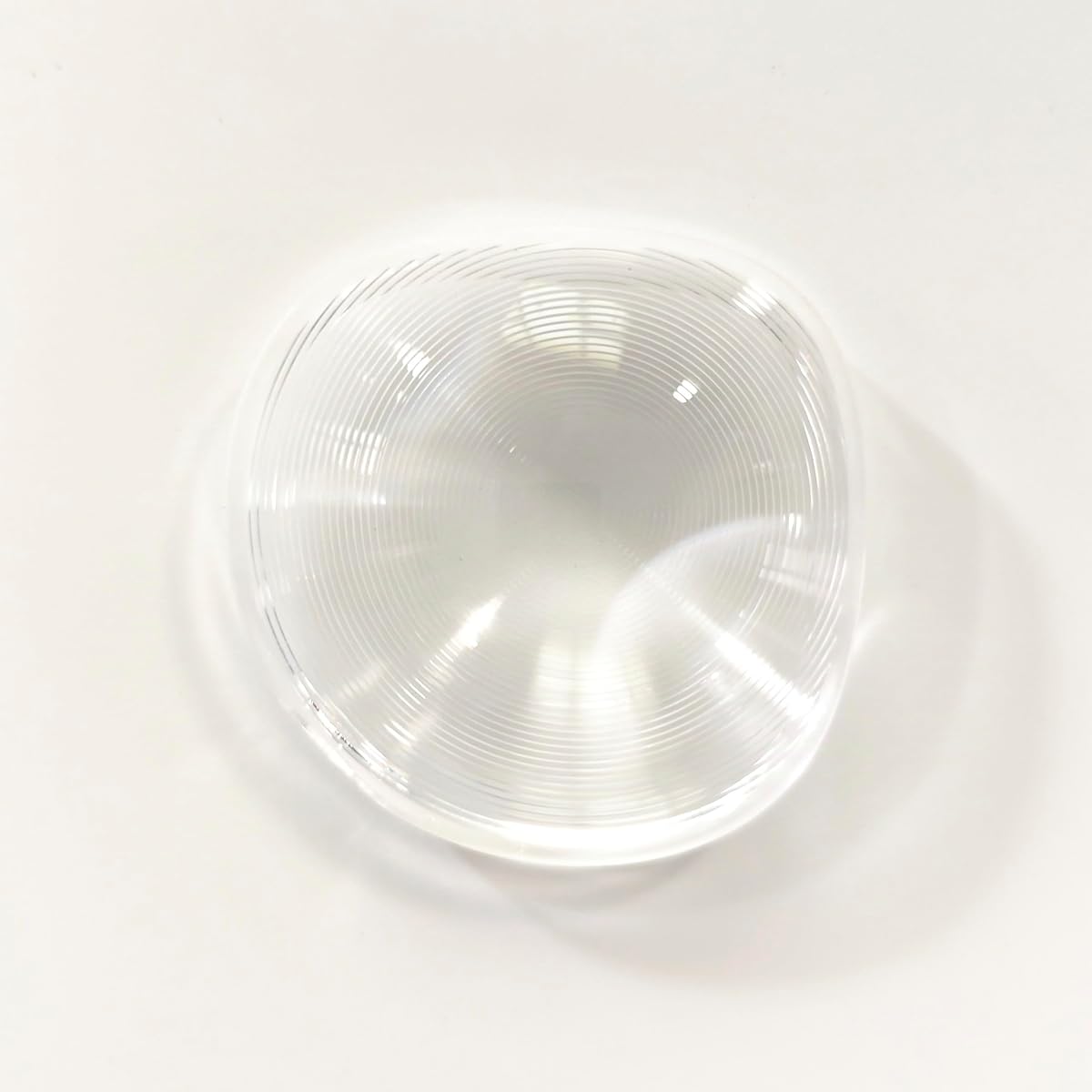



This product is a replacement Fresnel optic for the Oculus Quest 2 and carries a 4.1 rating. Its defining advantage is specificity: it is presented as a genuine OEM part designed for seamless repair or replacement rather than a general-purpose lens that may require adaptation.
We may earn a commission when you buy through this link, at no additional cost to you.
The selling point is direct relevance to the headset. Precision optics are intended to preserve a clear and immersive view, while the straightforward installation process is useful for owners dealing with a cracked, scratched, or otherwise damaged lens. It is a focused solution for restoring the original visual path of the headset.
The main limitation is obvious from the product's purpose. It is specifically designed for Quest 2, so it will not serve owners of Quest 3, Quest 3S, Rift S, phone viewers, or homemade cardboard systems. It also offers no selectable prescription power, meaning users who need myopia correction must address that requirement separately.
This is the most sensible recommendation for a Quest 2 owner who needs a matching replacement optic and has no need for prescription inserts. Confirm the headset model and inspect the existing lens assembly before ordering, but for a compatible Quest 2 repair, it offers the most direct option in the guide.
Because the lens is engineered around the Quest 2 optical layout, it avoids the uncertainty of adapting a generic lens. It is best suited to replacing a damaged original component while preserving the headset's intended viewing design.
Precision construction is intended to support a clear virtual reality experience, and the installation process is designed to be straightforward. The result is a convenient repair-focused accessory rather than a broad optical experiment.
We may earn a commission when you buy through this link, at no additional cost to you.
These insert lenses are intended for Quest 3S and Quest 2 users who want a more comfortable way to see inside the headset without wearing conventional glasses. The listed version contains a frame and one -3.50 spherical lens and carries a 4.5 rating.
We may earn a commission when you buy through this link, at no additional cost to you.
Their most useful feature is flexible prescription support. Fixed spherical powers are available from -1.00 through -6.00, allowing buyers to choose lenses appropriate for different levels of myopia. Because the package contains one lens, a user needing two different prescriptions can combine two separately selected units, with each insert usable on either side.
The trade-off is that buyers must understand the ordering format. A one-lens package does not provide a complete matched pair unless another lens is added, and the listed options cover spherical power rather than astigmatism or progressive correction. The no-glare coating and easy-install insert design do improve everyday usability once the correct power is selected.
This is the leading option for a Quest 3S or Quest 2 owner with a known spherical prescription who wants to avoid external glasses. Verify the required power, check whether one or two lenses are needed, and confirm the headset model before ordering to avoid an incomplete or unsuitable combination.
The inserts are designed around the curved shape of Quest 3S and Quest 2 optics. They give nearsighted users another way to focus inside the headset without relying on a conventional glasses frame that may sit awkwardly under the headset surround.
The most important buying detail is the single-lens format. A wearer with the same power in both eyes can purchase two, while someone with different prescriptions should select and combine the appropriate powers carefully.
We may earn a commission when you buy through this link, at no additional cost to you.
This biconvex lens pair is aimed at DIY Google Cardboard viewers and other homemade virtual glasses. It carries a 4.7 rating, uses a 34mm diameter, and has an approximate 45mm focal length. The optical glass construction and complete pair make it an accessible foundation for a custom viewer.
We may earn a commission when you buy through this link, at no additional cost to you.
The lenses are designed to improve the perceived 3D experience by providing magnification, with one side more curved than the other. They fit the scale of common Cardboard-style goggles, but the absence of tabs means they must be sandwiched securely between cardboard layers or another custom housing.
The lack of integrated mounting features is the principal drawback. Buyers must build or modify the enclosure themselves and ensure that each lens stays centered and cannot shift. These are not replacement optics for a Meta headset, and the product's value lies in its usefulness for a homemade optical system.
For educators, students, and makers building a Cardboard viewer, this is a strong budget choice. It offers a complete matched pair, a useful focal length, and a 4.7 rating, but it is most appropriate when you are prepared to handle the physical lens installation yourself.
Receiving two lenses at once simplifies the initial build of a symmetrical DIY viewer. It is a more convenient starting point than sourcing individual magnifiers and arranging them independently.
Because the lenses do not include tabs, they are intended to be held between enclosure layers. Use a stable spacer arrangement so the optical centers remain aligned and the lenses cannot shift during use.
We may earn a commission when you buy through this link, at no additional cost to you.
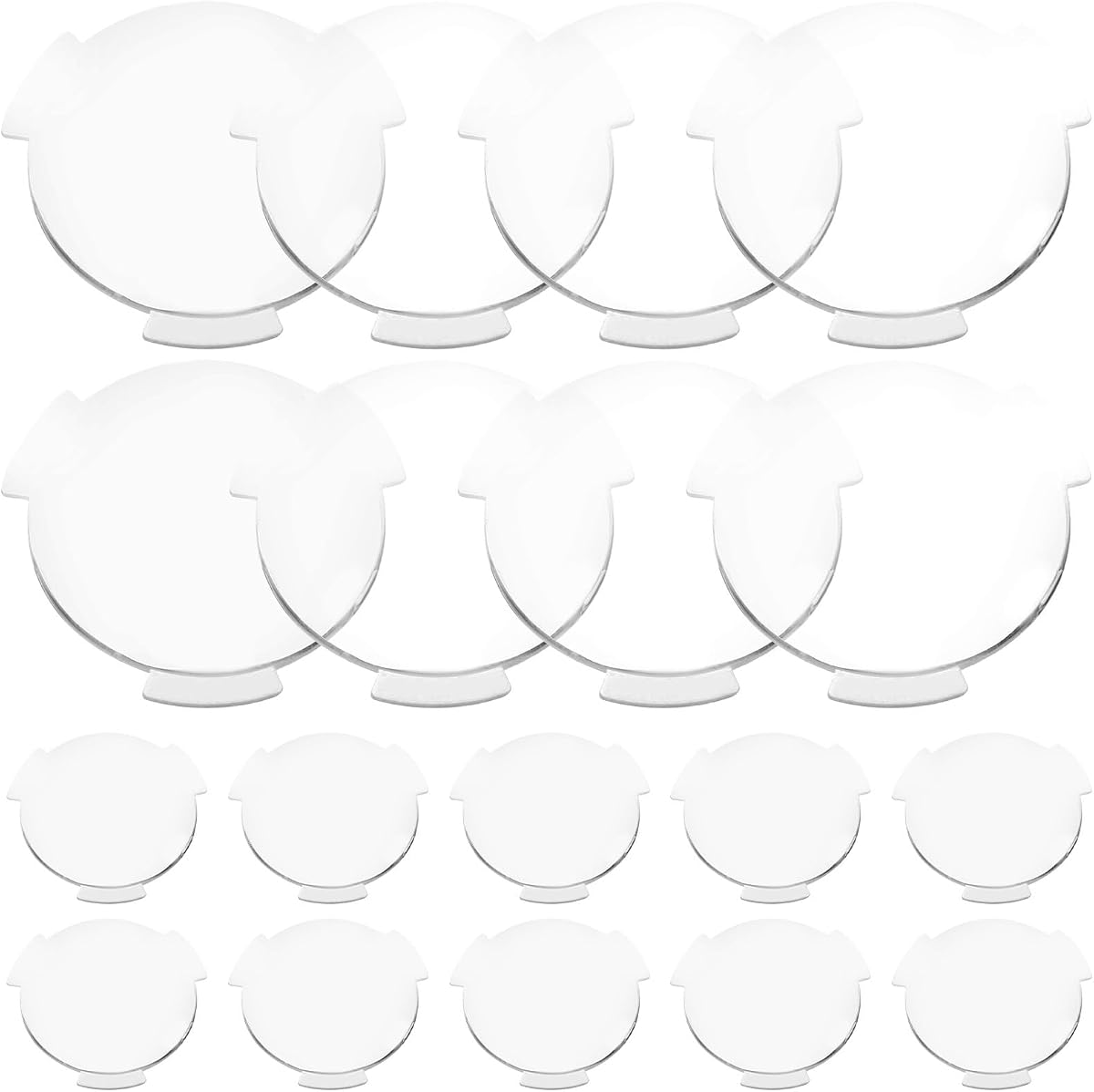
This 20-pack of clear acrylic biconvex lenses is centered on DIY viewing, STEM education, and repeated classroom assembly rather than a single finished headset. Its 4.5 rating reflects a versatile package with 25mm lenses, a 45mm focal length, and a flanged winged mounting design.
We may earn a commission when you buy through this link, at no additional cost to you.
The winged edges are the most important practical improvement for builders. They can lock into slots in a handmade viewer, helping prevent wobbling or falling out. The clear acrylic material is also described as lightweight and less prone to breakage than glass, making the quantity practical for group projects and makerspaces.
The 25mm size may not suit every viewer design, and the package is primarily a construction supply. It does not replace a Meta Quest optic, provide prescription correction, or eliminate the need to build a proper enclosure. Its broad use across physics demonstrations, miniature viewing, and hobby projects adds value beyond VR.
Choose this pack when you need multiple standardized lenses for a classroom, workshop, or series of DIY builds. The flanged design and 4.5 rating make it especially practical for repeated projects, provided the enclosure is designed around the 25mm diameter.
The flanged winged shape gives the lenses a mechanical advantage over unmodified biconvex discs. That design helps keep the optical element seated in a slotted DIY viewer and reduces movement.
The same magnification characteristics can support physics experiments, small-object inspection, custom miniature viewers, and creative maker projects. That versatility makes a bulk pack more useful than a single replacement lens.
We may earn a commission when you buy through this link, at no additional cost to you.
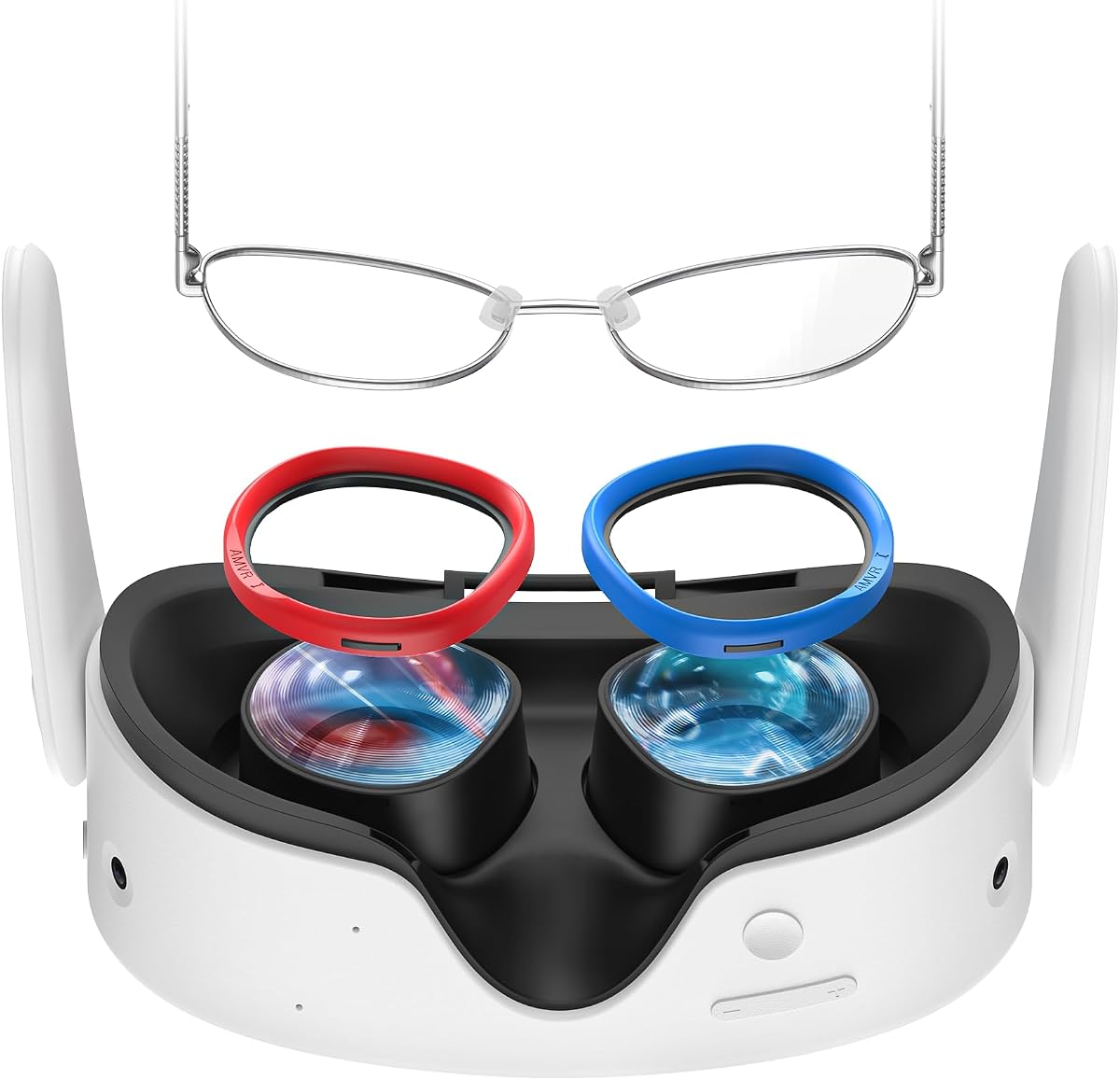
The AMVR Glasses Spacer is an accessory for Quest 3S, Quest 2, Rift S, and Go headsets, with a 4.6 rating. It places protective silicone rings between the headset lens and either the user's own glasses or another optical insert, reducing direct scratch contact.
We may earn a commission when you buy through this link, at no additional cost to you.
Its patented frame-and-ring arrangement uses grooves to hold the lens protection frame and silicone rings together. The package includes two frames, six pairs of rings in three colors, and an instruction manual. Three thickness options—4mm, 5mm, and 7mm—allow the user to select a spacer that matches the profile of their glasses.
Compatibility must be checked carefully because Quest 3 is explicitly excluded. The spacer is also not an optical lens itself and does not solve nearsightedness; its role is to protect and create separation. A user who needs vision correction still requires a suitable lens or prescription arrangement.
This is a strong choice for Meta headset owners who wear glasses and want to reduce scratching around the headset optics. The multiple ring sizes and secure installation make it more adaptable than a one-size spacer, provided the headset model is on the supported list.
Soft silicone rings keep prescription frames or inserted lenses from making direct contact with the headset optics. This simple interface is especially useful for owners who regularly put on and remove glasses while wearing a headset.
The 4mm, 5mm, and 7mm options account for different frame and lens thicknesses. Choosing the appropriate pair helps maintain a stable fit while keeping the protected elements separated.
We may earn a commission when you buy through this link, at no additional cost to you.
This Pop-Tech set provides two plastic biconvex lenses sized at 34mm with a 45mm focal length. It is intended for DIY Google Cardboard projects, telescopes, and virtual glasses, and it has a 4.1 rating.
We may earn a commission when you buy through this link, at no additional cost to you.
The lenses use an asymmetrical shape, with one side more curved and the other slightly flatter, creating the magnifying effect used in simple cardboard viewers. The pair provides a straightforward optical starting point for a virtual reality project, especially where a lightweight construction is preferred.
Its lower rating and limited stated feature set make it less compelling than the higher-rated Pop-Tech optical glass option. There is no mention of an anti-glare coating or integrated mounting tabs, so the builder must handle enclosure alignment and may need to manage reflections separately.
This set is best for a simple Cardboard build where two 34mm lenses and an approximate 45mm focal length fit the intended housing. If optical clarity and buyer feedback are the main priorities, the other Pop-Tech pair offers a more compelling specification set.
Two lenses make it easier to establish matching optical positions on both sides of a homemade viewer. Their dimensions suit the scale of many simple Cardboard-style constructions.
The plastic construction is convenient for lightweight projects, but users prioritizing optical clarity may prefer a glass set with a higher rating. The choice depends on whether weight, durability, or image quality matters more.
We may earn a commission when you buy through this link, at no additional cost to you.
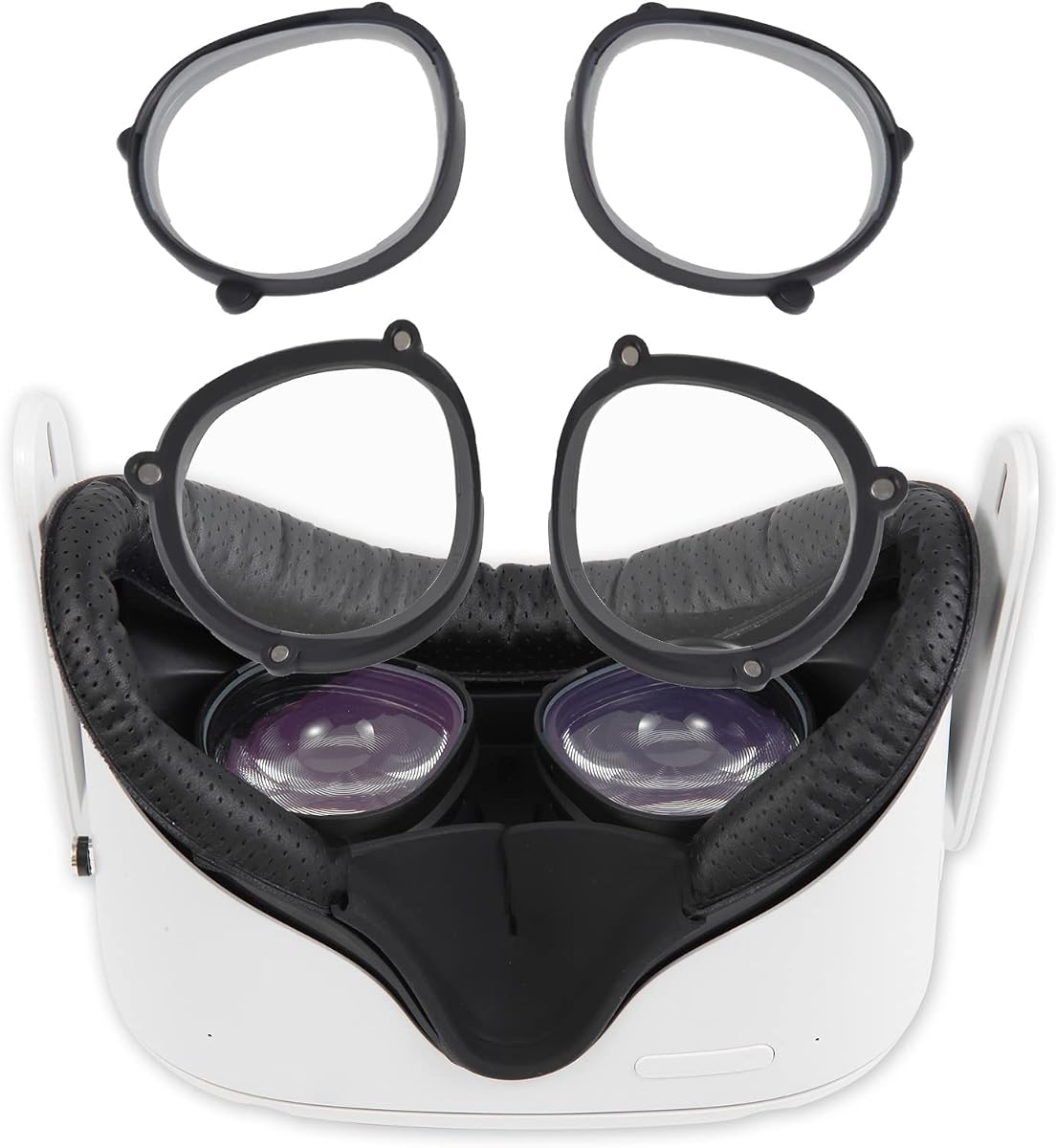
This magnetic-frame system is designed for Oculus Quest 2 users who want a detachable solution for myopia or comfort while wearing the headset. It has a 4.0 rating and includes two lenses, two insert top frames, two fixed bases, and a cleaning cloth.
We may earn a commission when you buy through this link, at no additional cost to you.
The magnetic construction is intended to keep the lens assembly in position while allowing it to be removed when sharing the headset. The frame uses three magnetic tabs, and the listed lens set uses aspheric lenses described as thinner, brighter, and clearer than standard spherical designs. The product also includes blue-light-blocking lenses.
The principal complication is prescription selection. The package supports replacing the lenses with a custom myopia degree obtained from a glasses store, which means a user needing a specific correction must arrange that customization separately. The stated focus is Quest 2, and users with other headset models should confirm fit before purchasing.
This system is best for a Quest 2 owner who wears glasses, dislikes the pressure or collision associated with external frames, and wants removable magnetic optics. It is a more involved solution than a simple insert, but it offers a useful route to personalized lens power.
The detachable magnetic design allows the lens assembly to be removed cleanly when the headset changes users. That can be more convenient than repeatedly fitting conventional glasses beneath the headset surround.
The support for custom myopia lenses is the core reason to consider this accessory. Buyers should consult an optical professional, select the required correction, and verify that the replacement process fits their expectations.
We may earn a commission when you buy through this link, at no additional cost to you.
The DESTEK V5 is a complete smartphone VR headset rather than a standalone lens accessory, and it carries a 4.7 rating. It is designed for users who want to turn a compatible phone into a private virtual theater, with a 110-degree field of view and lenses that transmit 92% of light.
We may earn a commission when you buy through this link, at no additional cost to you.
The headset supports screen sizes from 5.5 to 7.2 inches and includes soft, breathable padding. Its content features include a stated library of more than 50,000 free VR movies, 128 hand-picked applications, and a gamepad for Android interaction. The supplied information notes that iOS support is limited to YouTube control.
It does not solve lens replacement or prescription needs for a Quest headset, and its phone-based design has obvious functional limitations compared with a standalone VR system. The platform distinction matters: Android receives full interaction and navigation functions, while iOS has narrower control. Buyers should also consider whether a phone-powered headset suits their immersion goals.
This is the strongest complete-system choice for someone seeking an affordable entry into mobile VR rather than a Meta replacement. Its high rating, broad phone fit, optical specifications, and comfortable padding make it compelling as a self-contained viewing option.
Rather than requiring a separate lens and viewer, the DESTEK V5 combines a phone enclosure, viewing lenses, padding, controls, and content access. That integrated approach lowers the complexity of building a DIY viewer.
The platform distinction is important for buyers. Android users can use immersive navigation, motion control, and virtual interaction, while iOS users are limited to music playback and YouTube video controls.
We may earn a commission when you buy through this link, at no additional cost to you.
The Meta Quest 3 512GB Gorilla Tag Bundle is a complete standalone virtual reality system with a 4.5 rating. It is included in the comparison because its bundled lenses are part of a higher-end headset platform rather than as standalone replacement components.
We may earn a commission when you buy through this link, at no additional cost to you.
The system is described with a 4K+ infinite display, Snapdragon XR2 Gen 2 processor, 8GB of RAM, dual RGB color cameras, and more than two hours of battery life. Its wireless design removes tethering, while the Gorilla Tag bundle adds a Space Program suit, helmet, and 2,000 shiny rocks.
This is not the right purchase for someone searching only for a Quest 2 or Quest 3S replacement lens, and it is significantly more complex than a phone viewer or DIY lens set. The headset is designed for a broader gaming, mixed-reality, and application experience, so buyers should assess the complete platform rather than focus on lens specifications alone.
For a shopper seeking a premium, self-contained VR system rather than an optical component, this bundle offers a strong display, processing platform, color passthrough, and themed content. It is best chosen for the overall headset experience, not as a substitute for a specific replacement optic.
The absence of a connecting cable supports a more natural standalone experience. Users can move through games, educational applications, and mixed-reality content without managing a tether.
Dual RGB color cameras support the headset's passthrough features, while the XR2 Gen 2 processor and expanded memory are intended to provide smoother graphics and more responsive performance.
We may earn a commission when you buy through this link, at no additional cost to you.
This generic Fresnel replacement set is made for the Oculus Quest 3S and includes two lens pieces. It carries a 2.0 rating, which is notably lower than every other product in the guide, so prospective buyers should weigh the sparse description and limited customer feedback carefully.
We may earn a commission when you buy through this link, at no additional cost to you.
Its purpose is narrow but clear: replacing a broken or defective Quest 3S component. A two-piece set is convenient for owners who may need both sides or want a matching spare, and it removes the need to hunt for individual lenses after damage occurs.
The product is described as generic rather than OEM, and the supplied information does not explain its optical tolerances, coating, installation method, or exact materials. Those omissions make it difficult to compare confidently with a purpose-built OEM replacement. The low rating is another reason to verify fit, appearance, and optical performance expectations before ordering.
This set is most relevant to a Quest 3S owner who has already identified a damaged lens and needs a two-piece replacement format. It may fill an urgent gap, but for planned maintenance or a first replacement, the more clearly documented Fresnel options in this guide deserve careful consideration.
The two-piece configuration is convenient for a complete replacement or for keeping a matched spare on hand. It is more complete than a single-lens purchase when damage affects both sides.
The listing specifically names Oculus Quest 3S, so owners of other models should not assume it fits. Because detailed fitting and optical information is limited, buyers should compare the replacement shape with the original assembly.
We may earn a commission when you buy through this link, at no additional cost to you.
The right lens depends on whether you are correcting vision, replacing damage, protecting an original optic, building a DIY viewer, or buying a complete headset. Compatibility and the intended optical function should guide the decision before considering smaller convenience features.
Start with the exact headset or viewer model. The Quest 2 OEM Fresnel lens, Quest 3S replacement pair, prescription inserts, and anti-blue-light frames are designed around specific products, while the biconvex sets target handmade viewers. A lens that looks similar may still mount incorrectly, sit at the wrong distance, or distort the intended optical path. Some listings are especially narrow: the AMVR spacer explicitly excludes Quest 3, and the DESTEK V5 fits phones rather than a Meta headset.
Decide whether the product must replace a damaged optic, provide magnification, support myopia, block blue light, or simply prevent scratches. Replacement Fresnel lenses restore the original viewing function, biconvex lenses create magnification in DIY systems, and prescription inserts adjust focus for nearsighted users. Protective rings and spacers do not improve optical power; they reduce physical contact and wear.
Nearsighted users need an accurate prescription, and the available format can determine which approach is practical. Amavasion offers fixed spherical powers from -1.00 through -6.00, with one lens per package, while the magnetic Quest 2 frame supports custom myopia lenses. Spherical power does not address every optical need, and a one-lens order may require two separate purchases. Consult an eye-care professional when the correct correction is uncertain.
Material affects handling, weight, and durability. The Pop-Tech optical glass set uses glass, while the plastic and acrylic alternatives are lighter and less likely to break if dropped. The 20-pack acrylic set emphasizes polished surfaces and light transmission, while the 4.7-rated glass pair is a compact DIY option. A stronger rating can provide useful social evidence, but it should not replace checking dimensions, focal length, and intended housing.
Physical dimensions are essential for DIY viewers. Both Pop-Tech biconvex pairs use a 34mm diameter and a 45mm focal length, while the classroom-oriented 20-pack uses 25mm lenses with the same stated focal length. Diameter affects where the lens can sit, and focal length affects the viewing geometry. The lens must be mounted where its optical center aligns with each eye rather than simply wherever it physically fits.
A lens that shifts, falls out, or blocks the intended optical path can be more frustrating than a fixed design. The 20-pack uses flanged wings that lock into viewer slots, the Pop-Tech sets are intended to be sandwiched between enclosure layers, and the Amavasion inserts use an easy-install frame. For magnetic or headset-specific accessories, confirm that the headset can be closed and that the lenses do not contact the original optics.
A no-glare treatment can make the viewing surface easier to use, and blue-light blocking may be appealing for long sessions. However, coatings do not replace accurate prescription correction, and the anti-blue-light magnetic frame's broader benefit comes from its removable design as well as its lens treatment. Evaluate comfort factors such as fogging, frame pressure, weight, and clearance alongside optical claims.
Original headset lenses are vulnerable to scratches, especially when glasses or inserts are moved in and out. The AMVR spacer's soft silicone rings create separation and use a grooved connection to remain stable. For a DIY viewer, a secure flange and carefully aligned housing help prevent accidental contact. Cleaning and storage practices remain important because no protective frame can eliminate all handling damage.
Begin by confirming the headset model, lens dimensions, prescription information, and intended mounting method. For a replacement optic, compare the part shape and connection points with the original assembly. For prescription inserts, identify the correct power for each eye, and for DIY biconvex lenses, confirm that the diameter and focal length match the viewer design before opening the enclosure.
Install the lens in a clean, dry environment and handle optical surfaces by their edges. Seat each component according to the supplied instructions, taking care to center it over the intended eye position. DIY builders should sandwich or slot the lenses into a stable spacer, while Meta headset users should follow the frame's stated orientation and locking sequence. Confirm that the headset closes without pressing the lens against a frame or another optic.
After installation, test the headset in a safe seated position and inspect the view for alignment, haze, scratches, fogging, or uncomfortable pressure. Clean the lens with an appropriate soft cloth and avoid abrasive materials, chemical cleaners, and contact with dirty fingers. Store the headset in its protective environment, remove and clean removable inserts periodically, and replace damaged components rather than continuing to use a cracked or badly scratched lens.
No. Lens shape, mounting position, spacing, and optical design vary between headsets and even between versions of the same product family. A Quest 2 Fresnel replacement should not be assumed to fit Quest 3S, and the AMVR spacer explicitly excludes Quest 3. Always match the exact model and compare the original component before purchasing.
A prescription insert with the correct spherical power is the most direct option among the listed accessories. Amavasion provides fixed powers from -1.00 through -6.00, while the magnetic Quest 2 frame supports custom myopia lenses. Because spherical correction may not address astigmatism or progressive needs, users with complex prescriptions should consult an eye-care professional.
Most users need one lens for each eye, but the Amavasion product listed here contains only one insert. If both eyes require the same power, two separate one-lens purchases are needed. If the prescriptions differ, select the appropriate power for each side and determine which lens will be used on the left or right before ordering.
The biconvex products in this guide are designed for DIY viewers, cardboard-style goggles, STEM projects, and other custom optical constructions. They are not listed as compatible Meta Quest replacement lenses. Attempting to modify a commercial headset can affect focus, alignment, safety, and fit, so use a purpose-designed replacement or prescription accessory instead.
A protective spacer separates the headset lens from glasses or another insert to reduce scratching. It does not itself change focus. A prescription lens corrects the wearer's myopia, while a protective accessory only improves physical clearance and reduces wear between components.
The 20-pack biconvex set is the strongest classroom-oriented option because it includes twenty acrylic lenses with flanged edges designed to lock into DIY viewer slots. The multiple thickness and quantity make it practical for group work. The two smaller Pop-Tech pairs remain useful for individual cardboard projects but include fewer mounting provisions.
No. Blue-light filtering is only one part of eye comfort, and the supplied product information does not establish that it prevents eye damage. Correct prescription, proper display focus, suitable brightness, ventilation, and regular breaks can be more important to a comfortable session. Users experiencing persistent discomfort should seek professional advice.
Use a clean, soft microfiber cloth and avoid abrasive pads, dirty fingers, and unapproved chemical cleaners. Handle the lens by its edge and keep moisture or debris away from the headset electronics. If a lens is deeply scratched, cracked, or fogged, replacing it is generally preferable to continuing to use it.
The Pop-Tech optical glass biconvex pair stands out for DIY Cardboard use, the AMVR spacer excels at protecting a headset lens and external glasses, and the Amavasion inserts provide the most structured prescription option in the guide. These picks solve different problems, so the strongest recommendation depends on the viewer's actual need.
Compatibility should always come first. Match the exact headset, confirm the lens dimensions or prescription power, and evaluate whether the accessory must be removable, custom, protective, or intended for a homemade enclosure. Users who need correction should prioritize an accurate solution, while builders should focus on focal length, diameter, and a secure mount.
Finally, check the current listing, availability, included components, and price before buying. Product bundles, included quantities, and promotions can change, and a listing's description is the final place to verify compatibility. Choosing a clearly documented, correctly matched lens is the best way to improve clarity, comfort, and the useful life of a VR headset.