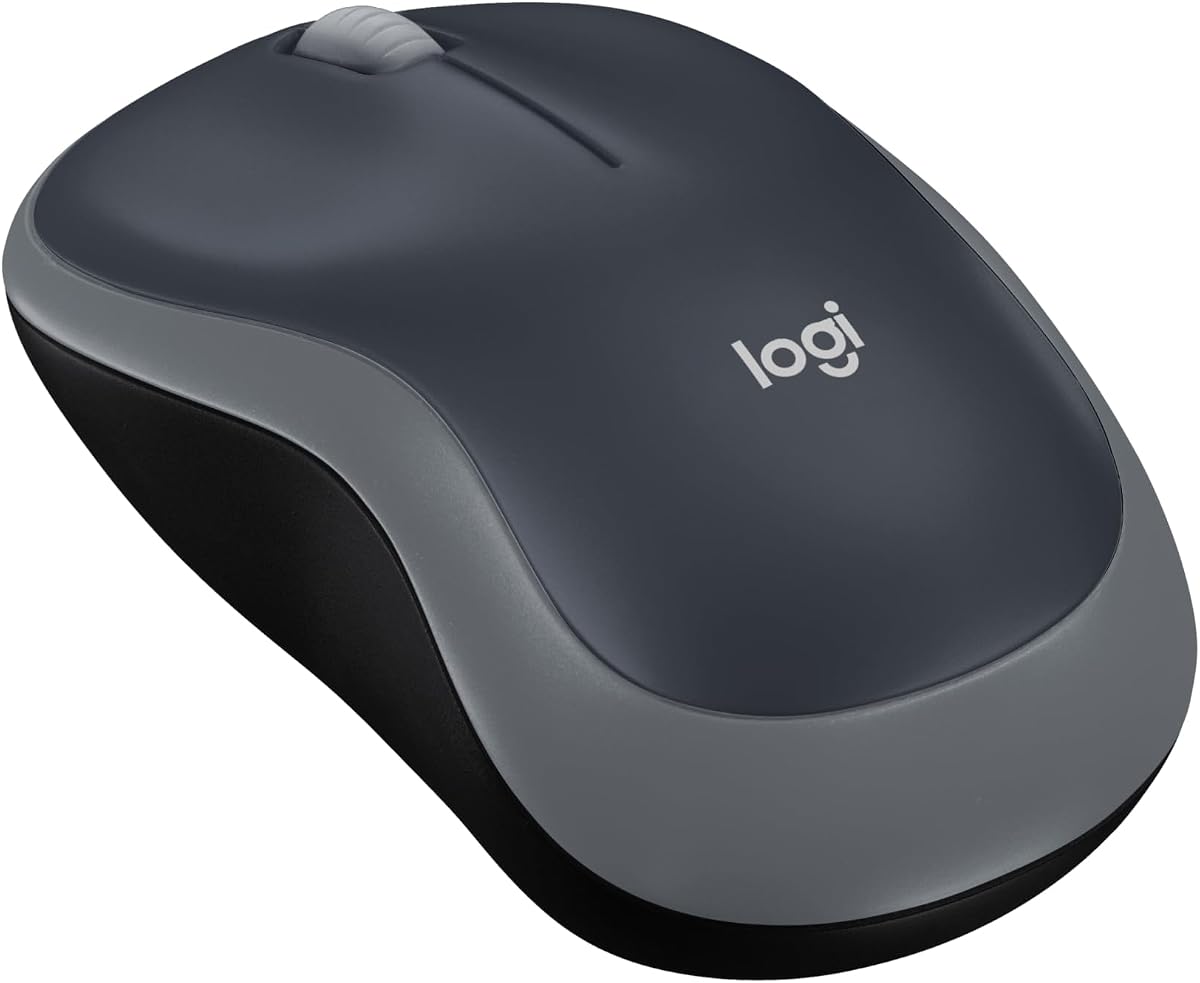
Logitech M185
4.4Editor score
Compact ambidextrous design
2.4 GHz nano receiver
No setup required
Best Mouse for iMac Desktop comparisons cover wired, Bluetooth, and multi-device models, focusing on compatibility, comfort, tracking, and everyday convenience.
Choosing a mouse for an iMac desktop is simpler than it appears, but the best results come from matching the connection method, controls, shape, and tracking needs to your workspace. Some iMacs include USB-A ports, while newer models favor USB-C, making receiver compatibility an important detail.
This guide compares ten mice across wired, Bluetooth, and multi-device designs. It examines connection options, adjustable sensitivity, button layouts, noise levels, battery requirements, portability, hand support, and compatibility with macOS and other operating systems without claiming personal hands-on testing.
Each review identifies the product's strongest attributes and practical trade-offs. The selections range from simple plug-and-play wired models to compact wireless mice and a premium full-scroll design, with availability and configuration details subject to change over time.
4.4Editor score

4.6Editor score

4.5Editor score
The comparison below highlights each mouse's connection style, core controls, sensitivity options, portability, and most relevant iMac-related features.


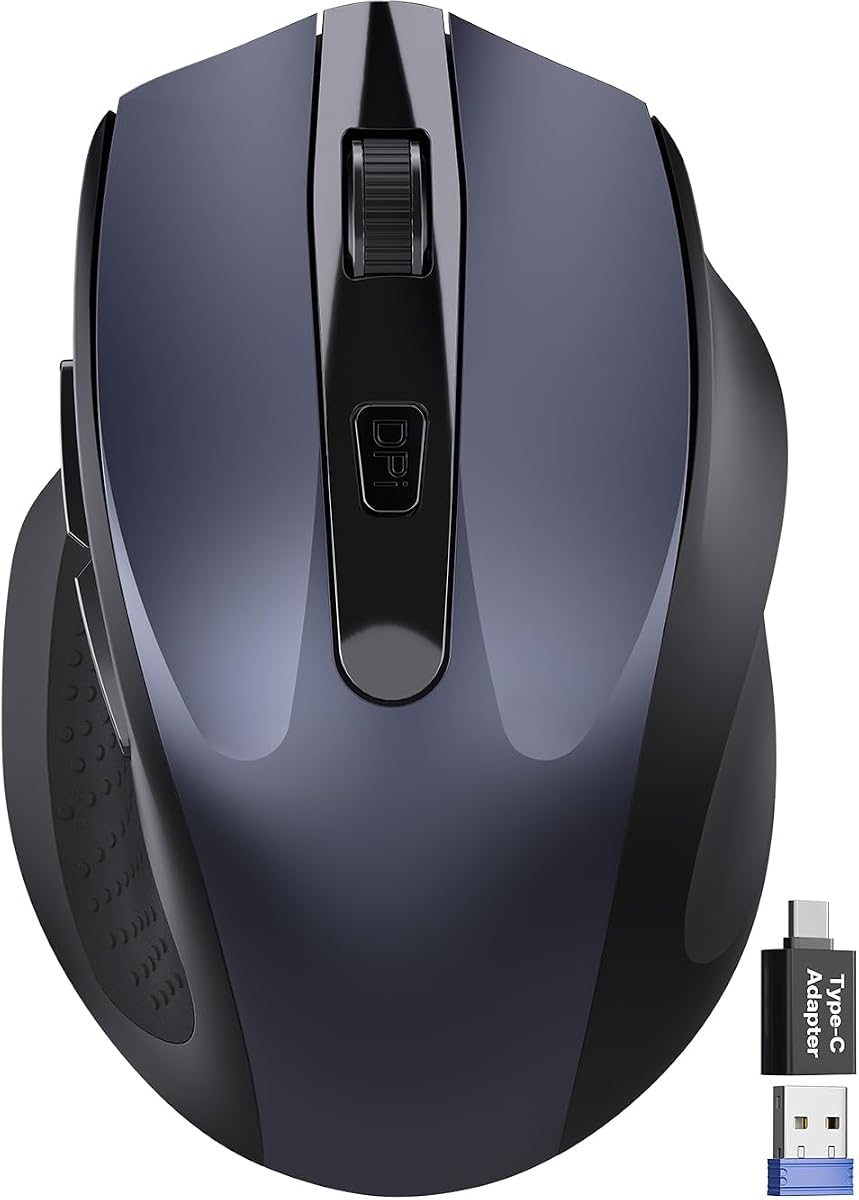

The Suteke Multi-Mode Wireless Mouse is a flexible option for people who move between an iMac, MacBook, iPad, Surface Pro, and other compatible equipment. Its 4.4 rating reflects a generally favorable reception, while its distinguishing feature is the ability to switch among Bluetooth 5.2, Bluetooth 3.0, and a 2.4 GHz receiver that carries both USB-A and USB-C connectors.
We may earn a commission when you buy through this link, at no additional cost to you.
The mouse offers three optical sensitivity levels of 800, 1200, and 1600 DPI, giving users a practical range for browsing, office work, and more precise cursor placement. Its quiet-click design reportedly reduces click noise by 96%, making it appealing in shared rooms or during late-night use. The included USB-C cable provides a straightforward charging method, and the stated battery runtime reaches several weeks in some conditions, with Bluetooth use estimated separately.
There are trade-offs to consider. The supplied information specifically notes that this mouse is better suited to small or medium hands using a palm or finger grip, so buyers with larger hands may find its slim contoured body less supportive. A mouse pad is also recommended for the best tracking experience. These limitations do not undermine its multi-device utility, but they are important for desk-specific shoppers.
This is a strong recommendation for an iMac user who wants one mouse for a computer, a portable Mac, and a tablet without committing to a single connection method. Choose it when broad compatibility, quiet operation, and rechargeable convenience matter more than a large sculpted body or a very high maximum sensitivity setting.
Bluetooth and dual-head 2.4 GHz connectivity make this model useful for quickly moving between Mac, PC, laptop, and tablet use. The different connection methods also provide useful alternatives when a preferred pairing method is inconvenient.
The advertised 96% click-noise reduction supports focused work in shared environments, while three DPI levels offer enough variation for routine productivity and detailed pointer placement.
We may earn a commission when you buy through this link, at no additional cost to you.
The Macally Dual-Connector Wired Mouse combines a practical three-button layout with an unusually useful wired plug. Its 4.6 rating is among the strongest in this group, and the dual USB-C and USB-A connector allows the same mouse to work with modern and traditional computer ports without requiring a separate adapter.
We may earn a commission when you buy through this link, at no additional cost to you.
The optical sensor provides 1200 DPI, which is a common and versatile level for everyday desktop navigation. Left click, right click, and a scroll wheel cover the controls needed for browsing, documents, and spreadsheets without adding buttons that may be confusing or difficult to reach. The contoured shape is designed for either hand, which also makes the mouse practical for shared workstations, classrooms, and homes.
Its wired design is both a strength and a limitation. Because the mouse receives power through the cable, it needs no batteries, charging cycle, or wireless pairing, and the connection cannot run down unexpectedly. At the same time, the cable adds a physical restriction, and the fixed 1200 DPI does not provide the sensitivity adjustment found on several other models in the list.
This mouse is an excellent fit for an iMac owner who values reliability and simplicity, especially if the desk has access to either USB-C or USB-A. It is less suitable for someone who wants to move freely between a desktop and a couch or needs adjustable sensitivity for specialized work. For a straightforward office mouse, however, its connector versatility is a clear advantage.
The built-in dual connector eliminates the need to carry a separate adapter when moving between USB-C and USB-A systems. That convenience is especially relevant for iMac users whose computers and accessories may use different port types.
A left button, right button, and scroll wheel keep the learning curve minimal. The 1200 DPI sensor supplies smooth movement for general office tasks, web navigation, and document work.
We may earn a commission when you buy through this link, at no additional cost to you.
The Macally USB-C Quiet Mouse is built for users who want a restrained set of controls and more control over pointer sensitivity. It holds a 4.4 rating and uses a direct USB-C connection, making it well suited to iMac desktops and other modern systems that provide compatible ports. The design avoids complicated features in favor of a familiar three-button and scroll-wheel arrangement.
We may earn a commission when you buy through this link, at no additional cost to you.
Its major strength is the DPI button, which cycles through 800, 1200, 1600, and 2400 DPI. That range lets users begin with a standard speed and move toward a more sensitive setting when navigating detailed documents, editing graphics, or repositioning the pointer. The quiet buttons reportedly reduce click noise by 90%, helping the mouse fit into offices, shared rooms, and other noise-conscious spaces.
The trade-off is its singular wired approach. A USB-C-equipped Mac can connect directly, but a system limited to USB-A would require an additional adapter, which is not listed among the included features. As with any corded model, the fixed connection is less convenient when the user needs to move around freely. The absence of extra shortcut buttons may also disappoint users accustomed to programmable productivity controls.
This is a sensible recommendation for an iMac owner who values quiet operation, plug-and-play USB-C use, and a genuine choice of sensitivity levels. It is best suited to a permanent desk, especially for users who work long sessions in shared environments and want the option to fine-tune cursor speed without installing software.
A dedicated DPI control makes changing pointer speed straightforward. Four levels offer more flexibility than a fixed-sensor mouse while preserving a simple, driver-free experience.
The advertised 90% reduction in button noise is useful in shared offices and quiet homes. The scroll wheel remains part of the traditional layout, preserving familiar navigation behavior.
We may earn a commission when you buy through this link, at no additional cost to you.
The Macally Silent Wired Mouse stands out as a balanced iMac accessory because it combines a slim, understated body with quiet buttons and four sensitivity levels. Its 4.6 rating makes it one of the best-rated products considered, and the plug-and-play approach avoids the setup complexity associated with wireless devices or software-heavy configurations.
We may earn a commission when you buy through this link, at no additional cost to you.
The sensor can be set to 800, 1200, 1600, or 2400 DPI using a physical control, allowing users to tailor the pointer to different tasks. At the same time, the mouse maintains a simple layout and does not rely on batteries. A five-foot USB-A cable is long enough for many desks and delivers a stable connection without the charging interruptions or pairing routines found on wireless alternatives.
Its primary limitation is the USB-A plug. Newer iMac models may not include this type of port, so owners may need a compatible adapter if their computer has only USB-C connections. The mouse also lacks additional shortcut controls, which could restrict workflow for people who regularly use application-specific buttons. Even so, its compact silhouette and ambidextrous positioning make it broadly approachable.
The recommendation is strongest for iMac users with USB-A access who want quiet operation, adjustable sensitivity, and a stable desktop connection. It can also work with Windows PCs and other compatible systems. For a fixed office desk, this model offers the most balanced combination of essential features among the wired selections in the guide.
The physical DPI switch provides meaningful control over pointer speed while retaining a straightforward three-button approach. It is a practical middle ground between a fixed-sensor office mouse and a feature-heavy productivity device.
A slim profile takes up relatively little desk space, while the ambidextrous shape can suit either hand. The 90% noise reduction is especially relevant for shared offices, libraries, and homes.
We may earn a commission when you buy through this link, at no additional cost to you.
The Macally Rechargeable Bluetooth Mouse is designed for users who want a wireless pointer that visually fits well alongside Apple equipment. It carries a 4.4 rating, supports Mac, MacBook, iPad, and PC use, and offers a slim, understated form that can complement an iMac desk without the bulk of many traditional productivity mice.
We may earn a commission when you buy through this link, at no additional cost to you.
Bluetooth connectivity is rated to work from up to 30 feet, providing a useful amount of freedom around a desk or room. The rechargeable battery and included USB-C charging cable remove the need for disposable batteries, while silicone membranes beneath the buttons are advertised to make clicks up to 90% quieter. Importantly, that noise-reduction figure applies to the buttons rather than the scroll wheel.
The wireless format does introduce a few practical considerations. The mouse must be paired through Bluetooth, which is less immediate than inserting a wired plug or a 2.4 GHz receiver. It also cannot provide the uninterrupted physical connection of a cable, and its minimal styling does not appear to include extra programmable shortcuts. Users who require those controls should verify their preferred workflow before choosing.
This is a well-rounded recommendation for an iMac user who values a clean Apple-style appearance, quiet button operation, and rechargeable convenience. It works particularly well for someone who wants to alternate between a desktop and an iPad or MacBook without dealing with a dedicated receiver.
The ultra-thin profile and minimal styling are intended to blend into an Apple-centered workspace. Bluetooth pairing also makes it convenient to move between a Mac and an iPad without carrying a receiver.
A rechargeable design reduces ongoing battery replacement, and the USB-C cable provides a familiar way to recharge. Noise-reducing button membranes support quiet work, although the scroll wheel remains outside the stated reduction.
We may earn a commission when you buy through this link, at no additional cost to you.
The FYBC Mouse and Jiggler is a distinctive option because it combines a compact wireless mouse with a mouse-jiggler function. Its 4.3 rating remains positive, and the integrated movement feature may appeal to office workers, remote workers, and IT professionals who want their computer to remain active during brief absences without adding a separate peripheral.
We may earn a commission when you buy through this link, at no additional cost to you.
The mouse supports Bluetooth 5.2, Bluetooth 3.0, and a 2.4 GHz receiver with both USB-A and USB-C connections. Its optical sensor offers 800, 1200, and 1600 DPI levels, while the rechargeable battery is stated to last as long as 90 days depending on use. A USB-C charge is reported to take approximately 1.5 to 2 hours, and the mouse weighs 68 grams.
Users must understand that the jiggler is not an automatic security or presence system. It activates by pressing and holding the DPI button for several seconds, and the supplied information describes its purpose as keeping the computer awake. It should therefore be used thoughtfully, especially on systems where unattended access could create privacy or security concerns. The slim shape is also better aligned with small and medium hands.
This mouse is a good fit for iMac users who specifically want a mouse jiggler built into a multi-device design. It offers more connection choices than a standard Bluetooth model and a lighter footprint than many full-size wireless mice, making it practical for travel and shared workspaces.
The integrated jiggler removes the need to carry a separate mouse-mover accessory. Its button-based activation gives the user direct control instead of leaving the movement function running continuously.
Bluetooth and a dual-port 2.4 GHz receiver make the mouse adaptable to several systems. The rechargeable design and fast USB-C charging support convenient travel use.
We may earn a commission when you buy through this link, at no additional cost to you.
The Compact Cordless Travel Mouse is aimed at people who need an easy-to-carry pointing device for an iMac, laptop, tablet, or other compatible system. Its 4.4 rating indicates solid reception, and the defining strengths are a tiny 4.09-by-2.68-by-1.49-inch body, a built-in thumb rest, and support for both USB-A and USB-C connections.
We may earn a commission when you buy through this link, at no additional cost to you.
The package includes a USB-A nano receiver and a USB-C adapter, giving it broader desktop and laptop compatibility than a receiver-based model limited to one port. Three DPI levels provide a useful range of cursor speeds, and forward and back buttons make document and page navigation more efficient. The company also states that the mouse can track on wood, fabric, paper, and leather without requiring a dedicated pad.
There are a few caveats. Its asymmetrical shape is specifically designed for right-hand use, which narrows its appeal compared with truly ambidextrous alternatives. It uses one AA battery, and that battery is not included in the package. The stated battery life of up to 18 months depends on use and the sleep settings, so actual results will vary with activity levels.
This is a useful recommendation for an iMac owner who travels frequently, works in compact areas, or wants a mouse that can move easily between a desktop and a laptop. Its extra navigation buttons and cross-surface tracking make it more feature-oriented than a bare-bones travel mouse, while its small size remains the central attraction.
The compact dimensions make the mouse easy to store in a laptop bag and unobtrusive on a crowded desk. An integrated thumb rest can reduce the need to grip the body tightly during extended use.
Forward and back buttons add practical shortcuts for document and browser navigation. The included USB-C adapter broadens compatibility while preserving the small footprint.
We may earn a commission when you buy through this link, at no additional cost to you.
The Rechargeable Bluetooth Mini Mouse combines a slim profile with Bluetooth, 2.4 GHz, and mouse-jiggler functions. Its 4.4 rating indicates positive user reception, while its wide operating-system support—including macOS, iPadOS, Windows, Linux, Chrome OS, and Android—makes it a flexible choice for users who move among different devices.
We may earn a commission when you buy through this link, at no additional cost to you.
Connection options include Bluetooth 5.2, Bluetooth 3.0, and a receiver with USB-A and USB-C connectors. Three optical DPI levels are available at 800, 1200, and 1600. The 500 mAh battery is stated to provide up to 500 hours after a full charge, and an eight-minute inactivity sleep mode helps preserve power. A click wakes the mouse, which keeps reactivation uncomplicated.
The mouse-jiggler function is activated by holding the DPI button for several seconds and is designed to simulate movement when the user steps away. That makes the mouse relevant to office, remote-work, and IT environments, but it also means the function is not something users should leave active without considering security implications. Its compact body is best interpreted as portable rather than sculpted for long, large-hand use.
This is a solid recommendation for an iMac user who wants a small rechargeable mouse, broad system compatibility, and a choice of Bluetooth or receiver-based operation. It is particularly attractive for people who already recognize the value of a mouse jiggler and do not require a large set of programmable productivity buttons.
Bluetooth serves portable Mac and tablet use, while the dual-port receiver provides a wired-free alternative for desktop systems. This makes the mouse easier to adapt as the user's device mix changes.
The stated 500-hour battery runtime and automatic sleep behavior support extended use between charges. A simple click-to-wake design avoids complicated power controls.
We may earn a commission when you buy through this link, at no additional cost to you.
The Logitech M185 is a proven, uncomplicated choice for an iMac user who wants a familiar wireless mouse without elaborate controls. Its 4.4 rating reflects solid performance, and the compact, contoured body is designed for either the right or left hand. It works with Windows and Mac computers and uses a tiny 2.4 GHz nano receiver rather than Bluetooth.
We may earn a commission when you buy through this link, at no additional cost to you.
The strongest advantages are simplicity, portability, and predictable operation. Plugging in the receiver is all that is required, with no software, driver, or pairing process. The supplied connection range is up to 33 feet, and a smart sleep mode helps conserve power. The included AA battery is stated to deliver up to one year of use, although actual duration varies with activity and computing conditions.
The main limitation is the absence of adjustable DPI. Users are limited to the mouse's fixed sensitivity and cannot tune it for different applications. It also uses a replaceable battery rather than a rechargeable cell, and it lacks extra buttons, backlighting, or a mouse-jiggler function. The compact size benefits portability but may not satisfy buyers seeking a large sculpted grip.
The M185 is a strong recommendation for a student, office worker, or home user who needs a dependable iMac mouse that works for either hand. It is especially attractive for people who want fewer controls and immediate setup. Its restrained feature set makes it straightforward, though not as adaptable as the adjustable and multi-mode alternatives in this guide.
The 2.4 GHz nano receiver provides a stable connection with a straightforward plug-and-play setup. There is no app, pairing process, or special configuration to manage.
Its contoured shape and modest size suit both left- and right-handed users. The smooth cursor control and compact footprint also make it practical for travel, shared offices, and busy desktops.
We may earn a commission when you buy through this link, at no additional cost to you.
The Microsoft ARC Mouse delivers the most distinctive design in this guide, with a 4.5 rating and a thin, lightweight body built around an innovative full scroll plane. It supports Windows and Mac computers over Bluetooth, making it a natural option for an iMac desktop owner who values a clean aesthetic and a different approach to scrolling.
We may earn a commission when you buy through this link, at no additional cost to you.
Instead of restricting movement to a narrow wheel, the ARC Mouse allows vertical and horizontal scrolling across the full touch surface. That can be particularly useful for wide timelines, spreadsheets, image canvases, and other interfaces where conventional horizontal wheel movement is limited. The left and right click areas are also precisely defined, while the body folds flat enough to slip into a pocket or bag.
Its minimalism comes with trade-offs. The full-plane mechanism replaces the familiar shape of a standard scroll wheel, so users accustomed to a raised wheel may need time to adjust. There are no extra shortcut buttons or stated DPI controls, and the product's appeal rests primarily on its design, portability, and scrolling method rather than extensive programmability.
For an iMac user willing to adopt a different interaction model, the ARC Mouse is a premium recommendation. It is best suited to people who value elegant minimalism, easy portability, and effortless horizontal navigation more than extensive physical controls. It also works well for users who routinely move between a home and office setup.
The full scroll plane supports both vertical and horizontal movement, expanding navigation options in documents, spreadsheets, and creative applications. It replaces the narrow scroll-wheel interaction with a broader gesture surface.
The mouse is ultra-slim and lightweight, and it can snap into a flatter form for storage. That portability makes it particularly suitable for people who work across multiple computers and limited desk spaces.
We may earn a commission when you buy through this link, at no additional cost to you.
The right iMac mouse depends on your computer's ports, work habits, preferred sensitivity, and need for portability. These factors help narrow the field before choosing a specific design.
Start by identifying the ports on your iMac and the peripherals you plan to connect. Some mice use a dedicated USB-A nano receiver, some connect through USB-C, and others support both USB-A and USB-C adapters. Bluetooth models avoid a receiver entirely but require compatible wireless pairing. A wired USB-C mouse is direct and dependable on newer desktops, while a USB-A model may need an adapter on a system that lacks the older port.
Choose the connection type that fits your existing equipment and daily workflow. Do not assume that a USB-A receiver will fit a USB-C-only desktop without checking whether an adapter is included.
Wired mice provide a consistent physical connection, require no charging, and are generally well suited to permanent desks. Wireless mice reduce cable clutter and make it easier to move around, but they introduce batteries, charging routines, wireless reception, and pairing considerations. A 2.4 GHz receiver usually offers a straightforward plug-in experience, while Bluetooth can be convenient for switching among several personal devices.
Pick wired for simplicity and uninterrupted desktop use. Pick wireless when mobility, a cleaner desk, or cross-device use matters more.
DPI determines how far the pointer travels for a given physical movement. A fixed 1200 DPI setting is sufficient for many office tasks, while adjustable models commonly offer 800, 1200, 1600, and 2400 DPI options. More settings can help when working with small interface elements, large displays, design software, or long document navigation. Optical tracking should also be tested against the surfaces you use, especially if you alternate between a desk mat, bare wood, fabric, or other materials.
Look for enough sensitivity options for your workload without unnecessary controls. A simple fixed setting is often more convenient for standard use.
Mouse comfort is highly personal. Ambidextrous models are suitable for either hand, while compact asymmetrical designs may provide more support for right-handed users. Large sculpted bodies can reduce strain during long sessions, but they occupy more desk space and may be unsuitable for travel. Very slim mini mice are portable and attractive, yet some users find them less supportive over extended periods. The product descriptions also identify hand-size guidance where it is available.
Choose based on grip and desk space rather than appearance alone. A mouse that feels natural is more likely to become a comfortable daily tool.
Quiet buttons can make a noticeable difference in an office, library, shared home, or late-night setting. Several products in this guide advertise 90% or greater reductions in click noise, although the wheel itself may not be covered by that claim. Silent operation should not be confused with a completely silent mouse, because scrolling can still produce sound. If colleagues or household members are frequently nearby, click reduction is worth considering.
Look for a clear noise-reduction claim and check whether it applies only to the buttons. A quieter model can improve focus without changing core controls.
Some iMac mice add navigation buttons, adjustable sensitivity, rechargeable batteries, or mouse-jiggler functions. These can be useful, but each extra feature adds complexity. Forward and back buttons help with browsing and documents, a DPI switch offers pointer control, and a jiggler can simulate movement when the computer should remain awake. A jiggler should be activated deliberately because it may keep a workstation available while the user is away.
Prioritize only the extras that solve a real problem. A dependable, simple mouse is often better than a feature-heavy model with controls you never use.
Wireless mouse ownership can involve disposable batteries, rechargeable cells, or both. Replaceable-battery models may be convenient because a fresh cell can restore operation quickly, while rechargeable models reduce recurring purchases but require a cable and regular charging. Pay attention to stated battery durations, sleep behavior, and whether a battery is included. Long advertised runtimes are usually best-case figures that vary with pointer activity, connection mode, and system behavior.
Choose the battery system you will realistically maintain. If you tend to forget charging, a long-running replaceable battery may be more convenient.
A permanent iMac desk can accommodate almost any shape, but compact mice are useful if you also work on a laptop, travel, or work in a small room. Mini mice fit easily into bags and take up little desk space, while full-size sculpted models can feel more substantial during extended use. Fold-flat designs are especially easy to carry. A travel-friendly mouse should still offer enough comfort and tracking for your usual sessions rather than being chosen solely for its small case.
Balance portability with comfort. The smallest device is not automatically the best mouse if it becomes tiring during your normal workday.
For a wired mouse, connect the appropriate USB-A or USB-C plug before opening the pointer controls. Wireless 2.4 GHz models generally require inserting the included nano receiver into a compatible port, while Bluetooth models need to be placed in pairing mode using the controls described in the manual. Once connected, open macOS System Settings and visit Bluetooth or Mouse settings if you want to adjust pointer speed, scrolling behavior, or secondary-click preferences.
Use the DPI control, if present, to match pointer speed to the task. Lower settings can support broad navigation, while higher settings are useful for dense menus, small controls, or large displays. Test the mouse on every surface you routinely use, and clean optical sensors if cursor movement becomes inconsistent. For wireless models, recharge before long work sessions and follow the stated sleep or power-saving behavior.
Keep the mouse free from dust, sticky residue, and excessive moisture, and avoid pulling on a wired connection. Clean the receiver ports and the underside sensor with a soft, dry cloth. Store a rechargeable mouse in a protective pouch during travel, keep spare batteries with a replaceable-battery model, and review the manufacturer guidance before opening the housing or changing internal components.
The products in this guide are described as compatible with Mac systems, but the exact setup can depend on the model and the iMac's ports. Wired USB-C mice connect directly to compatible USB-C ports, while USB-A mice may require an adapter. Bluetooth and 2.4 GHz options use their own pairing or receiver procedures, so check the connection requirements before buying.
Bluetooth is convenient when switching among a Mac, iPad, and other Bluetooth-enabled devices because no receiver is required. A 2.4 GHz model can be even more straightforward on a fixed desk because the tiny receiver is simply inserted. The better choice depends on how often you switch devices and whether you value receiver-free portability or stable dedicated operation.
A wired mouse with a USB-C plug is intended for iMac models that include compatible USB-C ports. It should not be assumed to work with an older desktop that only offers USB-A. If your iMac lacks USB-C, choose a mouse with a USB-A plug or use a suitable adapter, preferably one that supports the required data connection.
Most general office tasks, web browsing, and document editing are comfortable at a middle setting such as 1200 or 1600 DPI. Higher settings can help with precise placement in design tools or large workspaces, while lower settings reduce pointer travel. Adjustable models let you experiment without reinstalling software, and the right choice ultimately depends on display size and personal preference.
Not necessarily. Several product descriptions limit their noise-reduction claims to the left and right buttons, while the scroll wheel can still produce audible sound. If noise is a major concern, look for a model whose description specifically covers the wheel or verify the manufacturer's complete sound specifications before making a selection.
An integrated jiggler can simulate pointer movement to help keep a computer from locking during brief absences, avoiding the need for a separate mouse-mover accessory. It should be activated and deactivated deliberately, particularly on shared or secured systems, because keeping a session active can create unintended access risks.
A mini mouse is best for portability, smaller desks, and lighter portable use. Comfort depends on hand size and grip, and some users may find a compact body less supportive than a larger sculpted model. Check the stated hand-size guidance and consider how long the mouse will be used in each setting before choosing a mini design.
The products described as plug-and-play generally do not require drivers or setup software for basic pointer use. macOS may provide basic mouse settings, while wireless models require their specified pairing or receiver connection. Dedicated DPI buttons on several models handle sensitivity without additional software, which is useful for users who want a straightforward setup.
The Logitech M185 is the most approachable option for users seeking a compact, ambidextrous wireless mouse with immediate setup. The Macally Silent Wired Mouse is the strongest all-around choice for a permanent desk because it combines quiet operation, four DPI levels, and a dependable wired design, while the Microsoft ARC Mouse stands apart for its premium construction and full scroll plane.
Prioritize the details that affect daily use: confirm the physical port, compare the mouse size with your hand, decide whether quiet clicks matter, and check whether a wired or wireless format better suits your desk. Additional features such as a DPI button, navigation shortcuts, rechargeable construction, or a mouse jiggler can be valuable, but they should complement rather than dictate the decision.
Product listings and device support can evolve, so verify the current specifications, included accessories, and compatibility information before purchasing. The most suitable Mouse for iMac Desktop is the one that connects cleanly, feels comfortable, and provides the controls required for your particular routine.