4G LTE Solar Security Camera
5.0Editor score
Included annual cellular data
2K color night vision
360-degree pan control
IP66 weather protection
Our expert guide compares 10 security cameras for job sites, evaluating cellular coverage, solar power, image quality, alerts, durability, and remote monitoring
Security cameras for job sites must work where conventional Wi-Fi cameras struggle: unfinished buildings, remote lots, equipment yards, and newly developed properties without reliable internet service. The best models combine cellular connectivity, solar charging, flexible viewing, night imaging, and weather-resistant construction so supervisors can monitor valuable assets from a phone.
We compared these cameras by examining their power options, cellular capabilities, image and night-vision specifications, motion detection, viewing range, storage support, installation flexibility, and suitability for outdoor work environments. The list includes single-camera and multipack options, emphasizing products that can operate without wired power or dependence on a jobsite Wi-Fi network.
Each pick reveals how it balances monitoring features, field durability, and practical operation. The TACTACAM Defend 360 stands out for flexible remote control, the Metal 4G LTE Solar Camera offers exceptional optical reach, and several alternatives prioritize affordability, two-camera coverage, or flexible connectivity. Prices and service terms can change, so confirm current listings before purchasing.
5.0Editor score

5.0Editor score

4.0Editor score
The comparison covers cellular dependence, solar charging, image capabilities, motion alerts, viewing control, outdoor durability, and storage or deterrent features. Several options require a cellular plan, a SIM card, or both, while connectivity and recording behavior differ meaningfully across the list.


The TACTACAM Defend 360 is a cellular security camera designed for remote sites without dependable Wi-Fi. It has a 4.0 rating and distinguishes itself with 4K photos, 1080p video, 360-degree pan, tilt, and zoom control, plus a solar-powered rechargeable battery. That combination makes it particularly useful for gates, storage yards, cabins, barns, and isolated portions of a construction property.
We may earn a commission when you buy through this link, at no additional cost to you.
Its most important advantage is operational flexibility. Rather than requiring a network cable, wall outlet, or local router, the camera uses LTE cellular service to send motion alerts and imagery to a phone. Users can remotely rotate the camera to inspect different directions, reducing the need to install several fixed units when one adjustable viewpoint can cover a broad area. The 4K photo capability can also help with detailed documentation of equipment, materials, or suspicious activity.
There are trade-offs to consider. The 4.0 rating is respectable rather than exceptional, and the 1080p video is lower-resolution than the still-photo specification might initially suggest. A jobsite still needs usable cellular coverage, and a solar camera depends on adequate sunlight to maintain its rechargeable battery. The camera is most attractive to buyers who value remote control and very high-resolution photos over the highest video resolution.
Overall, the Defend 360 is a strong choice for a supervisor who wants one camera to cover a large or evolving site without running cables. It suits contractors, property managers, and owners monitoring remote access points. Confirm LTE coverage at the intended location, orient the solar panel toward usable sunlight, and verify current cellular service requirements before installation.
The remote pan, tilt, and zoom controls let a user inspect different parts of the site as conditions change. That adjustability is especially helpful when equipment moves, entrances shift, or a single pole can provide a broader view than several fixed cameras.
A solar panel and built-in rechargeable battery remove the need for a nearby electrical outlet. Installation is consequently easier at remote gates, storage containers, and undeveloped portions of a job site, provided the panel receives adequate sunlight.
We may earn a commission when you buy through this link, at no additional cost to you.
The Vosker VKX Video is a solar-powered 4G LTE camera built for remote monitoring and long periods between maintenance visits. It carries a 3.4 rating and uses an included SIM card for cellular communication. Its 1080p daytime imagery, 100-foot motion detection, infrared night vision, and integrated deterrent light give it a practical combination of monitoring and visible deterrence features.
We may earn a commission when you buy through this link, at no additional cost to you.
The emphasis is on low-power field operation. A frameless solar panel is paired with a high-capacity, front-access 14,000mAh battery, and the manufacturer advertises autonomy of up to six months. The camera can request 15-second clips through the mobile app and can be programmed to take motion-triggered photos. Its rugged antenna and IP65 rating are designed for outdoor conditions such as rain, snow, dust, and general jobsite wear.
The principal limitation is its recording model. This is not a live-streaming camera, and buyers who require uninterrupted footage should look elsewhere. Its 90-degree viewing angle is also narrower than the 270-degree, 355-degree, or 360-degree pan options offered by several competitors. The 3.4 rating reinforces that it is a specialized, low-power camera rather than a universally flexible surveillance system.
The VKX Video makes sense for a storage yard, equipment area, or remote worksite where long autonomy, easy battery swaps, and deterrence are more important than continuous streaming or panoramic control. It is particularly relevant for users familiar with the Vosker data-plan model. Review the cellular terms and confirm coverage before deploying the camera.
The large solar panel and front-access battery are central to the VKX design. Field users can service the power system without disturbing the camera and can rely on solar charging during extended periods away from conventional power sources.
Motion detection can identify activity within 100 feet, while the integrated light signals that the area is monitored. The combination is useful for yards where visible deterrence may discourage an intruder before further action is needed.
We may earn a commission when you buy through this link, at no additional cost to you.
The Metal 4G LTE Solar Camera is the most feature-forward model in this guide and holds a 5.0 rating. Its 6MP sensor, 50X true optical zoom, dual-lens display, and 355-degree pan provide unusually broad monitoring options. It is built for farms, construction sites, warehouses, cabins, and other off-grid locations where cellular coverage exists but Wi-Fi and wired power do not.
We may earn a commission when you buy through this link, at no additional cost to you.
Optical zoom is the feature that most clearly separates this model from cameras offering only digital magnification. Instead of enlarging a low-resolution crop, the lens can bring distant subjects closer with greater detail, making it useful for identifying faces, license plates, or activity around a distant perimeter. The dual-screen app view can display upper and lower perspectives simultaneously, while 360-degree pan and 90-degree tilt reduce blind spots.
Its metal housing, 12,000mAh battery, and 6W solar panel are intended for durable outdoor use. The camera and panel install separately, allowing the camera to be placed in a useful viewing position while the panel is mounted where it can receive stronger sunlight. One limitation is that motion tracking is manual rather than automatic. Users must adjust the view themselves instead of relying on the camera to follow a moving subject.
This is the top pick for a buyer who values image detail and optical reach. It is also compelling for large properties where a 50X lens could eliminate the need for several nearby fixed cameras. It supports major U.S. carriers through the included SIM, so check which carrier offers the strongest service at the installation site. For users who need true zoom, extensive articulation, and a rugged enclosure, it is the most complete option here.
The 50X optical lens preserves usable detail when a subject is far from the installation point. That is a meaningful advantage over digital zoom, which enlarges pixels and can produce a blurrier final image.
A metal shell offers greater heat resistance and durability than a lightweight plastic enclosure. The separate solar panel and camera placement also makes it possible to optimize the viewing angle independently from solar exposure.
We may earn a commission when you buy through this link, at no additional cost to you.
The SEHMUA 4G LTE Solar Security Camera is an approachable option for monitoring a construction site, barn, warehouse, RV, or vacation property without Wi-Fi. It has a 4.2 rating and combines 2K imagery, full-color night vision, a 360-degree rotating view, PIR detection, two-way talk, solar charging, and a built-in SIM card.
We may earn a commission when you buy through this link, at no additional cost to you.
The camera is genuinely wireless after the initial charging requirement, which is important for sites that lack a nearby outlet. Users can rotate the lens horizontally and vertically, adjust PIR sensitivity, receive phone notifications, and speak through the built-in speaker and microphone. The app also supports a 4X digital zoom, while the spotlight must be enabled manually when color night vision is needed.
The ongoing cellular cost deserves attention. The included EIOTCLUB SIM is for U.S. use and works with AT&T, T-Mobile, and Verizon, but a subscription is required after the stated trial. Cloud storage is also tied to a trial. These service conditions do not make the camera poor value, but they should be included in any long-term jobsite monitoring budget.
The SEHMUA is best for cost-conscious buyers who need dependable cellular monitoring, a flexible viewing angle, and solar power without paying for optical zoom. Its 4.2 rating and useful feature set give it a strong balance of capability and affordability. Verify cellular coverage, complete the initial charge as directed, and test the app before relying on the camera for unattended monitoring.
The 2K sensor and full-color night mode make nighttime monitoring easier to interpret than monochrome footage. The spotlight is app-controlled, allowing users to activate it when extra illumination is useful rather than relying on it continuously.
Built-in microphone and speaker functionality enables direct conversation through the phone app. This can be useful for checking with a site contact, though it should not be treated as a substitute for site safety procedures.
We may earn a commission when you buy through this link, at no additional cost to you.
The Vosker VKX 4G LTE Solar Cellular Security Camera 2-Pack provides two low-power cameras for separate parts of a jobsite. It shares the VKX emphasis on solar autonomy, front-access batteries, rugged antenna construction, and on-demand 15-second clips. Its 3.4 rating reflects the same specialized recording approach seen in the single-camera Vosker alternatives.
We may earn a commission when you buy through this link, at no additional cost to you.
A two-camera pack can monitor separate entry points, storage containers, or equipment areas without requiring two separate purchases. Each unit can be programmed to capture photos when motion is detected, while users can request short video clips through the mobile app. The frameless solar panels are intended to discourage snow and dust accumulation, and the advertised autonomy reaches up to six months without external power.
Buyers should not expect continuous recording or live streaming. Photo and video transmission require a Vosker cellular data plan following the included trial. The pack also offers detection snoozing for temporary privacy and an integrated deterrent light. These are meaningful operational details for a remote site where avoiding unnecessary mobile data may be as important as avoiding wiring.
This 2-Pack is best for a buyer who wants to cover two related but separate areas with a consistent camera design. It makes sense for a construction entrance plus a materials yard, or for two storage locations. It is less appropriate for users who need continuous recording, live streams, or a wide pan range. Confirm service availability and plan requirements before deployment.
Using the same camera model at two points simplifies app habits and maintenance. It also allows a contractor to watch an entry and a separate storage area without installing a second mixed system.
Requested clips and motion-triggered photos can reduce unnecessary transmission compared with continuous cloud video. Users can also snooze detection during selected periods when alerts are not needed.
We may earn a commission when you buy through this link, at no additional cost to you.
The 4G LTE Cellular Security Camera 2-Pack is designed for users who want two wireless cameras covering a jobsite without Wi-Fi. It has a 4.1 rating and provides 2K color night vision, 270-degree pan, 90-degree tilt, 4X digital zoom, PIR detection, two-way audio, and solar power. Both units are weather resistant for outdoor installation.
We may earn a commission when you buy through this link, at no additional cost to you.
The package includes pre-installed and pre-activated 4G LTE SIM cards with a seven-day data trial, followed by paid monthly or annual service options for U.S. use. Local event playback can use a microSD card, although one is not included, while optional cloud storage must be applied for through the app. Phone notifications can be triggered by people, vehicles, and animals.
The 270-degree pan and 90-degree tilt provide a broad field of view without reaching the 360-degree class offered by some alternatives. Four spotlights support color nighttime imagery, while speaker and microphone hardware enable two-way communication. The complete absence of Wi-Fi dependence is a major advantage at a newly built site, storage yard, or remote equipment area.
This two-pack works well for buyers who value two units and straightforward remote monitoring over advanced optical zoom. It is a good fit for monitoring two entry points or an active work zone and a separate equipment area. The main caveats are the need for cellular service and the possible extra cost of storage media. Check the data and cloud terms carefully, and test both cameras before leaving the site unattended.
Each unit operates over its own cellular connection and receives power from a solar system. That arrangement allows a contractor to cover separated areas without extending Wi-Fi or running power cables.
Remote playback through the Ubox app supports event review, while two-way audio provides a way to check with visitors or personnel. Users can choose local microSD storage, optional cloud storage, or both according to their needs.
We may earn a commission when you buy through this link, at no additional cost to you.
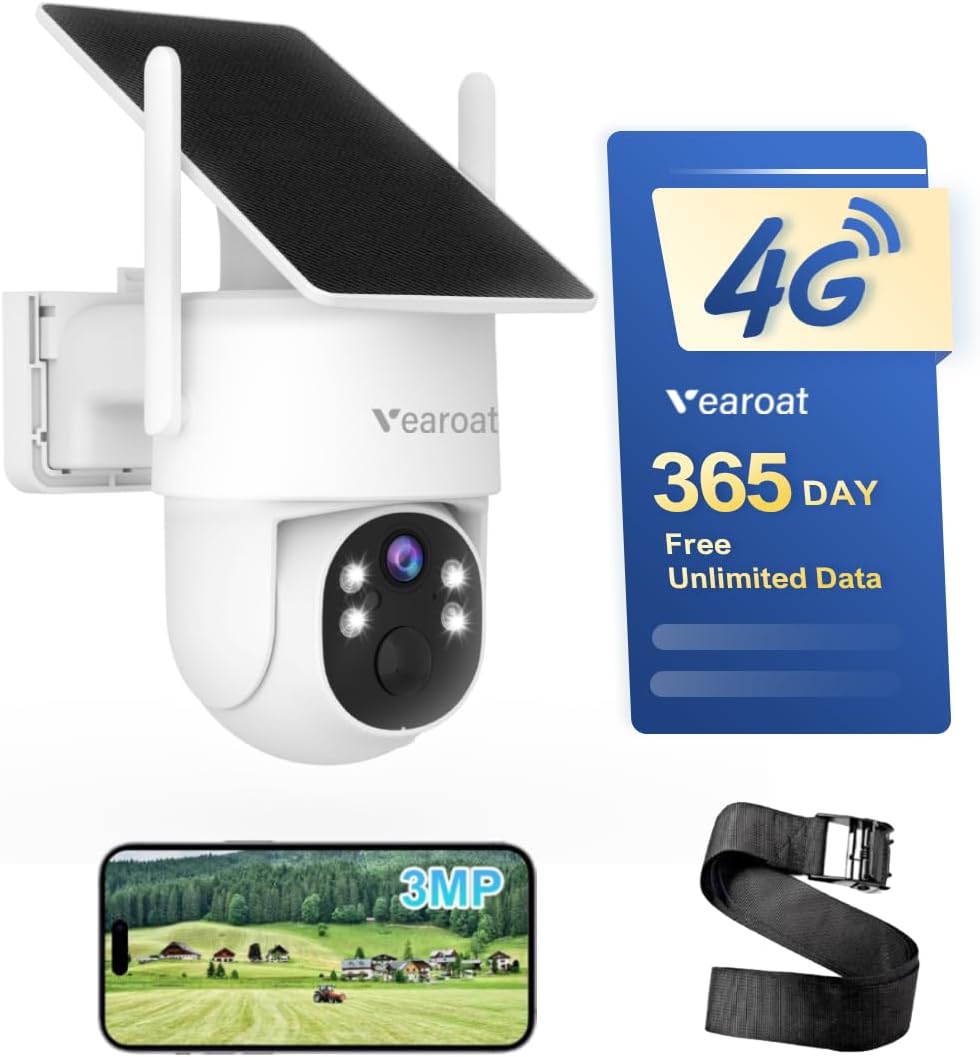
The 4G LTE Solar Security Camera is a 5.0-rated model that combines 2K video, color night vision, wide-area PTZ control, two-way audio, and a generous cellular-data allowance. It is designed for farms, construction sites, barns, RVs, and warehouses where 360-degree coverage and local storage are valuable operating features.
We may earn a commission when you buy through this link, at no additional cost to you.
Its 360-degree pan, 120-degree tilt, and 6X digital zoom provide more movement than the typical fixed jobsite camera. Infrared LEDs and the image sensor support full-color night footage, while human-detection alerts help surface relevant activity. The included 7W solar panel charges a 7,800mAh battery, and the housing carries an IP66 rating for year-round outdoor use.
The supplied SIM includes 365 days of unlimited data, which simplifies initial service setup. After that period, the user can renew by scanning the device's data-renewal code. A microSD card up to 128GB can store local recordings, but it is not included. This combination of cellular and local storage is useful because the camera can retain event footage on the device while also using the network for notifications.
The camera is an excellent general-purpose choice for a job site that needs 2K quality, mobile alerts, night visibility, and flexible remote control. It may be especially attractive to buyers who prefer cellular service already being organized for the first year. Confirm that the included data remains appropriate for the intended monitoring schedule, and purchase suitable storage if local recording is important.
The included 365 days of unlimited data removes the need to arrange service immediately after setup. Renewal is handled through a QR code on the device, making the transition to another term relatively straightforward.
Users can receive human-detection alerts through the network and save recordings locally on an optional microSD card. Supporting both methods adds flexibility when mobile data conservation or offline event review becomes important.
We may earn a commission when you buy through this link, at no additional cost to you.
The Vosker VKX 4G LTE Solar Cellular Security Camera, Video is a single-camera option built around long autonomy and low-data monitoring. It has a 3.5 rating, requests 15-second video clips through the app, and can capture photos when motion is detected. The absence of continuous recording makes it a specialized choice for remote sites that need periodic evidence rather than uninterrupted streams.
We may earn a commission when you buy through this link, at no additional cost to you.
Its frameless solar panel and swappable front-access battery support the advertised six-month operating autonomy without external power. The rugged antenna is intended to maintain communication in outdoor work environments, while the IP65 housing provides protection from dust and water. A strategically placed light makes the camera visible and provides an added deterrent against people and animals.
Privacy controls allow detection to be snoozed for a specified period, which is useful when legitimate activity makes alerts inconvenient. A Vosker data plan is required for photo and video transmission following the included trial. Users should also understand that this is not a live-streaming device and should not choose it for a role requiring continuous real-time viewing.
This model fits contractors who want a camera that can remain in a remote location for long stretches with minimal intervention. It is also appropriate for storage yards, remote properties, and barns where a visible deterrent and requested clips are enough. The rating is modest, so buyers should choose it for its specific low-power design rather than expecting the feature breadth of a 2K PTZ camera.
Solar charging and a front-access battery can simplify maintenance at a site that is inconvenient to reach. The advertised multi-month autonomy makes the camera especially relevant for widely dispersed equipment and storage areas.
The integrated light can discourage unwanted activity while making the monitored area visibly protected. Temporary detection snoozing gives the user control over when alerts are generated.
We may earn a commission when you buy through this link, at no additional cost to you.
The HOSAFE.COM 4G LTE Cellular Security Camera is a practical single-camera solution for a job site without Wi-Fi. It has a 4.1 rating and offers 2K color night vision, 270-degree pan, 90-degree tilt, 4X digital zoom, PIR detection, solar power, two-way audio, and a 64GB microSD card in the package.
We may earn a commission when you buy through this link, at no additional cost to you.
The included storage card separates it from several competing models whose microSD cards must be purchased separately. Events can be reviewed through the Ubox app, and optional cloud storage is available after application. A pre-installed and pre-activated 4G LTE SIM supports U.S. service, with a seven-day trial followed by monthly or annual cellular options.
The camera's 270-degree pan and 90-degree tilt cover a broad area, while four spotlights assist full-color night imagery. Human motion detection can notify the user by phone, and a built-in speaker and microphone enable communication. Its IP66 housing and stated temperature range support outdoor deployment, although the product still needs an appropriate mounting position and cellular reception.
The HOSAFE.COM is a strong choice for a buyer who wants straightforward cellular monitoring, app playback, and local storage without purchasing extra memory. It suits one entrance, a small storage area, or a remote equipment zone. The trade-off is the ongoing cellular plan and optional cloud requirement, but the supplied SIM and 64GB card simplify initial setup.
The bundled 64GB microSD card allows local event recording without a separate purchase. This is convenient for buyers who want a usable installation package and prefer avoiding additional storage costs.
Pan, tilt, and digital zoom can be adjusted remotely through the Ubox app. That flexibility makes the camera suitable for monitoring changing site layouts without relocating the mounting point.
We may earn a commission when you buy through this link, at no additional cost to you.
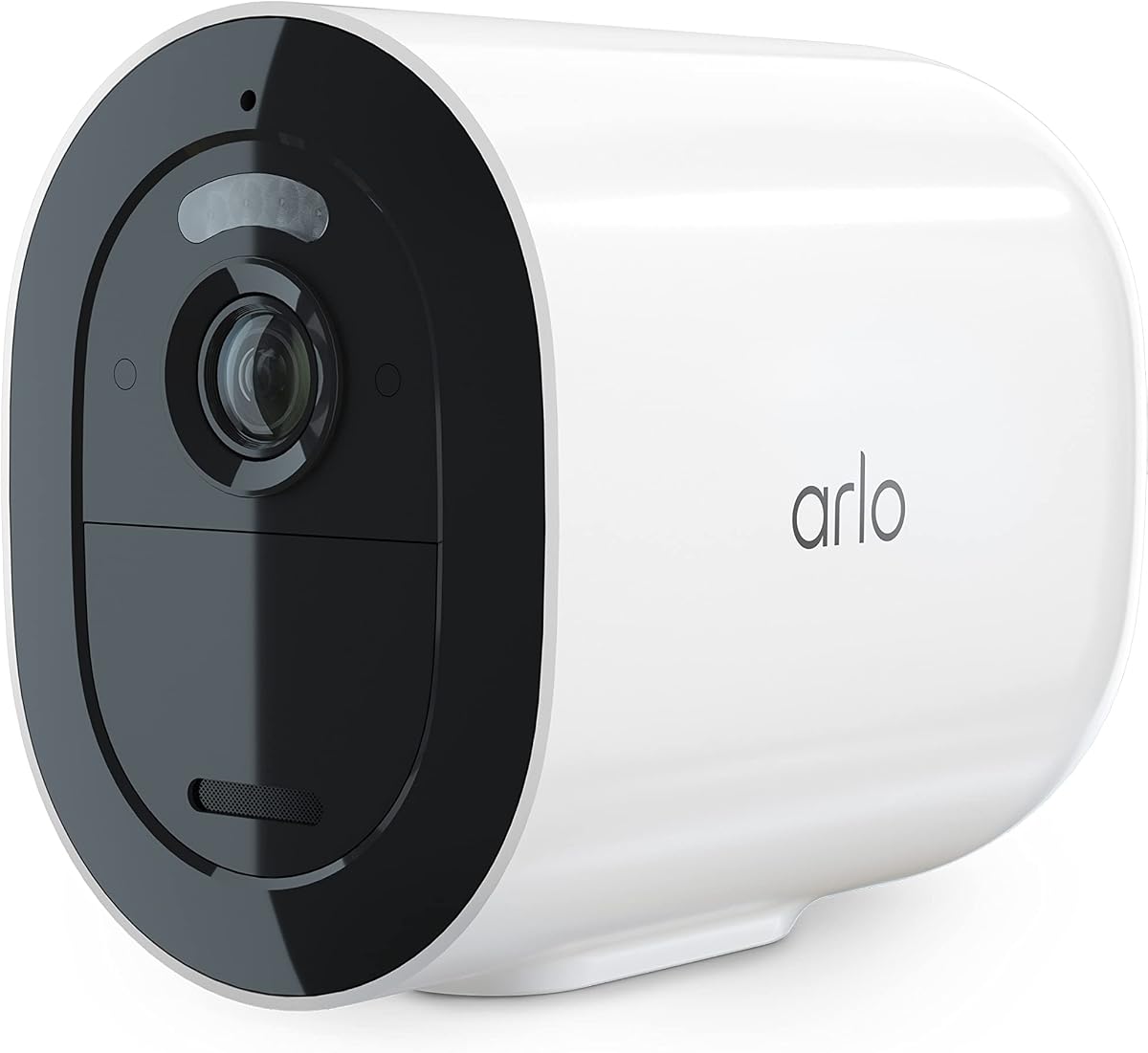
The Arlo Go 2 is a wireless 1080p security camera that can operate over 4G LTE or Wi-Fi. Its 3.5 rating reflects a recognizable feature set with broad placement flexibility, including a 130-degree field of view, color night vision, two-way audio, a spotlight, real-time notifications, live streaming, and local microSD recording.
We may earn a commission when you buy through this link, at no additional cost to you.
Unlike most cameras in this roundup, the Arlo Go 2 can use both cellular service and an existing 2.4GHz Wi-Fi network. It is therefore useful where connectivity changes between a jobsite office, a remote lot, and an established property. A rechargeable battery removes cord requirements, while the weatherproof body supports outdoor use. A SIM card is not included, so cellular users must arrange their own compatible service.
The battery-powered design requires regular charging, which limits it as a long-term unattended solution compared with solar models. The camera also lacks the large solar panel, broad optical zoom, and expansive pan range found among the leading cellular options. The mobile app supports GPS location tracking, which can help a user find a misplaced camera across a large property.
The Arlo Go 2 is best for a buyer who values brand familiarity, app-based control, and the flexibility to choose between Wi-Fi and LTE. It can work well for short-term construction monitoring, rental properties, RVs, boats, or temporary installations. For a permanently deployed remote site, choose it only if the battery can be charged regularly; otherwise, a solar model will usually be more practical.
The ability to switch between LTE and 2.4GHz Wi-Fi makes the camera adaptable to more than one environment. Users can use cellular service at a remote site and Wi-Fi where a compatible network is available.
GPS location tracking can help locate the camera if it is moved or temporarily misplaced. The built-in microSD slot supports local recording, reducing reliance on cloud storage for event review.
We may earn a commission when you buy through this link, at no additional cost to you.
Choosing a job-site security camera requires balancing connectivity, power, image detail, coverage, weather resistance, and recording behavior. The most suitable model is the one that can operate unattended in the exact location and match the way your team needs to review or respond to activity.
Most cameras in this guide use 4G LTE because job sites often lack dependable Wi-Fi. Coverage should be tested at the intended mounting position rather than assumed from a nearby office or residence. Some models include a preactivated SIM and accept major U.S. carriers, while the Arlo Go 2 requires the user to provide a SIM card. Cellular plans, trials, and renewal processes also differ, so the cost and duration of service should be checked before installation.
Confirm carrier support, signal strength, and data requirements before buying. A camera that sends frequent alerts or clips may need a more appropriate plan than one designed for low-volume transmission.
Solar power is the defining advantage of most cellular job-site cameras because bringing electricity to a remote gate or storage yard can be expensive. Models vary considerably in battery capacity, solar-panel size, and advertised autonomy. The Metal 4G LTE Camera and SEHMUA use 6W panels, the 4G LTE Solar Camera uses a 7W panel, and Vosker models advertise up to six months of autonomy. The Arlo Go 2 instead relies on a rechargeable battery.
Choose a solar model for prolonged unattended operation, but position the panel for strong sunlight and allow for obstructions. Choose a rechargeable camera only when regular charging is realistic.
A narrow fixed view may suit a single gate, while a PTZ camera can cover a broader yard. The guide includes options with 270-degree, 355-degree, and 360-degree pan ranges, as well as the Arlo Go 2's fixed 130-degree field of view. Digital zoom enlarges an image, while true optical zoom preserves detail by moving the lens. A moving subject also requires the user to manually aim a PTZ unit unless automatic tracking is supported.
Match movement and zoom capabilities to the area being protected. Use several fixed cameras for closely defined zones, or an adjustable camera where equipment and access patterns change.
Image specifications range from 1080p to 4K photos and 6MP still imagery. Higher resolution can help identify small details, but lens quality, lighting, and distance also affect the final result. Color night vision uses infrared illumination and a spotlight to retain image color after dark. The TACTACAM Defend 360 leads in stated photo resolution, the Metal 4G LTE Camera offers 6MP imagery, and several midrange options provide 2K video.
Prioritize readable faces, vehicles, equipment, and entry points rather than resolution alone. Check night-vision range and ensure the camera's field of view covers the location that must remain recognizable.
The cameras are not all designed to record in the same way. The Arlo Go 2 supports live streaming and local microSD recording, and several Ubox-based models offer remote playback through local or optional cloud storage. The Vosker cameras instead emphasize requested 15-second clips and motion-triggered photos, without continuous recording. This distinction can determine whether a model fits a need for immediate observation, event review, or evidence capture.
Check whether continuous recording, on-demand clips, motion photos, local storage, or cloud storage matters most. Also verify whether a memory card is included and whether cloud access requires an application.
Construction sites expose cameras to rain, dust, heat, snow, vibration, and changing temperatures. Most products in the guide carry an IP65 or IP66 weather-resistance rating. The Metal 4G LTE Camera goes further with a metal housing intended to improve heat resistance and durability. Weather ratings reduce concern about environmental exposure, but they do not eliminate the need for a secure mount, suitable cable routing, and protection from physical impact.
Choose an IP-rated model for exposed locations and consider a metal enclosure where heat and impact are greater concerns. Mount cameras high enough to discourage tampering while preserving the intended field of view.
A visible camera can deter theft before an intruder approaches equipment or storage containers. The Vosker models add an integrated deterrent light, while the SEHMUA, cellular 2-pack, 4G LTE Solar Camera, and Arlo Go 2 include two-way audio. Audio can help a supervisor speak with a visitor, delivery driver, or site contact, although it should not replace a formal site-safety or escalation procedure.
Consider a light or two-way communication valuable if the objective is immediate interaction. For passive evidence collection, motion alerts, reliable imaging, and dependable power may matter more.
The most attractive specifications still depend on a sensible installation. Place the camera where it can see the intended area without looking through reflective windows or dense foliage. Position solar panels away from shadows, confirm the view from the ground, and test cellular reception before finalizing the mount. Models with separate camera and panel placement offer more flexibility, while front-access batteries simplify servicing.
Plan for periodic cleaning, battery checks, firmware updates, and service renewals. Record the camera's location, test the alerts, and verify that the chosen recording mode meets the site's actual security policy.
Before installing a camera, confirm cellular reception at the exact position, review the included service information, and complete the required initial charging process where applicable. Create the app account, activate the SIM or plan, update the camera's software, and test it indoors before mounting it. If a microSD card is used, format it in the app and confirm that the camera recognizes it. The goal is to eliminate avoidable setup problems while the installer still has convenient access to power.
Mount the camera securely above the area that needs coverage, tighten all fasteners, and adjust the pan, tilt, and angle from the app. Place the solar panel where it receives direct light for as much of the day as possible. Trigger motion testing by walking through the monitored zone, confirm that phone notifications arrive, and check both daytime and night footage. Test two-way audio only when it is safe and appropriate, and make sure the camera does not capture more of the site than necessary.
Routine care includes checking the lens for dust, rain spots, and construction residue while avoiding abrasive cleaners. Inspect the solar panel for shading or debris, confirm that the battery holds a charge, and listen for unusual cellular or app errors. Review data and cloud terms, remove expired test media, and update the app and firmware when prompted. After a major storm, work change, or camera relocation, repeat the view and alert tests. Periodically verify that the service plan and storage are still active.
Most cellular cameras in this guide do not require Wi-Fi because they connect through 4G LTE and their own SIM card. The Arlo Go 2 is the exception because it supports both LTE and 2.4GHz Wi-Fi. For locations with no dependable internet, verify that a supported cellular carrier provides adequate signal at the exact mounting point.
Yes, solar cameras are especially useful at sites without a nearby electrical outlet. They can be placed at remote gates, storage yards, or developing properties without running power cables. Performance depends on adequate sunlight, panel placement, battery condition, and the amount of shade created by buildings or equipment, so initial testing is important.
Optical zoom physically changes the camera lens and retains more detail when a distant subject is enlarged. Digital zoom enlarges pixels from the existing image and can become softer or less useful. The Metal 4G LTE Camera offers 50X true optical zoom, while several other products in the guide rely on 4X or 6X digital zoom.
It depends on the model. The Arlo Go 2 provides live streaming and supports local microSD recording, while several Ubox-based cameras offer event playback and optional cloud storage. The Vosker models are designed around requested 15-second clips and motion-triggered photos, and they do not offer continuous recording. Check the recording method before choosing for evidence or live monitoring.
Usage varies with resolution, motion frequency, live streaming, and whether clips or photos are transmitted. Low-power models that send only requested clips or triggered photos may use less data than cameras providing regular live viewing. Included trials, annual plans, and renewal terms differ, so monitor the plan and select a level that fits the site's alert and recording needs.
The cameras in this guide are intended for outdoor use, with most carrying an IP65 or IP66 weather-resistance rating. The Metal 4G LTE Camera adds a metal housing for heat resistance and durability. Weather resistance does not prevent physical damage, so a stable mount and suitable location remain essential, and the solar panel should be kept clear of dirt and snow buildup.
A single camera is usually sufficient for a gate, small yard, or isolated storage area. A two-pack is more useful when monitoring two distinct entry points, separating active work areas from storage zones, or maintaining overlapping coverage. The multipack models are particularly useful when consistent camera operation and app behavior across both locations are priorities.
Check cellular signal, motion alerts, night imagery, recording playback, two-way audio if used, and battery or solar performance from the intended operating position. Walk the full monitored area and verify that the camera captures the relevant entry or asset without unnecessary neighboring property. Repeating these tests after storms, seasonal changes, or equipment relocation helps prevent silent coverage gaps.
The Metal 4G LTE Solar Camera is the strongest all-around choice for buyers who value 6MP imagery, 50X true optical zoom, extensive PTZ movement, and a metal housing. The 4G LTE Solar Camera is an appealing budget-oriented alternative with 2K video, 360-degree pan, local storage, and a full year of cellular data, while the TACTACAM Defend 360 stands out for 4K photos and particularly flexible remote control.
For a more specialized setup, the Vosker cameras prioritize long solar autonomy, requested clips, and visible deterrence. The SEHMUA and HOSAFE.COM models offer practical 2K cellular monitoring, with the latter including a 64GB card. The two-pack options make sense when two separate areas need coverage, and the Arlo Go 2 remains attractive for buyers who want both Wi-Fi and LTE but can regularly recharge the camera.
Before ordering, confirm cellular service, current plan terms, and the required recording style. Compare the viewing angle, night performance, storage method, and physical mounting needs against the site rather than choosing on resolution alone. Prices, promotions, and subscription terms can change, so check the current product listing before making a final purchasing decision.