
6-Inch Manual Die Cutting Machine Kit
4.3Editor score
Six-inch A5-compatible opening
Beginner accessory bundle
Portable manual operation
Our Manual Press Die Cutter guide compares ten manual cutters for leather, paper, fabric, and foam, highlighting force, size, setup, and versatility.
A manual press die cutter turns a hand-operated lever or crank into a controlled way to punch, shape, and emboss materials. The right machine balances pressing force, bed size, stability, die compatibility, and ease of setup, while also matching the materials and production volume of your workspace.
We compared all ten featured products using their stated specifications, included accessories, intended uses, ratings, and physical designs. The list covers compact paper-craft platforms, portable multi-purpose presses, and larger manual machines for leather, fabric, foam, rubber, and related materials.
Each pick reveals a different balance of capacity, working area, portability, and project versatility. Ratings and specifications reflect the supplied product information, while current listing details and availability can change, so confirm the latest configuration before purchasing.
4.3Editor score

4.1Editor score

5.0Editor score
The table below compares all ten machines by their working opening, press capacity, material range, and most notable design feature, making it easier to separate paper-craft platforms from heavy-duty manual presses.


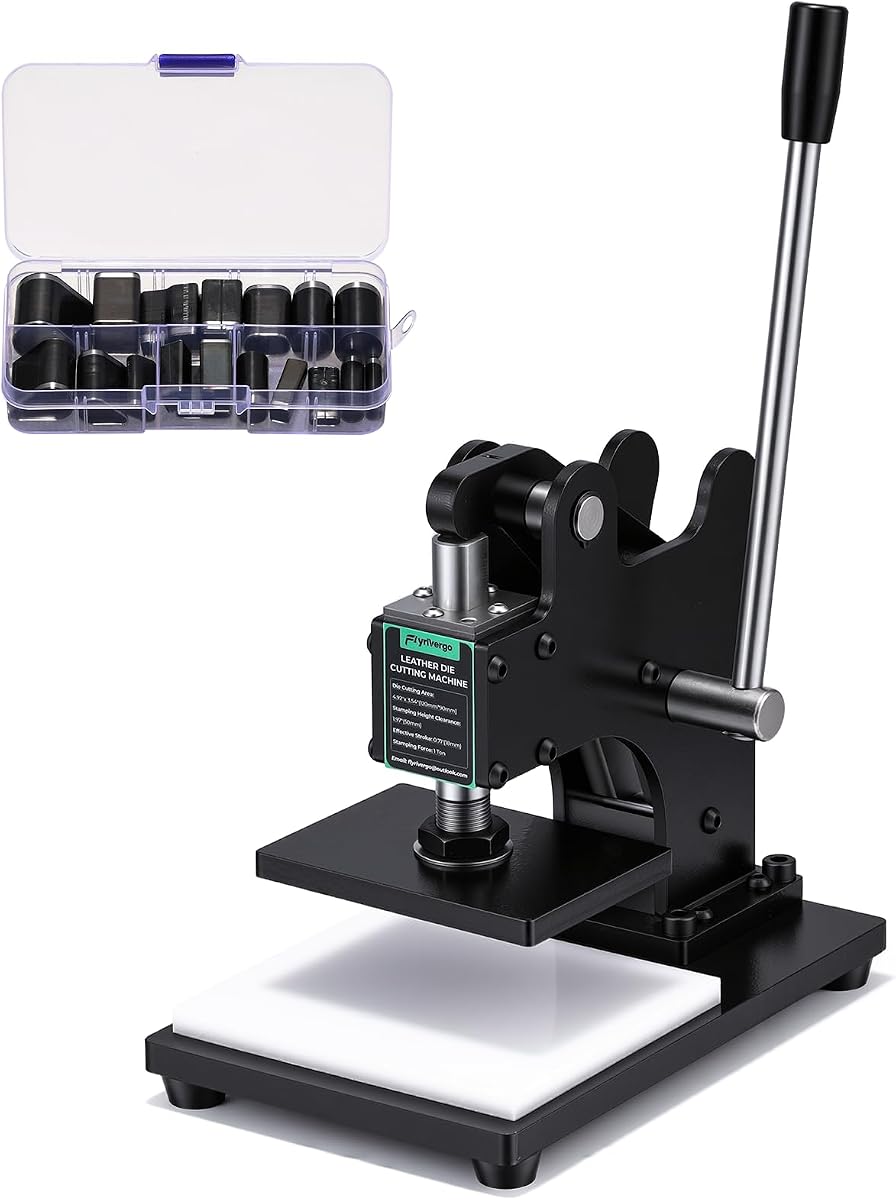


This manual press die cutter combines a stated 1.5-ton pressing capacity with a 5.9 by 3.9-inch embossing plate, offering a practical balance of force and portability. Its 4.1 rating reflects the supplied customer feedback, while the dual guide shafts, manganese-steel construction, and reinforced base distinguish it from lightweight craft platforms.
We may earn a commission when you buy through this link, at no additional cost to you.
The adjustable 0.47-inch stroke is particularly useful because it accommodates different material thicknesses. The stated applications include fabric leather, PVC and EVA foam, non-stick sheet material, plastics, rubber, and medium-soft materials, making this a credible option for mixed leathercraft and DIY work rather than a single-purpose cardmaking device.
Its main limitation is working area. The 5.9 by 3.9-inch plate is adequate for small components but cannot accommodate the larger sheets supported by the VEVOR 14.17-inch model. It also does not include a die collection, so buyers intending to punch intricate shapes will need compatible dies from another source.
This is the strongest general recommendation for a compact workshop that wants meaningful pressing power without a large floor-standing-style press. Hobbyists, small leather businesses, and mixed-material crafters should prioritize its portability, adjustable stroke, and broad material range.
The one-point-five-ton rating, dual guide shafts, and high-strength roller bearings support consistent manual pressing, while the 6.8-kilogram net weight keeps the machine manageable for transport and storage.
A 0.47-inch stroke gives the operator room to work with leather, foam, rubber sheet, and other medium-soft materials instead of limiting the press to thin paper.
We may earn a commission when you buy through this link, at no additional cost to you.
This VEVOR model is the clear capacity leader in the group, combining 3,300 pounds of stated pressing force with a 14.17 by 10.24-inch cutting area. Its 4.7 rating is the highest among the products with a listed rating, and the unusually broad platform makes it suited to leather, fabric, paper, and larger production components.
We may earn a commission when you buy through this link, at no additional cost to you.
The 2-in-1 design supports both punching and embossing. An extended handle is intended to simplify one-hand pressing, while limit screws help control handle rebound. A thick steel body, rust-resistant finish, and anti-slip base reinforce the impression of a workshop-oriented machine designed for repeat creative or production tasks.
The trade-off is space. A 14.17 by 10.24-inch working area needs a dedicated table, and the extended handle adds to the overall footprint. Buyers working primarily on small jewelry-scale leather pieces may find the smaller presses more convenient even if this model offers greater raw capacity.
Choose this machine when project size and versatility matter more than compact storage. It is well suited to home workshops, leather-goods factories, craft clubs, and market booths that need a broad working surface and substantial manual force.
The 14.17 by 10.24-inch cutting area is the most generous listed here, reducing the need to reposition large sheets or oversize dies during a single placement.
Limit screws are designed to reduce rebound, while the extended labor-saving handle supports smoother pressing for repeated leather and fabric work.
We may earn a commission when you buy through this link, at no additional cost to you.
This 11 by 5.5-inch VEVOR press offers 3,306 pounds of stated load capacity, dual guide shafts, and an adjustable 0.47-inch stroke. Its 4.3 rating places it among the stronger-rated options, and the long plate gives leatherworkers more usable width than the compact 1.5-ton model.
We may earn a commission when you buy through this link, at no additional cost to you.
The base combines manganese steel, high-strength roller bearings, limit screws, and a black oxide coating. These details focus on resisting deformation, corrosion, and handle rebound while maintaining alignment during embossing. The stated material range includes leather, fabric, PVC and EVA foam, plastic, rubber sheet, and non-stick materials.
Its plate is wide but not as large as the 14.17 by 10.24-inch area of the preceding VEVOR. It also lacks a stated included die set, so first-time buyers must plan compatible tooling separately. The sizable structure may be less convenient for an apartment craft desk.
This is a strong middle-ground choice for small leather workshops and serious hobbyists who need more capacity and plate width than a compact press but do not need the largest listed platform.
A heavyweight base and limit screws work together to limit movement and rebound, supporting more repeatable placement when processing leather, foam, or rubber.
At 11 by 5.5 inches, the platform favors elongated components and gives operators more lateral room without occupying the largest possible worktable.
We may earn a commission when you buy through this link, at no additional cost to you.
This six-inch manual die cutting machine is aimed at scrapbooking, cardmaking, and paper craft rather than heavy leather production. It carries a 4.3 rating and offers a six-inch opening that accommodates A5-sized paper along with many standard dies and embossing folders.
We may earn a commission when you buy through this link, at no additional cost to you.
The straightforward plate-stack method is one of its strongest beginner features. Embossing uses a 13-millimeter plate, two 3-millimeter PC plates, and an embossing folder, while die cutting uses a 13-millimeter plate, a 5-millimeter PC plate, paper, die, and 3-millimeter plate. Carbon-steel internal construction supports durability without an electrical connection.
This design is not intended to compete with one-and-a-half-ton leather presses. It is better suited to paper, thin cardstock, and compatible crafting layers, and the included construction should be considered within that lighter-duty context. Portability is a major advantage for classes, shared spaces, and outdoor crafting.
For beginners building a first scrapbooking setup, this is a practical, approachable choice. Its strengths are straightforward setup, a manageable size, and broad compatibility with common paper-craft dies rather than industrial force.
Clearly defined plate combinations for cutting and embossing help new users build repeatable results while keeping the manual sandwich system uncomplicated.
The opening works with most standard die cuts and embossing folders, reducing the need to buy a platform restricted to one proprietary system.
We may earn a commission when you buy through this link, at no additional cost to you.
This compact leather die cutter combines a 5.0 rating with a one-ton press capacity, an 18-piece metal die set, and a small 5 by 3.5-inch working area. The included dies make it unusually complete for buyers who want to begin punching leather patterns immediately.
We may earn a commission when you buy through this link, at no additional cost to you.
The machine is built from steel and cast iron with a black oxide coating, and its handle attaches by simply screwing it on. An adjustable 18-millimeter pressure stroke adds flexibility, while the stated material list covers leather, fabric, cloth, stickers, plastic, rubber sheet, film, paper, PVC and EVA foam, and non-stick materials.
Its small bed and one-ton rating make it less suitable for larger panels or stiff vegetable-tanned leather. The stated thickness guidance limits soft chrome-tanned leather to 1 millimeter and stiff vegetable-tanned leather to 0.5 millimeter, so material planning is essential.
This is a compelling choice for jewelry-scale leatherwork, small accessories, and crowded craft tables. The included dies, compact frame, adjustable stroke, and one-year warranty form a convenient package for beginners who want an immediately usable setup.
The included 18-piece metal collection covers holes, patterns, and custom shapes, with a carrying case that helps keep the small dies organized.
The 5 by 3.5-inch platform is optimized for compact dies and components, making it suitable for dorm rooms, home offices, and other limited workspaces.
We may earn a commission when you buy through this link, at no additional cost to you.
The CraftGenes 9-Inch machine is a paper-focused manual platform with a 4.3 rating, a foldable design, and an opening intended for A4 paper and larger. It targets cardmakers, journal makers, and seasonal crafters who want manual control without needing an electrical outlet.
We may earn a commission when you buy through this link, at no additional cost to you.
Its standout feature is the foldable side panels, which reduce the machine's footprint when stored. ABS construction provides a lightweight shell, while the hand crank delivers consistent manual pressure. Detailed plate arrangements are supplied for both embossing and die cutting, helping users understand where paper, folders, dies, and plates belong.
This is not the same class of device as the steel leather presses in the list. Its construction and stated application focus center on paper crafts rather than thick leather, rubber, or industrial-style cutting. A home user who occasionally works with leather may still find the format useful, but heavy duty is outside its stated focus.
Choose it for compact paper crafting, creative classes, and gift projects where a folding manual machine offers easier storage than a fixed metal press. The emphasis is accessibility and organization rather than high-force cutting.
The side panels collapse when the machine is not in use, making this a sensible option for shared craft rooms, apartments, and seasonal project periods.
The specified combinations for cutting and embossing simplify setup, while the recessed embossing-folder position helps support consistent results.
We may earn a commission when you buy through this link, at no additional cost to you.
This square manual leather die cutter offers an adjustable stated capacity of 0.8 to 1.0 tons, a 7.87 by 7.87-inch platform, and an included 18-piece metal die collection. Its 4.1 rating is supported by a design focused on straightforward setup and material flexibility.
We may earn a commission when you buy through this link, at no additional cost to you.
The steel and cast-iron structure receives a black oxide coating intended to resist rust and corrosion. Operators can attach the handle by screwing it into place, and the pressure stroke adjusts by plus or minus 3 millimeters around a stated 0.47-inch value. The material list includes leather, fabric, stickers, rubber sheet, film, paper, PVC and EVA foam.
Compared with the tiny 5 by 3.5-inch press, this machine offers a more useful square bed for medium-sized components. However, the supplied information does not state a maximum leather thickness, so users should still test the actual material and die combination. The included dies also limit initial creative flexibility to those supplied shapes.
This is a balanced option for leatherworkers who want a compact platform, a choice of metal dies, and one year of warranty coverage without moving to a much larger press.
A 0.8 to 1.0-ton range and adjustable 12-millimeter stroke give operators two ways to tune the press for different material conditions.
The screw-on handle eliminates complicated installation, allowing the machine to move from unpacking to a ready working position with minimal assembly.
We may earn a commission when you buy through this link, at no additional cost to you.
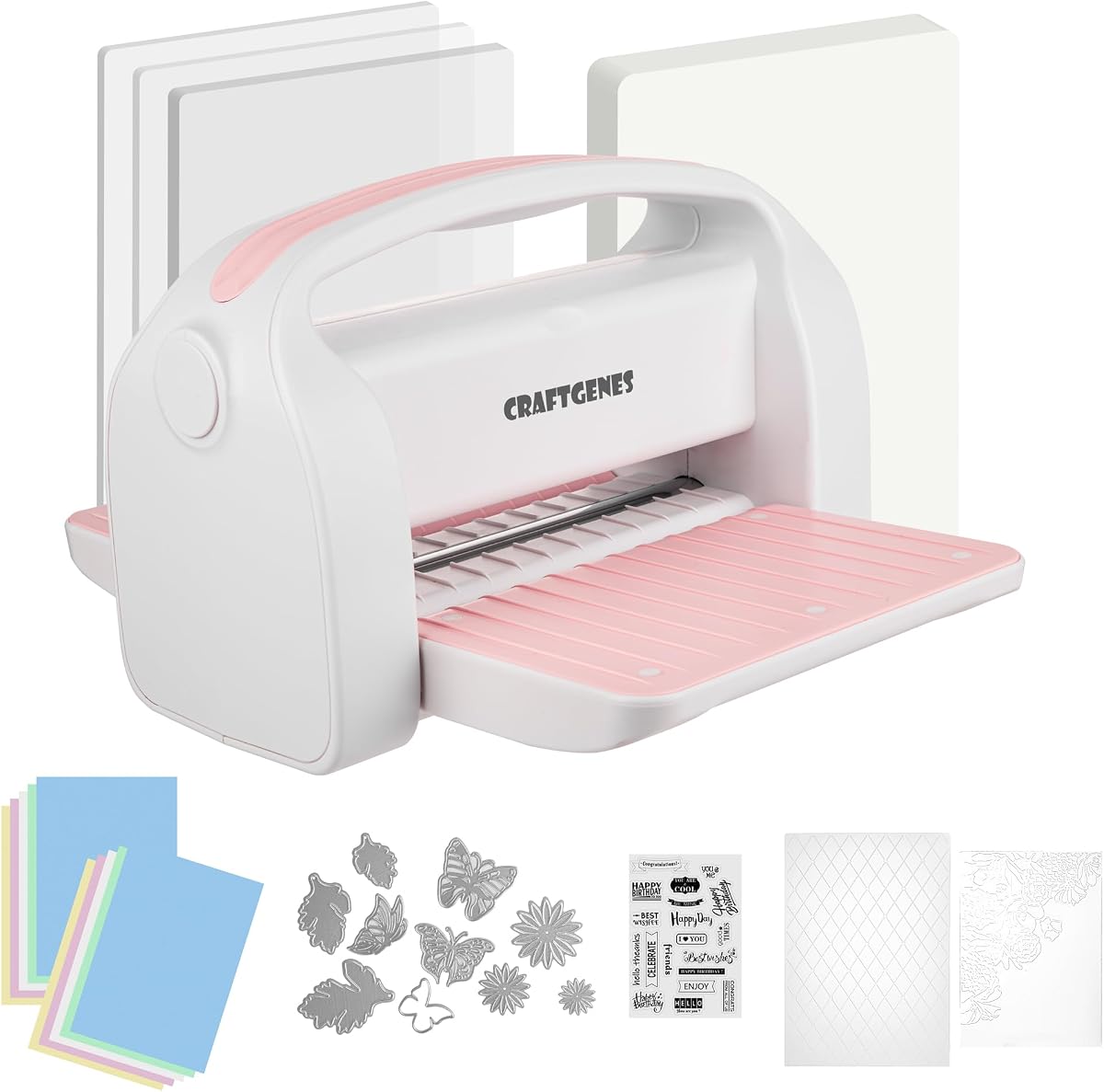
The CraftGenes 6-Inch machine is a complete cardmaking package with a 4.2 rating and a six-inch A5 opening. Rather than providing only the machine, it includes base and cutting plates, magnetic and plastic sheets, embossing folders, dies, cardstock, a badge set, and instructions.
We may earn a commission when you buy through this link, at no additional cost to you.
Its defining system is the layered sandwich. The maximum stated thickness is 22 millimeters, with separate arrangements for embossing and die cutting. Paper up to 240gsm is supported, magnetic and plastic sheets can add thickness, and the guidance warns against positioning a die's sharp edge directly against a magnetic plate.
The limitations are specific but important. The manufacturer states that the machine is designed for cardstock and should not process adhesive-backed or laminated materials. Light marks on the clear cutting plate are described as normal, and the handle should not be forced if the sandwich is misaligned or too thick.
This is an excellent match for beginners, cardmakers, and classroom-style use because the accessories and instructions reduce setup uncertainty. The ABS frame is portable and rugged, making the complete package easy to carry for mobile crafting sessions.
The bundled plates, dies, folders, cardstock, and badge set allow a new user to complete several types of project without first assembling a full separate tool inventory.
A stated 22-millimeter stack limit gives users a clear boundary, and the included guidance explains how optional sheets should and should not be positioned.
We may earn a commission when you buy through this link, at no additional cost to you.
The WUTA Large is the most substantial premium machine in the list, with a 5.0 rating, a 38.5-kilogram packaged weight, a double guide-shaft design, and stated bearing capacity of one to 1.5 tons. Its large structure is designed for dedicated leather and multi-material craft work.
We may earn a commission when you buy through this link, at no additional cost to you.
Chrome-plated, quenched guide shafts work with double guide wheels and long compression rods to support pressure and alignment. The body uses black-anodized stainless steel, while the red portion uses a sprayed-plastic process for added rust and corrosion resistance. A high-density PVC board and cutting mold are included to help start using the press.
Its weight is the central trade-off. A packaged mass of roughly 38.5 kilograms means it is not a casual carry-on tool, and the 38-centimeter by 31.5-centimeter format needs a permanent work area. The machine also requires attention to die orientation, with the knife edge facing upward during operation.
For a serious leather workshop, this is the premium pick. Its large frame, guided compression system, and included working materials offer a more substantial setup than compact card-craft machines or entry-level presses.
Dual guide shafts, guide wheels, and long compression rods distribute the load along the press, supporting stable movement for demanding leather projects.
The upgraded bottom plate, smooth screw caps, high-density PVC board, and included cutting mold provide a more specialized starting point than a basic paper platform.
We may earn a commission when you buy through this link, at no additional cost to you.
This VEVOR six-inch starter machine packages a portable manual press with cutting pads, an A6 embossed folder, a cutting die, and A5 cardstock. Its 4.1 rating and six-inch opening make it a straightforward option for cardmaking, scrapbooking, and small craft projects.
We may earn a commission when you buy through this link, at no additional cost to you.
A metal handle and steel roller system provide the operating structure, while the compact body is designed to remain stable during use. The opening accepts standard six-inch embossing folders, texture plates, and rule dies, making it useful for common craft supplies rather than specialized large dies.
The stated material range is broader than a typical cardstock-only platform, including felt, leather, fabric, and metal. Nevertheless, its physical design and six-inch width are better aligned with small paper-craft pieces than with thick full-size leather panels or heavy production runs.
Choose it as a portable introduction to manual die cutting, particularly if the included accessories and a familiar six-inch platform matter most. Users should verify their intended material and die dimensions before committing to it for demanding cutting.
Cutting pads, a folder, a die, and cardstock provide essential materials for an initial project, making the kit more approachable than a bare machine.
The compact opening suits small cards, tags, and decorations, while the stable construction helps keep the work aligned on a crowded craft table.
We may earn a commission when you buy through this link, at no additional cost to you.
The right manual press depends on the material, die size, required force, and available workspace. Comparing those requirements before considering accessories helps prevent an expensive mismatch between a paper-craft platform and a leather-focused machine.
Manual die cutters fall into two broadly different formats. Plate-stack paper machines use a crank, sandwich material between plates, and pass it beneath a roller, making them appropriate for cardstock, folders, and standard dies. Lever-operated leather presses clamp material beneath a platen and force a die into it, making them more appropriate for thick, fibrous, or dense materials. Choosing the wrong format is the most consequential mistake a buyer can make because the operating principle, tooling, and force profile differ substantially.
Pressing force should correspond to the densest material you expect to process. The featured presses range from compact one-ton models to machines rated at 1.5 tons or 3,300 pounds. More force is not automatically better, because an unnecessarily powerful press can be harder to control and may still be limited by its bed size or stroke. Thin paper, embossing folders, and small leather components need very different capabilities from thick leather, layered foam, or rubber sheet.
The working area determines which sheets and dies can be positioned in one pass. The list extends from a 5 by 3.5-inch leather bed to a 14.17 by 10.24-inch cutting area, while several paper machines use six-inch or nine-inch formats. Measure a typical project rather than focusing only on the machine's overall dimensions. A slightly oversized bed can accommodate repositioning and alignment, but an overly large platform may consume the primary work surface.
Stroke is the vertical travel available during pressing or the depth of the material sandwich the machine can process. Several leather presses use an adjustable 0.47-inch stroke, while the compact metal press has a stated 18-millimeter adjustment. Paper platforms may specify a maximum sandwich thickness instead, such as 22 millimeters. A machine may be powerful enough while still lacking sufficient travel for thick stock, so both specifications matter.
A die-cutting machine is only useful when it accepts the right tools. The paper-oriented models support standard dies, texture plates, rule dies, or common embossing folders, while the leather presses are intended for compatible metal cutting dies. Some products include a cutting mold or a set of 18 metal dies, but others do not include dies at all. Check the opening dimensions, die thickness, folder dimensions, and included accessories before deciding that a machine is ready for your preferred design.
Stable machines make placement easier and help maintain consistent impressions. Relevant features include dual guide shafts, limit screws, anti-slip bases, weighted frames, and guide wheels. Lever presses benefit from a rigid frame and rebound control, while plate-stack machines need rollers and plates that move in sequence without jamming. A larger base may add stability but also require more table space and make the machine less portable.
Manual operation makes every machine usable without electricity, but that does not make all of them portable. The compact leather presses weigh substantially less and fit on smaller desks, while the WUTA premium model has a packaged weight of about 38.5 kilograms. Paper machines with folding panels are especially convenient for storage. Consider how often the tool will be carried, where it will be stored, and whether a permanent work area is available.
Accessories can determine how quickly a new owner can begin. The 5 by 3.5-inch leather cutter and the 7.87-inch square model include 18-piece metal die sets, while the WUTA machine includes a high-density PVC board and cutting mold. Paper kits may instead provide plates, embossing folders, cardstock, dies, or magnetic sheets. Compare the included components with what you already own, because a generous accessory list may duplicate supplies you already have.
Begin by placing the machine on a level, stable work surface and securing the die, cutting mold, embossing folder, or paper according to its stated orientation. Check that guide shafts, rollers, plates, and the lever are free of debris, then arrange the required plates or material in the correct sequence. For leather presses, make sure the cutting edge faces upward as directed by the manufacturer.
Feed or position the material only as far as the machine requires. Close the lever or turn the crank smoothly, maintaining even pressure without forcing the handle. If resistance rises sharply, stop and inspect the alignment, die orientation, plate stack, or material thickness. Paper machines have stated sandwich limits, and leather presses have specific thickness guidance that should not be exceeded without confirming compatibility.
For maintenance, remove loose material after each use and wipe the plates, rollers, guide shafts, and working surface with a dry or lightly damp cloth appropriate to the material. Do not flood electrical-adjacent areas, although these machines are manual and do not require power. Store the tool away from moisture, inspect moving parts periodically, and use the included carrying case for small die sets. For heavy steel presses, arrange two people when moving the machine.
A manual die cutting machine typically uses a hand crank and a layered plate system to push paper or thin craft material through a roller. A manual leather press uses a lever to drive a die through material placed on a platen. The first favors paper-craft folders and dies, while the second offers greater force and stroke for leather, foam, rubber, and related materials.
Some heavy manual presses list leather, fabric, paper, foam, rubber sheet, and plastic among their applications. Smaller plate-stack machines are generally optimized for cardstock and compatible folders or dies. If your workload spans both categories, choose a higher-force press and verify that your paper dies and leather dies fit the same platform.
Pressing force indicates the maximum load the machine is designed to handle. It matters most when cutting dense or thick materials that require more force than thin paper. A higher rating can broaden material compatibility, but plate size, stroke, die quality, alignment, and the operator's control still affect the final result.
It depends on the machine. Products such as the compact 5 by 3.5-inch cutter and the 7.87-inch square cutter include 18-piece metal die sets, while the WUTA model includes a cutting mold. Other machines list dies and folders as compatible accessories but do not include them. Confirm the tool format and dimensions before ordering additional dies.
Plate order, thickness, and orientation determine whether the material reaches the rollers correctly and whether the die or embossing folder contacts the paper. Extra or misplaced plates can cause incomplete cuts, jams, damaged dies, or uneven embossing. The 22-millimeter limit cited for one paper machine is a practical stack-height guide, not a suggestion to force thicker material through.
That depends on the machine and the leather. The compact 5 by 3.5-inch press states maximum thicknesses of 1 millimeter for soft chrome-tanned leather and 0.5 millimeter for stiff vegetable-tanned leather. Larger presses have more force and stroke, but their listed specifications should still be checked against the specific leather and die being used.
Keep the working surface, plates, rollers, and guide shafts free of paper fragments, leather fibers, and adhesive residue. Wipe compatible surfaces after use and store the machine in a dry area to reduce corrosion risk. Do not force a jammed handle; remove the sandwich, check alignment and stack height, and confirm that the die is not damaged or misoriented.
No. A heavier press may provide greater stability and force, but it also requires more storage space and can be harder to move. The best choice depends on the material, die size, production volume, and work area. A portable six-inch paper machine may be more useful for cardmaking than a heavy-ton leather press that remains unused.
The Leather Cutting Machine is the most balanced general pick because it combines 1.5-ton stated capacity, an adjustable stroke, dual guide shafts, and a portable 6.8-kilogram frame. The 6-Inch Manual Die Cutting Machine Kit is the best budget-oriented choice for beginners focused on scrapbooking and paper crafts, while the WUTA Large is the premium option for a dedicated leather workshop.
Before purchasing, identify the thickest and largest material in your regular workflow, then prioritize the correct machine format, working area, stroke, and die compatibility. Buy a platform-style model for folders and paper dies, or a lever press for leather, fabric, foam, and rubber. Included accessories are useful, but they should not override a poor fit with your materials.
Finally, review the current listing, included components, dimensions, warranty terms, and availability before ordering. Product configurations and seller information can change, and the supplied ratings provide useful context without replacing a careful comparison of the machine's stated specifications.