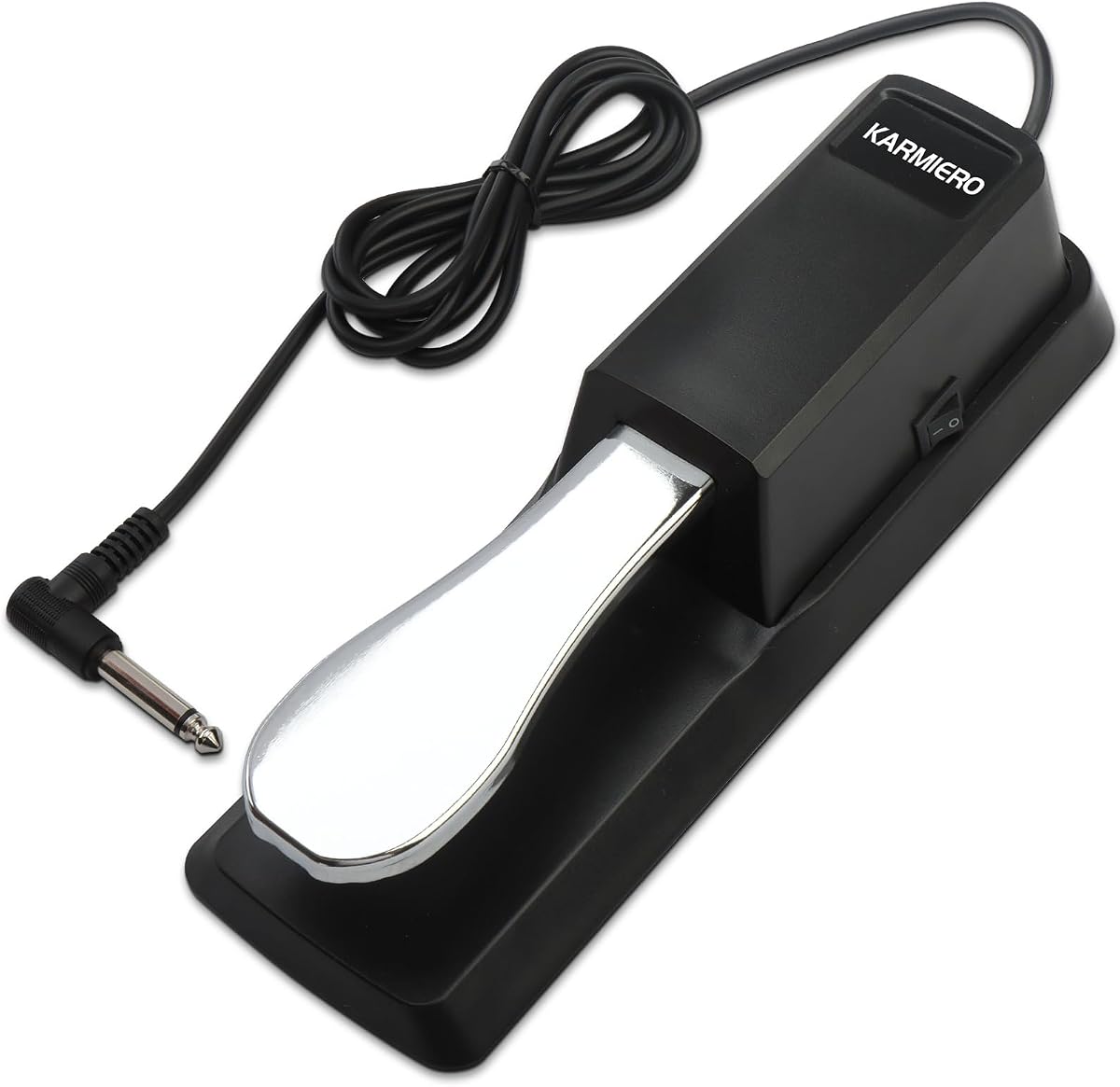
karmiero Universal Sustain Pedal
4.7Editor score
Smooth alloy pedal action
Side-mounted polarity switch
Long flexible keyboard cable
Non-slip rubber underside
Discover the best sustain pedal for keyboard in 2026, with expert comparisons of compatibility, response, construction, cable length, and stability underfoot.
A sustain pedal gives electronic keyboards and digital pianos the sustained, expressive feel of an acoustic instrument while adding control over note length and phrasing. The right model should combine a stable base, responsive action, dependable wiring, and compatibility with your instrument’s input and polarity configuration.
We compared all ten pedals using the supplied specifications, focusing on connector format, polarity controls, resistance, stability, housing materials, and cable length. The list covers universal models, manufacturer-specific options, portable designs, and a Yamaha pedal built around specialized half-pedaling functions.
Each review explains the practical advantages and limitations of its featured pedal, helping you identify the right match for your keyboard and playing style. Product availability and prices can change, so confirm the current specifications, accessory inclusion, and compatibility before making a final purchase.
4.7Editor score

4.7Editor score

4.7Editor score
The comparison below highlights the main differences among these sustain pedals, including their intended keyboard compatibility, physical construction, stability features, and connection options.


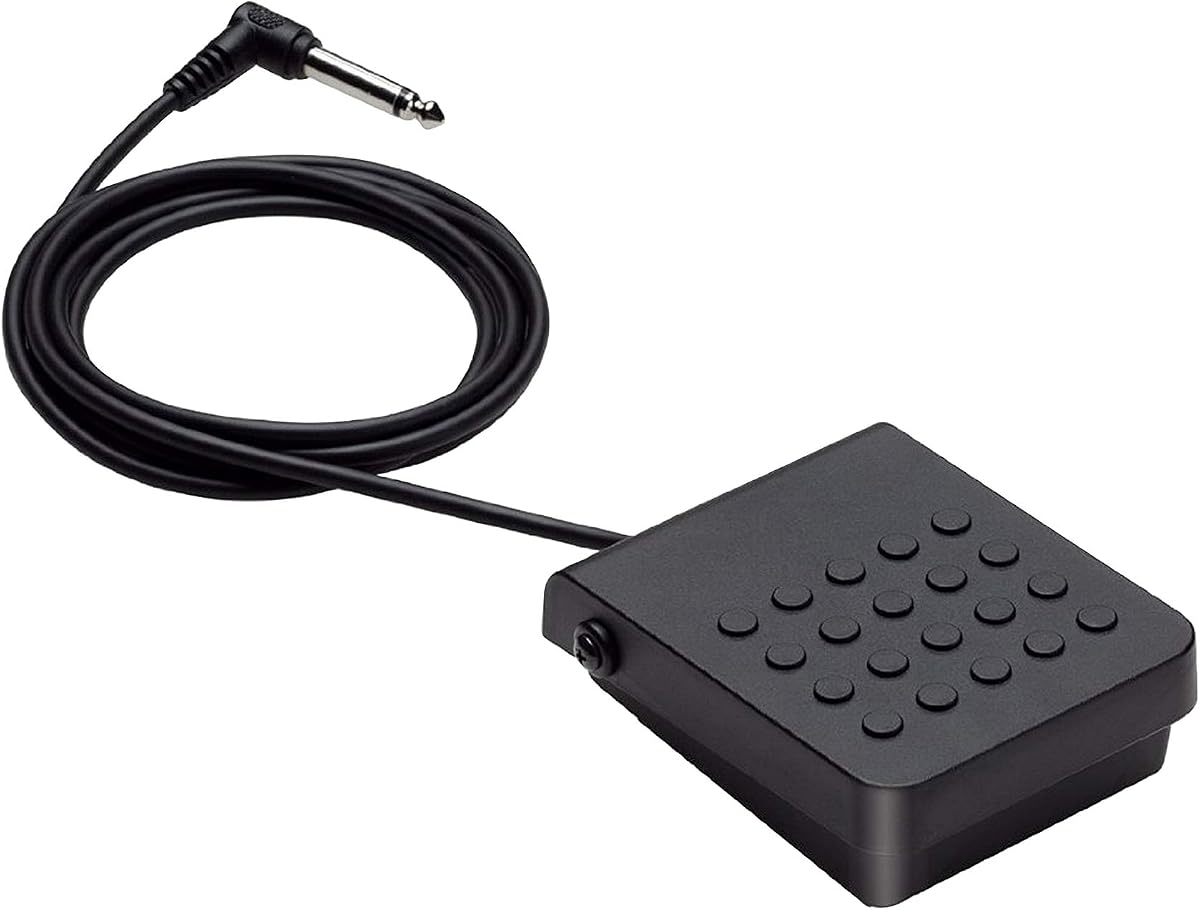

The M-Audio SP-2 Universal Sustain Pedal is a strong all-purpose choice for keyboard players who want responsive sustain action, dependable construction, and broad instrument compatibility. Its 4.7 rating reflects a well-regarded pedal built around a chrome foot mechanism, a practical polarity switch, and a compact piano-style design that should fit comfortably beneath a keyboard or digital piano.
We may earn a commission when you buy through this link, at no additional cost to you.
One of the SP-2’s most useful features is its conveniently placed polarity switch. Instead of assuming that every instrument uses the same switching arrangement, the pedal lets you configure whether the circuit is normally open or normally closed. The included quarter-inch plug and six-foot cable also make it straightforward to connect to a standard sustain pedal input, while the rubber pads on the underside help prevent movement.
The robust, heavy-duty mechanism and chrome pedal are the main reasons this model works well for regular practice, lessons, and performance. Its lightweight, ultra-compact appearance is another advantage for players who move instruments around or have limited floor space. The trade-offs are that the specified cable is shorter than several universal alternatives, and the supplied details do not indicate support for advanced half-pedaling behavior.
The M-Audio SP-2 is a strong recommendation for beginners, educators, gigging keyboardists, and home players who need a dependable universal pedal. It is especially suitable when you want a more substantial mechanism than a basic lightweight option without moving to a manufacturer-specific model. For standard sustain operation, polarity flexibility, and stable placement, it provides a balanced and versatile package.
The polarity switch reduces setup uncertainty across different keyboard and digital piano systems. Connect the quarter-inch plug, select the appropriate switch position, and test the action before beginning a performance.
Rubber pads under the pedal help it remain in place, while the compact body suits smaller playing spaces. This makes the SP-2 useful for players who value control without a large floor footprint.
We may earn a commission when you buy through this link, at no additional cost to you.
The Soraco Universal Sustain Pedal offers a practical way to add sustain control to an electronic keyboard without locking the buyer into one manufacturer’s ecosystem. It carries a 4.5 rating and includes the features most players need: a standard quarter-inch plug, selectable polarity, a metal pedal, and a floor-gripping base.
We may earn a commission when you buy through this link, at no additional cost to you.
Its stainless steel pedal is designed to provide a natural, piano-like sustain response while resisting everyday wear and corrosion. The high-strength rubberized housing adds protection around the working mechanism, and the anti-slip base helps the unit remain securely positioned. A 65-inch cable gives the player reasonable freedom to position the pedal under the keyboard.
The main limitation is that the product is designed for conventional sustain operation rather than specialized half-pedaling. Its construction is also more compact than that of some larger universal pedals, which may matter if you prefer a larger tread surface or particularly substantial feel. The supplied information also places compatibility with most electronic keyboards and digital pianos rather than guaranteeing every possible device.
This Soraco pedal is a sensible choice for students, casual players, and anyone who needs a dependable universal foot controller at an accessible cost. It is less compelling for a professional who requires advanced expression controls, but for normal sustain duties, adjustable polarity, metal construction, and stable placement, it covers the essentials well.
The weighted stainless steel tread provides a more substantial playing surface than a thin plastic footplate. That quality can make the pedal feel more consistent during repeated use.
The normally open and normally closed settings expand compatibility across different keyboard systems. Testing the pedal after each change helps prevent reversed or continuous sustain behavior.
We may earn a commission when you buy through this link, at no additional cost to you.
The VALDI BP-3 is a well-rounded universal sustain pedal aimed at keyboard, digital piano, MIDI keyboard, and synthesizer users. Its 4.6 rating, conversion switch, weighted metal design, and extended cable make it an appealing option for players who want a single pedal to work across a varied collection of instruments.
We may earn a commission when you buy through this link, at no additional cost to you.
A particularly useful feature is the universal conversion switch, which is intended to simplify operation with keyboards from different manufacturers. The balanced metal weight and natural rubber base with a diamond pattern are designed to keep the pedal planted during use. Its quiet, smooth mechanism also minimizes the distraction of noisy foot movement, an advantage for practice, recording, and ensemble playing.
The extended quarter-inch cable gives the player more freedom to arrange the pedal, especially on a stage or in front of a larger digital piano. Color options including black, white, red, and blue also make it easier to coordinate the pedal with a setup. As with other universal pedals, however, the manufacturer’s broad compatibility language should be confirmed against the exact input and polarity requirements of your own instrument.
The BP-3 is well suited to gigging musicians, students with compatible keyboards, and home players who want quiet operation and flexible cable placement. It is a compelling alternative to a basic plastic model when appearance, metal construction, and underfoot stability matter. Advanced half-pedaling is not documented, so performers needing that function should verify their keyboard’s specifications before buying.
The smooth, low-noise action is useful when foot movement could otherwise distract from the music. It also suits recording sessions where unwanted mechanical noise would be unwelcome.
Extended cable length and multiple color options make the BP-3 easy to integrate into a finished keyboard rig. The finish can complement or intentionally contrast with the instrument.
We may earn a commission when you buy through this link, at no additional cost to you.
The karmiero Universal Sustain Pedal combines a 4.7 rating with an alloy construction, adjustable polarity, and one of the longest cables in this guide. It is a compelling budget-oriented option for players who want a responsive pedal, enough cable length to position the unit comfortably, and broad support for standard electronic keyboard inputs.
We may earn a commission when you buy through this link, at no additional cost to you.
The premium alloy tread and high-strength plastic housing are intended to provide smooth, stable action without making the entire unit unnecessarily heavy. A high-quality spring system is designed to supply soft resistance that supports expressive control. The non-slip rubber bottom helps keep the pedal in position and prevents unwanted movement while you play.
The standout practical feature is the 91-inch cable. That extra reach makes the pedal easier to arrange beneath a keyboard, around a desk, or at a comfortable distance from a seated player. The polarity switch is located on the side for straightforward access, although the pedal still needs to be tested after connection because normally open and normally closed configurations produce opposite behavior.
This pedal is a good choice for students, rehearsal players, and performers who prioritize smooth action and cable flexibility over specialized manufacturer features. It does not list half-pedaling support or any other advanced function, so it is best viewed as a capable general-purpose sustain pedal rather than a specialist expression controller. Its combination of response, stability, and reach makes it an excellent budget pick.
The spring system is described as offering softer resistance, which can make sustained passages feel more controlled. Players can vary pressure more gradually instead of moving between only fixed on and off positions.
The long cable allows the pedal to sit where it feels natural rather than forcing a tight position under the keyboard. That flexibility is especially helpful in rehearsal rooms and compact home setups.
We may earn a commission when you buy through this link, at no additional cost to you.
The LEKATO Universal Sustain Pedal is a light, modern take on the standard keyboard accessory. Its 4.7 rating, chrome-plated metal pedal, ABS housing, and four silicone anti-slip pads make it appealing for players who want responsive action and reliable floor stability without carrying a heavy pedal around.
We may earn a commission when you buy through this link, at no additional cost to you.
The chrome finish gives the pedal a polished appearance, while the metal tread is designed to resist wear. A sturdy ABS housing supports the mechanism without adding unnecessary weight. The standard quarter-inch TS plug and built-in polarity switch allow it to fit most electronic keyboards and digital pianos that use a conventional sustain input.
Four silicone pads distributed beneath the pedal help prevent unwanted movement on different floor surfaces. The supplied 60-inch cable offers enough reach for typical floor placement without creating unnecessary excess. The mechanism is described as providing instant, smooth response, which is valuable for players who want a clear difference between lifting their foot and pressing the pedal.
LEKATO is a good candidate for students, mobile musicians, and anyone who wants a modern universal pedal with a manageable weight. It is less suited to performers who require half-pedaling or another manufacturer-specific function, because those capabilities are not documented. For standard sustain control, the combination of stability, clean construction, and broad compatibility is convincing.
The metal tread and ABS housing balance a durable playing surface against a relatively manageable overall weight. That makes the pedal easier to carry between rehearsals, lessons, and gigs.
Multiple silicone pads distribute the pedal’s contact with the floor. This arrangement helps resist sliding and supports consistent positioning during active passages.
We may earn a commission when you buy through this link, at no additional cost to you.
The RockJam 6.35mm Sustain Pedal stands out for its 5.6-meter cable, which gives keyboardists considerable freedom in placement. It has a 4.5 rating and combines a standard quarter-inch connection, an adjustable polarity switch, a non-slip rubber base, and a polished design suited to both practice spaces and stage-oriented setups.
We may earn a commission when you buy through this link, at no additional cost to you.
The pedal is designed for keyboards and digital pianos with a 6.35mm sustain socket, and the polarity switch allows the player to accommodate different circuit arrangements. Its smooth, natural response is intended to make subtle changes in sustain possible, while the robust construction is meant to withstand regular use.
Cable length is the defining characteristic. A lead of this length can reach a keyboard stand, a raised digital piano, or a more distant stage position without forcing a cramped arrangement. It may also need to be secured along the floor to avoid creating a trip hazard. The anti-slip rubber bottom provides some pedal stability, but cable management remains an important part of safe setup.
The RockJam pedal suits players who need unusual cable reach, stage flexibility, or a simple conventional sustain connection. It is not documented to offer half-pedaling, so it works best with keyboards that support a basic on-and-off sustain input. Its long lead and responsive action make it a distinctive choice within the universal category.
The unusually long lead supports setups where the pedal must sit farther from the keyboard than a standard cable permits. Route it carefully to keep the floor safe and the connection secure.
The smooth action is intended to respond accurately to slight changes in foot pressure. This benefits passages in which sustain must begin and end cleanly beneath other notes.
We may earn a commission when you buy through this link, at no additional cost to you.
The Casio SP-20 is a natural choice for players who use a Casio keyboard or digital piano with a pedal jack. It has a 4.7 rating, piano-style construction, a long cord, and a black finish, giving users a straightforward manufacturer-specific option without the need for a universal polarity switch.
We may earn a commission when you buy through this link, at no additional cost to you.
Because the pedal is designed for Casio instruments with a pedal jack, it can offer a more focused buying experience than a broadly universal model. The piano-style shape fits naturally into a traditional performance position, and the long cord gives the player room to arrange the pedal under the keyboard without immediately restricting placement.
The main trade-off is flexibility. The supplied specifications specifically identify compatibility with Casio keyboards and digital pianos that have a pedal jack, while a separate polarity switch is not mentioned. Players with other brands may need to confirm connector size and electrical behavior before assuming this model will work. It is also a basic sustain pedal rather than an advanced half-pedaling controller.
The SP-20 is recommended for Casio owners who value traditional appearance, simple operation, and a cable long enough for normal placement. It may also suit players who already know the pedal works with their instrument. For a mixed collection of brands, a universal model with adjustable polarity would provide a safer choice.
Choosing an accessory designed for the same brand removes some of the guesswork involved with connector format and setup. It is a practical option when the instrument is a compatible Casio model.
The piano-style body and black finish create a familiar look beneath a digital piano. Its visual consistency is especially noticeable in a setup where exposed accessories are part of the stage presentation.
We may earn a commission when you buy through this link, at no additional cost to you.
The Casio SP3 Sustain Pedal is a compact, piano-style option designed for Casio keyboards and digital pianos with pedal jacks. Its 4.6 rating and support for most keyboards with a quarter-inch sustain input make it a simple solution for adding sustain and improving playability without a large or complex accessory.
We may earn a commission when you buy through this link, at no additional cost to you.
The pedal’s straightforward design focuses on the core function of holding notes. It can give a keyboard player more expressive phrasing, make sustained chords easier to manage, and provide the basic sensation of using a piano-style foot control. Its relatively compact proportions are useful under crowded keyboard stands or in home setups where floor space matters.
The specifications indicate broad Casio compatibility and mention compatibility with most quarter-inch sustain pedal inputs, but they do not identify a polarity switch. Players should therefore verify that their exact instrument expects the same switching behavior. The SP3 also lacks the explicit cable-length advantage and stability details highlighted for several universal models, so it is best viewed as a focused basic pedal.
The SP3 is a good choice for a compatible Casio owner who wants a simple, compact, and recognizable sustain pedal. It also has potential for mixed setups because many keyboards accept a quarter-inch sustain input, though electrical compatibility should not be assumed solely from connector shape. Choose it for simplicity; choose a universal model when adjustable polarity is essential.
The small piano-style body is easy to position under a keyboard without occupying a large portion of the available floor. That makes it convenient for lessons and compact home studios.
The pedal is made for Casio keyboards and digital pianos with compatible pedal jacks. That focused design can be reassuring for players who want an accessory known to fit their own instrument.
We may earn a commission when you buy through this link, at no additional cost to you.
The Nord Sustain Pedal is a premium-feeling accessory created for Nord keyboards and produced by StudioLogic, a company identified in the product information as a leader in keyboard accessories. Its 4.4 rating, high-quality construction, and embedded Clavia logo make it especially appealing to players who want a visually coordinated Nord setup.
We may earn a commission when you buy through this link, at no additional cost to you.
The pedal is included with Stage 88 and Stage 76 keyboards and can also be used with other Nord keyboards. For owners of those instruments, this direct relationship offers confidence that the accessory is intended to serve the Nord ecosystem. Its branded appearance also complements the clean, professional visual identity of Nord stage keyboards and digital pianos.
Compared with universal pedals, the Nord model provides fewer documented details about polarity, connector size, cable length, and grip materials. That means buyers should verify current compatibility with the exact Nord model they own. The supplied product information also does not describe half-pedaling, so those seeking more nuanced acoustic-style control should check the requirements of their keyboard before purchasing.
The Nord Sustain Pedal is a strong choice for Nord players who prioritize brand coordination and established accessory quality. It is less convincing for someone who needs a universal solution, a documented long cable, or selectable polarity. Choose it when your primary instrument is a compatible Nord keyboard and a coordinated, purpose-built accessory matters most.
The embedded Clavia logo and Nord-specific compatibility give the setup a unified appearance. It is a natural accessory for owners of Stage-series and other compatible Nord keyboards.
Its history of inclusion with Stage 88 and Stage 76 systems indicates an established role in keyboard performance. That background is reassuring for players building a stage-oriented Nord rig.
We may earn a commission when you buy through this link, at no additional cost to you.
The Yamaha FC3A is the most specialized premium option in this guide. Designed to reproduce the feel of acoustic piano pedals and support half-pedaling functions, it has a 4.7 rating and offers a level of expressive control that ordinary on-and-off sustain pedals cannot provide.
We may earn a commission when you buy through this link, at no additional cost to you.
Half-pedaling allows the player to vary the sustain effect according to how far the foot travels. That creates subtle changes in tone and resonance, which can be valuable in expressive passages, contemporary arrangements, and settings where an acoustic-like response is important. The piano-style construction and five-foot cable support a natural performance position beneath a compatible instrument.
Compatibility is the decisive caveat. The FC3A uses a 0.25-inch FC3A plug and works only with the listed Yamaha arranger keyboards, synthesizers, stage pianos, digital pianos, and keyboards. Those include Tyros4 and Tyros5 systems, PSR-S and specified PSR-A arranger workstations, MONTAGE, Motif XF, selected S and MOXF models, MX synthesizers, CP and P-Series stage pianos, specified DGX models, Piaggero portable keyboards, and REFACE CP.
This pedal is an excellent premium choice for an eligible Yamaha owner who wants half-pedaling and a dedicated FC3A connection. It is not appropriate as a general replacement for a universal pedal, and the extensive compatibility list should be checked against the exact model. When the instrument is supported, the specialized control can deliver a noticeably more nuanced sustain response.
Half-pedaling changes sustain from a simple on-and-off effect into a variable response. The player can gradually soften the sustain behavior, creating a more natural and expressive tonal transition.
The FC3A plug and listed instrument range make compatibility the central purchasing consideration. Locate your exact Yamaha model in the supplied list before choosing this specialized pedal.
We may earn a commission when you buy through this link, at no additional cost to you.
The most useful sustain pedal is not necessarily the one with the longest feature list. Your keyboard’s input type, polarity requirements, intended performance level, and preferred pedal feel should determine which design will work reliably and feel natural.
Most sustain pedals in this guide terminate in a 1/4-inch, or 6.35mm, plug, which is common on electronic keyboards and digital pianos. A matching physical connector is only the first step, however. The keyboard must also support the same type of pedal input, and any manufacturer-specific plug such as the Yamaha FC3A must match the instrument exactly. Always check the keyboard’s manual or input panel before choosing a model, especially if your setup includes several brands.
A polarity switch tells the pedal whether the connected keyboard should treat the circuit as normally open or normally closed. If the setting is wrong, notes may sustain continuously, fail to sustain, or behave inconsistently. Universal models such as the M-Audio SP-2, Soraco, VALDI BP-3, karmiero, LEKATO, and RockJam include a switch for this reason. Connect the pedal, select the appropriate setting, and test it before playing. If a pedal lacks a switch, confirm the manufacturer’s supported keyboard list rather than assuming it will work.
Pedal feel is subjective, but the construction and mechanism can influence how comfortably you control sustain. Metal footplates tend to provide a clear, durable surface, while springs and housings determine resistance and travel. The M-Audio SP-2, Soraco, VALDI BP-3, karmiero, and LEKATO emphasize metal pedal components. The Yamaha FC3A is distinctive because it supports half-pedaling, allowing finer control than a conventional binary pedal. Choose according to the type of musical control you need rather than assuming a heavier pedal is automatically better.
A sustain pedal that slides can interrupt a passage and pull the player’s attention away from the instrument. Rubber feet, rubberized bases, silicone pads, and weighted housings are intended to improve stability. The M-Audio uses rubber pads, the Soraco and RockJam have anti-slip rubber bases, the karmiero has a non-slip rubber underside, and the LEKATO uses four silicone pads. The VALDI adds a diamond-pattern rubber base and balanced metal weight. Consider your floor surface, pedal angle, and cable tension, because no base can compensate for poor routing.
Cable length determines how freely the pedal can be positioned under or around the keyboard. The M-Audio includes a six-foot cable, the Soraco a 65-inch lead, the LEKATO a 60-inch cable, the Yamaha FC3A a five-foot cable, and the karmiero an especially long 91-inch lead. The RockJam’s stated 5.6-meter cable provides maximum reach but requires deliberate floor routing. Measure the distance from the instrument’s pedal jack to your natural playing position, then allow enough slack to prevent the plug from being pulled or the footplate from being dragged.
A universal pedal is convenient when you switch among Yamaha, Casio, Roland, Korg, Behringer, Moog, MIDI keyboards, or other compatible instruments. A dedicated model can be more reassuring for a single-brand setup and may integrate more closely with that instrument’s supported functions. The Casio SP-20 and SP3 are aimed at Casio products, the Nord pedal serves Nord keyboards, and the Yamaha FC3A supports half-pedaling on an explicit list of compatible models. The right choice depends on whether portability across brands matters more than model-specific assurance.
If you rehearse at home, travel to lessons, or perform in different rooms, the pedal’s size and weight affect how easily you can include it in your setup. The M-Audio is described as lightweight and ultra compact, while the LEKATO pairs a metal pedal with a sturdy ABS housing to avoid unnecessary weight. Dedicated premium models may provide a more refined feel but are less useful if they cannot be connected to every keyboard in your collection. Portability should be balanced against durability and the amount of floor space available at each destination.
Standard sustain pedals usually provide a binary effect: the notes continue while the pedal is pressed and stop when it is released. A half-pedaling pedal creates a variable response, allowing the player to influence the sustain and associated tone more gradually. The Yamaha FC3A explicitly supports this capability and is the only model here with documented half-pedaling compatibility. If you rely on nuanced pedal expression, your keyboard must also support the relevant function. Otherwise, the added complexity of a specialized pedal may provide little practical benefit.
Begin by placing the pedal on a clean, level surface beneath the keyboard. Keep the cable loose enough that it does not pull against the plug, then route it away from feet and chair legs. Connect the plug to the instrument’s sustain pedal input, power on the keyboard, and hold down a key before testing the pedal. This lets you hear the effect clearly without confusing a wiring problem with a note still being held.
For a pedal with a polarity switch, try the recommended starting position and press and release the pedal while a note sounds. If the note sustains when the pedal is raised, change the switch to the opposite setting and test again. Once the behavior is correct, place the cable where it will not shift the pedal or create a hazard. A slight heel-down position is common, but use whatever technique feels comfortable and keeps the footplate fully supported.
Clean the footplate and floor contact points periodically with a soft, dry cloth. Avoid harsh cleaners, moisture around the jack, and cables pulled sharply from the keyboard. If the action becomes stiff, the cable feels damaged, or the pedal slips, disconnect it and inspect the mechanism, connector, base, and routing before the next session. Store the pedal loosely in a dry area rather than leaving the cable tightly wound around its housing.
Many electronic keyboards and digital pianos use a 1/4-inch, or 6.35mm, sustain pedal jack, but not every instrument follows the same standard. Check the labels beside the pedal inputs and consult the keyboard manual if the jack is unclear. Some manufacturer-specific pedals use other plugs, including the Yamaha FC3A connection, so physical appearance alone is not always enough.
A polarity switch lets you choose between normally open and normally closed operation, allowing the pedal to suit different keyboard circuits. If the setting is incorrect, the keyboard may sustain without a pressed pedal or fail to sustain when the pedal is down. Most universal models in this guide include the switch, and a short test after connecting will confirm the correct position.
A universal pedal still needs a matching connector, a supported sustain input, and compatible electrical behavior. It may also need the correct polarity setting. Check the manufacturer’s compatibility list and the keyboard’s specifications, particularly for specialized inputs or functions, before assuming that a broadly described universal model will work.
Half-pedaling allows the sustain effect to respond to how far the pedal is pressed rather than operating only fully on or fully off. It can create more gradual and natural tonal changes when the keyboard supports the function. The Yamaha FC3A included here explicitly supports half-pedaling on its listed compatible models.
The right length depends on the distance between the keyboard’s input and your natural foot position. The pedals in this guide range from about five feet to a very long 5.6-meter lead. Measure the actual setup and leave enough slack for comfortable movement without creating a cable that drags the pedal or crosses a walking path.
Sticking can result from dirt around the mechanism, while sliding may be caused by a smooth floor, poor contact, or tension in the cable. Clean the base and footplate, confirm that the rubber or silicone pads are unobstructed, and route the lead without pulling the pedal. If the mechanism remains stiff, check the product guidance before lubricating any part.
Not necessarily. Stability comes from the base, floor contact, balance, and cable routing as well as total weight. Metal tread and weighted housings can provide a solid feel, while a lighter design may be easier to transport. The best stage pedal is stable under your particular foot and floor conditions without obstructing movement.
Sometimes, but you should not assume it. The connector, polarity, supported functions, and pedal response must all be compatible. A dedicated pedal may work with a standard quarter-inch input, but only if the keyboard supports its electrical configuration. Universal models are generally the safer option for mixed-brand setups.
The M-Audio SP-2 stands out as the most versatile all-round choice, combining a sturdy chrome mechanism, compact construction, floor grip, and adjustable polarity. The karmiero pedal is a strong budget option for smooth action and excellent cable reach, while the Yamaha FC3A is the specialized premium choice for owners of eligible Yamaha instruments who want half-pedaling and a more detailed acoustic-style response.
Prioritize connector compatibility first, followed by polarity and the functions your keyboard actually supports. Next, consider the pedal’s action, base stability, cable length, and portability. A universal model is most useful across several brands, whereas a manufacturer-specific pedal can be a more confident match for a single compatible instrument.
Before ordering, confirm the exact keyboard model, inspect the pedal input, and check whether the pedal requires a particular polarity setting. Product availability and prices change over time, so review the current listing, included accessories, and technical details before making your final decision.