
Wengart 120V LCDI Power Cord
4.6Editor score
120V, 10A electrical rating
NEMA 5-15P wall plug
Test and reset controls
Seven-and-a-half-foot cable
UL Listed construction
Our Air Conditioner Power Cord Replacement guide compares 10 cords for voltage, amperage, LCDI protection, plug type, length, and safe installation today.
Replacing a worn air conditioner power cord is more than a routine repair: the correct cable must match the unit's voltage, amperage, plug configuration, conductor size, and terminal layout. A well-designed replacement also adds valuable safety features, particularly when LCDI protection detects leakage current associated with damaged insulation or aging conductors.
The products in this guide were compared using the specifications supplied by their manufacturers and retailers. We evaluated electrical ratings, wire gauge, cord length, plug type, LCDI functions, terminal configuration, certification claims, and suitability for portable, window, and packaged terminal air conditioners.
Each review identifies the configuration that makes a particular cord useful, along with installation limits and potential trade-offs. Ratings and product details can change over time, and prices fluctuate frequently, so readers should confirm the current listing and equipment requirements before making a purchase.
4.6Editor score
4.8Editor score

4.8Editor score
The comparison below covers every cord in the guide, highlighting the electrical rating, cord configuration, protective design, and intended air conditioner use so the correct replacement can be selected without relying on appearance alone.


The ELEGRP L15515 is a 120V, 15A LCDI replacement cord for compatible air conditioners, carrying a 4.8 rating in the supplied data. Its most useful combination is a standard NEMA 5-15P wall plug, 14AWG three-conductor cable, and an LCDI module designed to monitor leakage associated with cable damage.
We may earn a commission when you buy through this link, at no additional cost to you.
The cord is listed for portable, window, and indoor packaged terminal air conditioner loads. Shielded power conductors are used to sense leakage between the shield and the hot or neutral wire, and the protection module is stated to interrupt current within 0.5 seconds when leakage below 5mA is detected. Black, white, and green leads are identified for the hot, neutral, and ground connections.
There are limitations. It is restricted to 120V equipment and should not be selected for a 240V air conditioner or a circuit with different requirements. The 1,800-watt capacity also needs to remain within the air conditioner's electrical rating. Installation requires connecting the leads to compatible terminals, so a replacement is not a zero-knowledge task.
This is a strong general recommendation for a 120V, 15A unit because it combines a common plug format, substantial conductor size, and integrated leakage protection. It is best suited to a homeowner or technician who can identify the equipment terminals, disconnect power safely, and verify the completed connection.
The shielded LCDI arrangement is the main reason to consider this cord over a basic pigtail. It is designed to identify leakage current and interrupt power before an insulation failure becomes a more serious fire hazard.
The NEMA 5-15P plug and 14AWG conductors make this model relevant to many common residential air conditioners. The load, however, must not exceed the stated 120V and 15A limits.
We may earn a commission when you buy through this link, at no additional cost to you.
The ELEGRP L22620 is a 240V, 20A LCDI power cord intended for compatible air conditioner loads, and it carries a 4.8 rating. Its NEMA 6-20P plug and 12AWG construction distinguish it as a higher-capacity option than the common 120V cords in this guide.
We may earn a commission when you buy through this link, at no additional cost to you.
The supplied specifications list a 4,800-watt capacity, 60Hz operation, and a cord measuring approximately 2.2 meters, or 7.6 feet. Its shielded LCDI system is designed to detect leakage between the shield and neutral or hot conductors and interrupt the electrical flow within 0.5 seconds when the stated threshold is reached.
Its specialized plug configuration is also its main constraint. A NEMA 6-20P plug will not fit a conventional 5-15R household receptacle, and the equipment and circuit must support 240V. Trying to substitute a different plug or adapter would undermine the reason for selecting this properly rated replacement.
For a 240V portable, window, or indoor PTAC unit that uses a 6-20 configuration, this is a compelling option. It offers the highest power capacity among the listed 240V LCDI models and pairs that capacity with robust 12AWG wiring and leakage monitoring.
With a stated 20A and 4,800-watt rating, this cord is better suited to higher-demand equipment than the 240V, 10A alternatives. The connected unit and its supply circuit must both support that load.
The LCDI and shielded conductors create an added layer of protection against leakage caused by cable deterioration. That feature is particularly relevant when replacing an aging factory cord.
We may earn a commission when you buy through this link, at no additional cost to you.
The ELEGRP L22520 combines a 120V supply with a 20A, 2,400-watt capacity, and its supplied rating is 5.0. It is the highest-rated product in this selection and offers an unusually substantial 12AWG cable for a 120V replacement.
We may earn a commission when you buy through this link, at no additional cost to you.
Its 8.3-foot length is the longest among the LCDI air conditioner cords listed. That can make routing more flexible when the outlet is not directly beside the unit. The NEMA 5-15P plug, black hot lead, white neutral lead, and green ground lead provide a clear connection plan.
The important caveat is circuit capacity. The cord's 20A rating does not authorize use on a receptacle or branch circuit that cannot support 20A. An air conditioner's nameplate rating, the outlet, and the breaker all need to be considered before installation.
This model is a strong choice for a compatible 120V unit that needs a long cord or benefits from heavier conductors. It is less suitable for smaller installations where extra capacity, length, and bulk are unnecessary, but for a correctly matched 20A system it offers a generous and safety-focused specification.
The 8.3-foot cable can reduce the need for extension cords or awkward changes in direction. Route it away from hot surfaces, doors, and walking paths to prevent physical damage.
The 12AWG construction provides extra conductor capacity compared with many 120V replacement cords. It remains important to stay within the stated 2,400-watt maximum and match the equipment's requirements.
We may earn a commission when you buy through this link, at no additional cost to you.
The BAOMAIN 13A model is a 120V LCDI cord with a 4.5 rating. It targets compatible indoor appliances that need a grounded NEMA 5-15P connection, provided their current draw remains within the cord's 13A limit.
We may earn a commission when you buy through this link, at no additional cost to you.
The cable uses 16AWG pure copper conductors and includes pre-terminated live, neutral, and ground leads. Its 7.2-foot length balances reach and portability, while the outer jacket is described as heat resistant to 105 degrees Celsius and rated VW-1 for flame resistance.
Compared with the 14AWG and 12AWG options, this is a lighter-duty choice. It may be perfectly appropriate for a smaller room air conditioner, but a larger unit could exceed its rated capacity. The ring and spade terminal configuration also needs to correspond with the air conditioner's connection points.
The BAOMAIN is best for a compatible 13A indoor appliance where a compact, flame-retardant cord with pre-stripped terminals is desired. Buyers should verify both the appliance draw and the terminal style before ordering.
Pre-stripped wire ends with ring and spade terminals can simplify installation when those connector types match the original equipment. They should not be assumed to fit every air conditioner.
The stated heat-resistant and VW-1 jacket properties are useful in an appliance environment. Physical care still matters because heat, sharp edges, and repeated bending can damage any cable.
We may earn a commission when you buy through this link, at no additional cost to you.
The BAOMAIN 15A cord is a 120V, 1,800-watt LCDI power supply cable with a 4.7 rating. It provides a grounded NEMA 5-15P connection and adds user-facing features in the form of a status LED and test and reset buttons.
We may earn a commission when you buy through this link, at no additional cost to you.
Its flexible 14AWG, three-conductor shielded cable measures 7.2 feet. The black hot and white neutral leads have insulated terminals, while the green ground lead uses a ring terminal. The LCDI module monitors leakage in the shielded cable and is designed to interrupt power when leakage is detected.
The product is specifically intended for indoor equipment. Its test and reset controls make routine function checks more convenient, but users still need to follow the directions associated with the plug. The cord also includes only the cable assembly, so matching terminals and the original mounting method remain important.
This is a well-balanced option for a 120V, 15A air conditioner that uses a NEMA 5-15P receptacle. It is especially attractive to users who appreciate visible monitoring and manual test controls, provided the terminal arrangement matches the unit.
The LED indicator provides an immediate visual reference for the cord's operating state. It is a useful companion to the LCDI test and reset buttons during routine maintenance.
The grounded NEMA 5-15P plug makes this a familiar option for standard residential receptacles. The 15A and 1,800-watt limits must still match the air conditioner's nameplate data.
We may earn a commission when you buy through this link, at no additional cost to you.
The ELEGRP L22630 is the highest-capacity cord in this guide, with a stated 240V, 25A and 6,000-watt rating. It has a 4.6 rating and uses 12AWG, three-conductor cable with a NEMA 6-30P plug.
We may earn a commission when you buy through this link, at no additional cost to you.
The LCDI system uses shielded power conductors to identify leakage between the shield and the neutral or hot conductor, with the supplied information stating interruption within 0.5 seconds. The 7.5-foot cord is equipped with identified hot, neutral, and ground terminals for installation.
Its specialized configuration limits the pool of compatible appliances. A NEMA 6-30P plug requires a matching receptacle arrangement, and the air conditioner, outlet, and branch circuit must all support the intended load. The cord's maximum capacity is a ceiling, not a reason to operate a smaller unit beyond its own rating.
This is the appropriate option in a narrow category: a compatible 240V, 25A air conditioner requiring a 6-30 connection. It offers the most headroom and the greatest stated load capacity among the listed products, along with integrated leakage protection.
The 25A and 6,000-watt specification makes this cord suitable for high-demand 240V equipment when all other electrical components match. The unit's nameplate rating remains the controlling factor.
The NEMA 6-30P plug helps maintain a deliberate, purpose-built connection instead of relying on improvised adapters. It also makes visual plug matching especially important.
We may earn a commission when you buy through this link, at no additional cost to you.
The Wengart 240V cord is a 5.0-rated replacement for compatible 240V window and portable air conditioners. It combines a 10A current rating and 2,400-watt maximum with a NEMA 6-15P plug and 7.5-foot length.
We may earn a commission when you buy through this link, at no additional cost to you.
Its LCDI protection is intended to detect leakage associated with damaged insulation or frayed wires and cut power in milliseconds. The product description also emphasizes shielding designed to reduce nuisance tripping while retaining sensitivity to genuine internal faults. Fire-retardant materials and copper wiring are highlighted as construction features.
A 240V unit using a 10A circuit is the proper use case. The 6-15P plug has a distinct configuration with two horizontal blades and a ground pin, so the wall receptacle must match. This is not a conventional 120V household plug, despite some visual similarities among NEMA configurations.
For a compatible 240V window or portable unit, the Wengart provides a focused alternative to the higher-amperage ELEGRP cords. It is especially attractive when the original equipment used a 6-15 connection and a 2,400-watt ceiling is sufficient.
The LCDI is intended to identify leakage before a deteriorated cord becomes a fire hazard. Its shield also helps the interrupter distinguish internal faults from some external interference.
The 240V rating, NEMA 6-15P plug, and stated suitability for window and portable units create a clearly defined application. Check the original cord and outlet before ordering.
We may earn a commission when you buy through this link, at no additional cost to you.
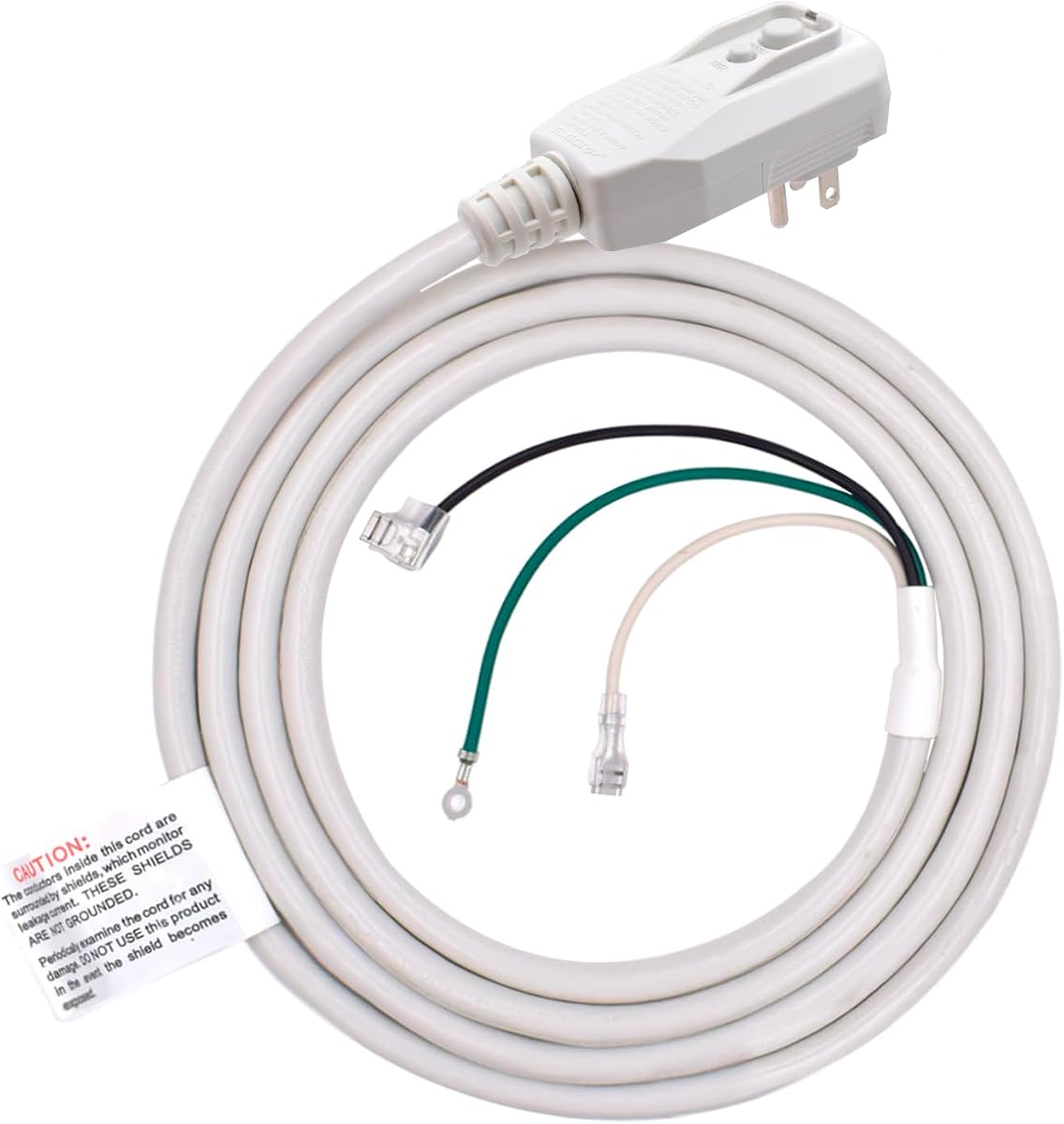
The Wengart 120V LCDI cord offers a straightforward replacement path for compatible window air conditioners and portable units. It has a 4.6 rating, a 10A current rating, and a stated maximum load of 1,200 watts.
We may earn a commission when you buy through this link, at no additional cost to you.
The plug head includes clearly presented test and reset buttons along with an integrated LED indicator. The supplied guidance recommends a monthly self-test to verify that the LCDI is functioning. Its flexible, grounded three-wire jacket is designed to make routing around furniture and corners easier.
The main trade-off is its relatively modest 1,200-watt limit. It should not be selected for a unit whose nameplate current or wattage exceeds the cord's rating, even if the physical plug appears to fit. A replacement cord is not a way to expand an appliance's electrical capacity.
This cord is best for a smaller 120V air conditioner that operates within 10A and 1,200 watts. For owners who want straightforward monitoring and a familiar NEMA 5-15P connection, it provides a practical and easy-to-check safety feature.
The test interface makes it easier to confirm that the interrupter responds as expected. A monthly check is a sensible habit, particularly during periods of frequent use.
The high-flexibility white jacket is easier to route in visible areas than a stiff cable. It still needs protection from sharp edges, pinching, and repeated bending.
We may earn a commission when you buy through this link, at no additional cost to you.
The EP two-pack is a general-purpose 14/3 SJTW replacement cord rather than a dedicated LCDI air conditioner cable. It has a 4.7 rating and includes two 12-foot cords, each with a NEMA 5-15P male plug and a bare pigtail end.
We may earn a commission when you buy through this link, at no additional cost to you.
The cable is listed for up to 15A, 125V, and 1,875 watts. Its ETL Listing, stripped insulation, and grounded three-conductor design support appliance repair use. The SJTW jacket provides a stated temperature range from minus 40 to 140 degrees Fahrenheit and is designed to resist moisture, abrasion, and sunlight.
The omission of an LCDI is the decisive distinction from most dedicated replacements in this guide. This cord is for users who need a flexible, multipurpose repair cable and can safely hard-wire the bare end. It should not be represented as providing the automatic leakage interruption offered by LCDI models.
This two-pack is a sensible choice for maintenance work involving several compatible appliances or for keeping a spare on hand. It is not the top recommendation for a dedicated LCDI replacement, but its length, certification, and broad appliance compatibility make it versatile.
The two-pack format provides useful redundancy for technicians or homeowners who service more than one appliance. Each cord must still be installed according to the equipment's voltage and connection requirements.
The stated minus 40 to 140-degree Fahrenheit range supports use in varied environments. Installation practices and local electrical codes still govern outdoor applications.
We may earn a commission when you buy through this link, at no additional cost to you.
This 12AWG replacement power cord is a straightforward heavy-duty pigtail with a 4.9 rating. It combines a six-foot length, a NEMA 5-15P plug, and pre-stripped black, white, and green conductors for hard-wiring into compatible indoor or outdoor appliances.
We may earn a commission when you buy through this link, at no additional cost to you.
The cord is stated to handle 20A, 125V, and up to 2,500 watts. Its right-angle low-profile plug can reduce stress on the receptacle and avoid blocking an adjacent outlet. A bright yellow plug also improves visibility in dim utility rooms, garages, and busy work areas.
The cable lacks an integrated LCDI, so it does not automatically interrupt power after detecting leakage. The bare-end connection also requires care to preserve conductor identification and create a secure, code-appropriate termination. The 20A cord rating does not override a lower appliance or branch-circuit limit.
This cord is best for a hard-wiring project where a compact, right-angle plug and substantial conductor size matter more than built-in leakage detection. It is a strong general repair option, but an LCDI model is more directly aligned with the safety priorities of many air conditioner cord replacements.
The low-profile plug is useful where a straight plug would protrude awkwardly or block another receptacle. Its bright yellow color also makes the connection easier to identify.
Black, white, and green conductors are stripped for direct connection, which simplifies matching. Correct terminations, strain relief, and electrical testing are still necessary for safe use.
We may earn a commission when you buy through this link, at no additional cost to you.
The right replacement is determined by the air conditioner's electrical requirements, wall connection, terminal layout, and desired safety features. Reviewing these factors before ordering avoids a mismatched plug, an undersized conductor, or a cable without the protection needed for the installation.
Begin with the air conditioner's nameplate, manual, and original cord. Voltage must match exactly, while the replacement's current and wattage ratings must comfortably accommodate the unit's operating load. The list includes 120V and 240V options at 10A, 13A, 15A, 20A, and 25A, plus several 125V general-purpose cords. A higher-rated cable does not make an undersized outlet or breaker acceptable.
The wall plug must physically and electrically match the outlet. NEMA 5-15P is common for 120V applications, while NEMA 6-15P, 6-20P, and 6-30P serve various 240V circuits. Blade shape, grounding configuration, amperage, and receptacle type all matter. Do not rely on adapters, improvised converters, or a plug that merely appears similar.
Wire gauge influences current handling, voltage stability, heat generation, and physical durability. The guide includes 12AWG, 14AWG, and 16AWG options. A heavier gauge can be valuable for larger loads or longer runs, but it cannot compensate for an inadequate connector, terminal, circuit, or appliance rating. Match the manufacturer's original cable where practical.
An LCDI, or Leakage Current Detection Interrupter, monitors the shielded cord for leakage current and interrupts power when a fault is detected. This adds protection against hazards associated with aging insulation, damaged conductors, and arcing. It is not a substitute for inspecting the cable, maintaining a proper connection, or following the manufacturer's testing instructions.
A replacement should reach without stretching, taut wiring, or creating a trip hazard. Listed lengths range from six feet to 12 feet, with several 7.2- to 8.3-foot options offering flexible routing. Avoid extension cords unless the air conditioner manufacturer expressly permits them. Keep the cable away from hot surfaces, sharp edges, moisture, and moving parts.
Some products terminate the conductors with ring or spade terminals, while others provide stripped pigtails. The air conditioner's connection points, conductor order, and strain-relief method must be compatible. Color coding helps—black for hot, white for neutral, and green for ground—but it should be verified against the equipment documentation rather than assumed.
Certification claims provide useful evidence of design standards, but they do not determine compatibility. Look for UL, UL 1699, or ETL coverage relevant to the stated construction and use. Cords with LCDI modules may also include test and reset controls or status indicators. Review the included instructions and perform the recommended checks after installation.
The environment matters. Several LCDI products are described for indoor air conditioner use, while the general-purpose SJTW cord has a broader temperature range and outdoor resistance claims. Wet locations, extension runs, high ambient heat, and commercial equipment can require additional code considerations. When the installation is uncertain, a qualified electrician is the safer choice.
Before replacing a cord, unplug the air conditioner and disconnect power at the appropriate breaker or switch. Allow enough time for the appliance to become electrically safe, then photograph the original routing and terminal connections. Compare the old cord's plug, conductor colors, gauge, terminal arrangement, and length with the replacement.
Connect each conductor only after identifying the air conditioner's terminals and the replacement's documentation. Black normally identifies hot, white neutral, and green ground, but the equipment's own wiring diagram takes priority. Make secure connections with correctly sized terminals, restore any strain relief, and prevent the cable from being pinched, cut, or exposed to excessive heat.
After installation, test the LCDI using its test and reset controls if provided, inspect the full cord, and verify that the unit operates normally without repeated tripping. Unplug and discontinue use if the plug becomes warm, discolored, damaged, or repeatedly trips. Inspect connections periodically and replace the cord again if cracking, discoloration, corrosion, or damaged insulation appears.
Check the air conditioner's nameplate and manual for voltage, amperage, wattage, and plug type. Then compare those requirements with the replacement cord, outlet, and branch circuit. The cord should also have compatible terminal connections and an appropriate length. Never select a replacement solely because its wall plug appears to fit.
An LCDI cord contains a Leakage Current Detection Interrupter that monitors shielded conductors for leakage current and disconnects power when a fault is detected. A regular replacement cable does not provide that automatic interruption function. LCDI protection can add an important safety layer, but it does not eliminate the need for proper installation and regular inspection.
No. Voltage, plug configuration, current, and conductor requirements must match. A 120V cord plugged into a 240V appliance or inappropriate circuit can create a serious hazard. Even using a cord with a higher current rating is not acceptable if the voltage or plug configuration is wrong.
A thicker 12AWG cord can handle more current and may reduce conductor heat when properly matched to the load, but it does not make an incorrect voltage safe. The wire gauge, terminal, plug, receptacle, breaker, and appliance all need to be compatible. The air conditioner's manufacturer specifications should guide the choice.
A trip can indicate a wiring mistake, damaged conductor, poor connection, incompatible equipment, or an actual leakage fault. Unplug the unit and disconnect power before inspecting it. Verify the hot, neutral, and ground connections and check for damaged insulation. If the problem remains, do not repeatedly reset the plug; have a qualified technician investigate.
It is best not to unless the air conditioner manufacturer expressly allows it. Extension cords can add heat, reduce voltage, become damaged, or create overloaded connections. A correctly rated replacement cord of sufficient length is generally the safer approach. Follow the appliance instructions and local electrical requirements.
A damaged cord can often be replaced independently when the plug, ratings, and terminals match and a qualified person can make the connection safely. Do not attempt the repair if the appliance shows damaged internal wiring, burn marks, melting, or other electrical damage. Those signs warrant professional service or appliance replacement.
Inspect the visible cable and plug regularly, with closer attention during periods of heavy use. Look for cracking, discoloration, softness, exposed conductors, loose plugs, unusual heat, or repeated tripping. Use the test and reset controls at the interval recommended by the manufacturer. Remove the cord from service if any damage is suspected.
The ELEGRP L15515 stands out for many 120V installations because it combines 14AWG conductors, a NEMA 5-15P plug, and LCDI protection. The Wengart 120V model is an accessible option for smaller compatible units, while the ELEGRP L22620 provides a robust 240V, 20A solution with heavier conductors and a 6-20P configuration.
Prioritize the air conditioner's nameplate requirements above every convenience feature. Match voltage, current, wattage, plug type, conductor gauge, terminal layout, and installation environment. For a dedicated replacement, LCDI protection is a meaningful advantage, but only proper wiring, routine testing, and careful cord care make that protection effective.
Product availability, ratings, certification details, and prices can change after this guide was prepared. Before purchasing, verify the current listing and manufacturer information, compare the replacement with the original cord, and confirm that the wall outlet and branch circuit are suitable for the air conditioner.