
CyberPower CP1500AVRLCD3 Intelligent LCD UPS
4.5Editor score
1500VA and 900W capacity
Twelve protected NEMA outlets
Color LCD monitoring panel
Automatic voltage regulation
Our 2026 guide compares the best backup battery for security cameras by runtime, voltage, capacity, connectivity, weather resistance, and installation needs.
A backup battery for security cameras helps preserve monitoring when household power fails, an outage knocks out the network, or a wired installation loses its primary supply. A useful backup must match the camera system, deliver stable voltage, switch over promptly, and provide enough runtime for the period your household needs most.
This guide compares ten backup batteries, UPS units, camera power systems, and camera-integrated alternatives using the supplied specifications, ratings, compatibility details, and design features. The list covers compact DC backups, full outlet UPS systems, multi-camera installations, and wireless cameras with their own rechargeable batteries.
Each selection highlights the most useful balance of runtime, protection, capacity, connectivity, and installation convenience for a different situation. The top picks show the strongest options for focused, multi-camera, and value-conscious needs, while the complete comparison explains what distinguishes every product. Prices and availability can change.
4.5Editor score

4.2Editor score

The table below compares the ten options by device fit, backup architecture, runtime information, monitoring features, and connectivity, helping identify the most suitable option for a single camera, several cameras, or a complete security installation.


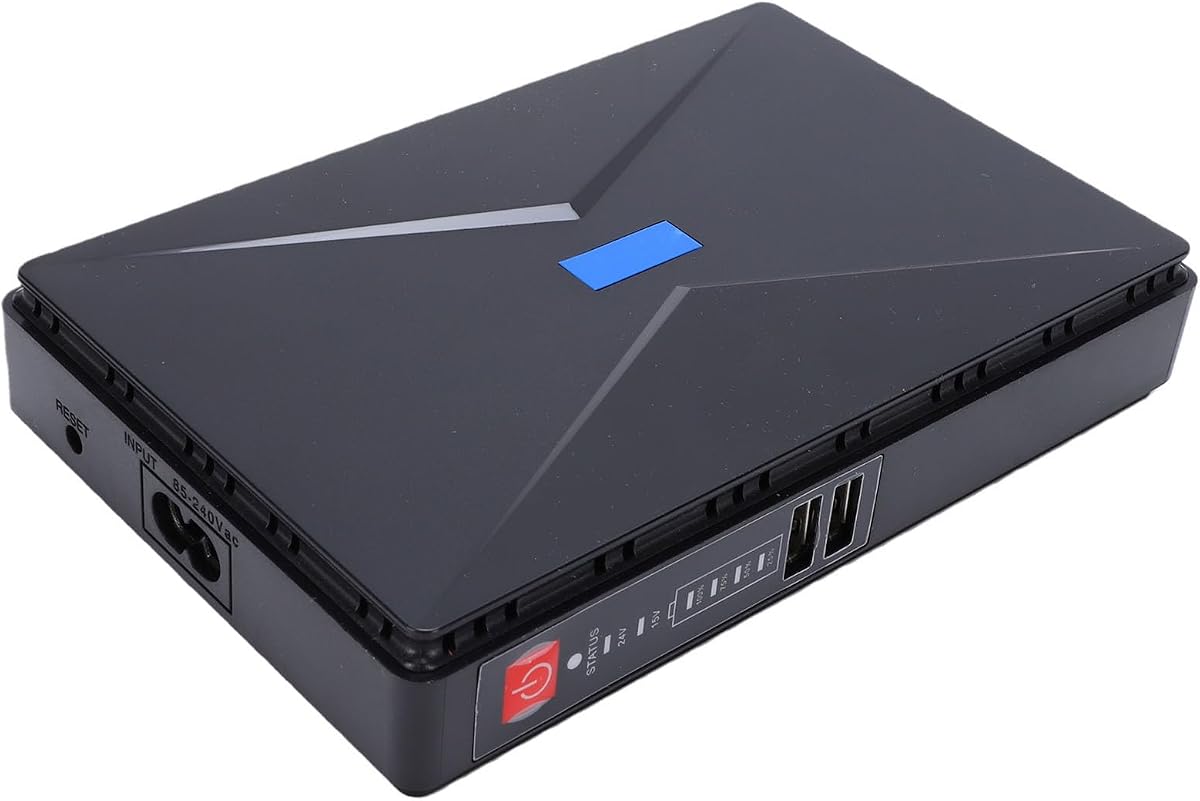


This compact DC UPS is a flexible option for security cameras that accept low-voltage power, while also serving routers, modems, IP cameras, and several other small devices. Its 3.8 rating indicates mixed customer experiences, but the supplied specifications show a thoughtfully equipped unit with five-volt, nine-volt, twelve-volt, USB, and PoE output options.
We may earn a commission when you buy through this link, at no additional cost to you.
The strongest feature is output selection. The backup includes 5V and 9V DC connections, 12V DC output, and PoE configurations at 15V and 24V. That range makes it easier to support a camera alongside essential networking equipment without needing several separate backup boxes. Indicator lights communicate remaining battery capacity, while short-circuit, overcharge, deep-discharge, thermal, overcurrent, and voltage-instability safeguards add protection.
The main compromise is that no precise runtime figure is supplied, and actual operation depends on the connected load, battery condition, and how frequently the equipment is used. A 3.8 rating also suggests that some buyers may have encountered fit, capacity, or performance concerns. Buyers should therefore verify their camera's exact connector, voltage, and current requirement before ordering.
This is a sensible pick for a homeowner who wants one compact unit to support a security camera, router, and related low-voltage equipment. It is less appropriate for installations requiring assured multi-hour runtime or many wired cameras. Confirm the camera's power specification, use the matching output, and test the complete setup before relying on it during an outage.
The multi-output design can keep a camera and essential network devices running from one source. This simplifies a small installation while reducing the number of wall adapters required during normal operation.
Extensive electrical safeguards help guard connected equipment, while indicator lights make remaining capacity visible. Users can check the unit before an outage instead of discovering its status only when protection is needed.
We may earn a commission when you buy through this link, at no additional cost to you.
The CyberPower EC850LCD is a general-purpose UPS that can serve a mixed group of AC-powered security and networking devices. Its 4.4 rating is among the stronger customer ratings in this guide, and the outlet layout gives installers flexibility when a camera system needs more than one powered device.
We may earn a commission when you buy through this link, at no additional cost to you.
Six outlets provide battery backup and surge protection, while another six offer surge protection. The multifunction LCD reports battery and power conditions, making the unit easier to manage than a basic power strip. ECO mode can switch off selected peripherals when an associated computer is off or asleep. A three-year warranty includes the battery and is accompanied by a connected-equipment guarantee and downloadable PowerPanel Personal Edition software.
This is not a dedicated low-voltage camera battery, so compatibility deserves careful attention. A camera with a standard wall plug can be especially easy to integrate, while a unit requiring a proprietary power brick may need additional support from the camera manufacturer's listed adapter. The relatively substantial UPS format is also less discreet than a mini DC unit, and ECO behavior should be checked against equipment that must remain continuously powered.
Choose the EC850LCD when you need several protected AC outlets, visible operating information, and a proven general UPS platform rather than a single-camera accessory. It works especially well for installations that combine a camera, router, modem, and other low-power electronics. Position it where its LCD and indicators remain accessible, and test each connected device after installation.
Twelve NEMA outlets allow a security installation to draw from one protected source. Six maintain battery power during outages, while the remaining outlets provide surge protection for equipment that does not require continued operation.
The LCD provides detailed information about battery and line conditions. That visibility is valuable for routine checks and for deciding whether supplemental runtime is necessary.
We may earn a commission when you buy through this link, at no additional cost to you.
This mini DC UPS combines an 8800mAh battery with outputs designed for routers, modems, security IP cameras, and several other low-voltage devices. Its stated five-hour runtime applies to an 18W router-and-modem setup, so camera runtime will vary according to power draw, transmission activity, and environmental conditions.
We may earn a commission when you buy through this link, at no additional cost to you.
Output selection includes DC 12V at 1A, DC 9V at 1A, DC 5V at 2A, USB 5V at 2A, and switchable PoE output at 15V or 24V. The included 1-to-2 DC 5.5-by-2.1mm cable adds installation flexibility. A battery indicator shows remaining capacity, and short-circuit, voltage-fluctuation, overcharge, over-discharge, and temperature protections are included.
The main limitation is the absence of a customer rating, which makes long-term user feedback unavailable in the supplied data. Capacity alone should not be treated as a guarantee of camera runtime. The five-hour claim is tied to a particular 18W network load and should not be directly applied to a camera, especially one using infrared illumination, continuous recording, or wireless activity.
This unit is a strong candidate for a small installation that needs a compact, high-capacity source for one camera and network equipment. Confirm the DC connector size, required voltage, current draw, and whether the camera uses PoE. After wiring, test the system under normal recording and night-vision conditions to obtain a more realistic estimate of backup duration.
The 8800mAh battery provides useful energy storage without the footprint of a full outlet UPS. That makes it easier to place near a router or camera without giving up substantial runtime.
DC, USB, and selectable PoE outputs broaden the types of equipment the unit can support. The included adapter cable also reduces the need for an additional connection accessory.
We may earn a commission when you buy through this link, at no additional cost to you.
The CyberPower CP1500AVRLCD3 is the most complete conventional UPS in the guide for security cameras, routers, networking equipment, and home electronics. Its 4.5 rating is the highest confirmed customer score listed, and the 1500VA, 900W platform offers substantial room for a camera system and essential connectivity hardware.
We may earn a commission when you buy through this link, at no additional cost to you.
Twelve NEMA 5-15R outlets are divided between six battery-backed, surge-protected connections and six surge-only connections. The color LCD gives detailed battery and power information and can alert users to potential problems. Automatic voltage regulation corrects minor fluctuations without needlessly transferring to battery power. USB charging ports add convenience for phones and tablets, and the package includes a three-year warranty covering the battery.
Its simulated sine-wave output and larger form mean it is not the discreet choice for a single compact camera. Plug-in camera adapters must also fit the unit's supported characteristics and the camera's power requirements. Placement noise and size may also matter in a discreet installation, although the comprehensive protection and monitoring justify the larger format in many homes.
This is the top overall recommendation for buyers who want one dependable UPS to protect several security and network devices. It combines a strong customer rating, ample capacity, useful diagnostics, automatic regulation, and generous outlet selection. Install it close to the equipment, confirm adapter compatibility, and perform an outage test to verify transfer behavior and expected runtime.
The 900W capacity makes it practical to support more than one camera alongside a router and modem. Extra capacity also provides room for additional low-power equipment when the total load remains within the unit's limits.
The color LCD surfaces battery and power conditions that might otherwise remain hidden. Routine status checks can help identify a depleted battery or unstable input before monitoring is put at risk.
We may earn a commission when you buy through this link, at no additional cost to you.
This indoor security camera incorporates a 1400mAh rechargeable battery and is designed to continue recording for up to eight hours during a power outage. Rather than requiring an external UPS, it provides an integrated solution for consumers who want a ready-to-use camera with standby power already built in.
We may earn a commission when you buy through this link, at no additional cost to you.
The camera supports true 3K UHD video, zero-glow night vision, dual-band Wi-Fi 6, Bluetooth, two-way audio, PTZ control, AI tracking, and facial identification features. Local Micro SD recording is supported up to 512GB, while optional cloud storage is also available. The camera can function as a baby monitor, pet camera, or general indoor security device, giving the battery feature broad household relevance.
The eight-hour runtime is a stated maximum rather than a guarantee under every condition. Heavy motion, frequent two-way audio, continuous recording, weak wireless reception, and other intensive tasks can increase power consumption. Because the device is designed for indoor use, it cannot replace a weatherproof camera for exterior coverage. Cloud storage is optional and tied to a subscription rather than included as a complete local alternative.
Choose this product when indoor monitoring, smart detection, and seamless battery integration matter more than supporting an existing camera through an external battery. It is particularly suitable for a nursery, pet area, or indoor entry point. Confirm that the recording schedule and connectivity pattern fit the available runtime, and keep the camera charged so it is ready when mains power fails.
A built-in battery removes the need to hunt for a compatible DC adapter and external mini UPS. The camera simply changes to battery operation when household power is interrupted.
Three-dimensional UHD recording, dual-band connectivity, two-way audio, and flexible storage make this a complete indoor monitoring product. The backup battery is one element of a broader feature set rather than the sole purpose of the device.
We may earn a commission when you buy through this link, at no additional cost to you.
The VBESTLIFE is a compact 2600mAh uninterruptible power supply adapter intended for a single low-power device or a very small group of compatible electronics. Its listed applications include routers, CCTV cameras, webcams, modems, speakers, LED systems, card readers, phones, and car DVRs.
We may earn a commission when you buy through this link, at no additional cost to you.
Its intelligent power management enters sleep mode after charging and activates during an outage, allowing the connected equipment to continue operating without a restart. A two-amp USB output supports compatible devices, and the broad voltage input is intended to provide stable output across varied low-voltage equipment. Setup is straightforward: connect the battery, plug the UPS into a wall outlet, and attach the device.
The 2600mAh capacity is much smaller than the 8800mAh mini UPS and the 6000mAh camera-focused unit, so runtime will be limited for anything beyond a low draw. No customer rating is available in the supplied data, which leaves less evidence about long-term user experience. Camera compatibility also depends on the connector, voltage, and whether the camera can accept the available output.
This is the best budget option for a straightforward indoor camera setup where compact size and simple operation matter most. It is particularly suitable for a lower-power camera that can operate from a compatible USB or low-voltage connection. Verify the adapter's output and tip dimensions before purchase, test the switchover, and avoid expecting the runtime of a larger dedicated security UPS.
The operating sequence is simple: install the battery, connect the unit to mains power, and attach the camera. This makes the adapter approachable for first-time backup-power users.
The 2600mAh capacity works best with cameras and accessories that consume relatively little power. Higher-draw equipment or extended overnight monitoring will reduce available runtime.
We may earn a commission when you buy through this link, at no additional cost to you.
The EVERSECU is a metal-boxed, regulated 12V power supply with nine channels and a backup battery link. It is intended for professional or advanced residential installations involving CCTV cameras, PTZ equipment, infrared illuminators, video processors, burglar alarms, and access-control systems.
We may earn a commission when you buy through this link, at no additional cost to you.
Each output has an individual PTC fuse and LED indicator, helping isolate a fault to one channel without shutting down every connected device. The unit also provides short-circuit, high-voltage, and overcurrent protection. It accepts a 12V lead-acid battery for backup operation, but that battery is not included, making the total system cost and selection more involved than with an integrated mini UPS.
Users must provide appropriate wiring, connectors, a suitably rated 12V lead-acid battery, and grounding consistent with the installation. Total camera current must remain within the five-amp supply and individual channel limits. The metal enclosure is suited to a utility cabinet or secured equipment area, but it is not a discreet living-room accessory. Installation errors can also affect several devices, so correct polarity and load distribution matter.
Choose this unit when managing several wired cameras or mixed low-voltage security equipment and when long-term serviceability is more important than a compact decorative design. Its 4.4 rating adds confidence, while individual output protection is particularly helpful in multi-camera environments. This recommendation is best suited to installers comfortable with basic DC wiring and battery selection.
Individual PTC fuses and indicator lights help identify a problematic channel. Other outputs can remain operational, reducing the impact of a single cable or device fault.
Nine outputs accommodate cameras and related equipment such as PTZ controls, infrared illuminators, and access control. The backup link supports a more conventional centralized power architecture.
We may earn a commission when you buy through this link, at no additional cost to you.
This wireless outdoor camera uses its own high-capacity rechargeable battery instead of a conventional wall-powered system. The stated battery life reaches six months depending on detection activity, making it a practical wire-free choice for driveways, porches, yards, fences, garages, and other locations without nearby outlets.
We may earn a commission when you buy through this link, at no additional cost to you.
The camera records in 2K UHD and uses a built-in spotlight for full-color night vision. Dual-band 2.4GHz and 5GHz Wi-Fi is designed to improve connection stability, while two-way audio enables communication through the app. Local Micro SD storage up to 256GB and free rolling cloud storage provide alternatives, and IP66 construction is intended to handle rain, snow, heat, humidity, and dust.
The six-month figure is an activity-dependent maximum rather than a fixed runtime. Frequent motion detection, night illumination, live viewing, weak signal conditions, and two-way conversations can shorten the interval between charges. The product is also not a universal backup battery for existing cameras; it works only as part of its own wireless camera system. In addition, recordings remain dependent on the camera and storage services rather than a separate UPS.
Choose this option when avoiding outdoor wiring is the priority and a self-contained wireless camera is acceptable. It is well suited to locations where mains-powered backup units would be difficult to install or protect. For users with existing cameras, the 12V camera UPS products in this guide offer a more relevant solution; for new outdoor installations, this camera provides battery backup from the outset.
A rechargeable battery removes the need for a nearby outlet and the wiring that normally accompanies it. This simplifies installation at fences, trees, garages, and other remote spots.
IP66 construction and full-color night vision address common outdoor monitoring challenges. Dual-band wireless connectivity and two-way audio add useful security and communication functions.
We may earn a commission when you buy through this link, at no additional cost to you.
The 12V 2A camera UPS is purpose-built for the kind of equipment many security installations depend on, including 12V cameras, Wi-Fi routers, and modems. Its 6000mAh lithium battery is stated to provide five to six hours of backup, making it one of the more runtime-focused options in the guide.
We may earn a commission when you buy through this link, at no additional cost to you.
The unit supplies stable 12V at up to 2A through a 5.5-by-2.1mm DC connection. Overcurrent, overvoltage, overcharge, and over-discharge protection helps guard the battery and connected devices. A wide 110V–240V AC input range supports use across varied line standards, and the compact ABS housing is easy to position near a router or camera.
The primary compatibility question is the DC connector and electrical rating. A camera must accept 12V, stay within the 2A limit, and use the specified barrel size and polarity. The five-to-six-hour claim also requires careful interpretation because actual camera loads differ. Night vision, motor movement, continuous recording, and wireless activity can change runtime substantially. No specific IP or outdoor-weather rating is listed.
This is the most targeted pick for a homeowner with a compatible 12V camera who values useful outage runtime in a small package. It is particularly useful for keeping a camera and nearby network equipment online through a moderate interruption. Confirm connector dimensions and camera current, position the unit in a dry protected location, and test it under realistic recording conditions before finalizing the installation.
The 6000mAh battery and stated five-to-six-hour duration make this option more purpose-driven than a generic compact adapter. It is intended for the sustained operation associated with cameras, routers, and modems.
The small enclosure can sit close to the devices it supports, reducing long cable runs. Its broad mains input also simplifies use in regions with different household voltage standards.
We may earn a commission when you buy through this link, at no additional cost to you.
The Eaton Tripp Lite BC600RNC combines compact UPS protection with network-connected monitoring. It is designed for routers, Wi-Fi equipment, office electronics, and security cameras that use compatible standard power supplies, making it most relevant to a small installation needing remote visibility.
We may earn a commission when you buy through this link, at no additional cost to you.
Its 600VA, 300W capacity and four outlets provide a modest but practical platform for low-power devices. The unit includes surge protection, EMI and RFI filtering, a resettable circuit breaker, automatic restart after power returns, and a replaceable internal AG-0760 battery cartridge. Email or text alerts, remote restart capability, and outlet-bank visibility through a browser or the free Brightlayer app set it apart from simpler UPS designs.
The 3.6 rating is the lowest confirmed score in the list and suggests that some users may have been dissatisfied with the package or performance. Four outlets are restrictive for a multi-camera installation, while cloud-connected features add more complexity than a basic local UPS. Buyers should also confirm that their camera adapter and total load are appropriate for the simulated or modified-sine output and available capacity.
Choose the BC600RNC when remote monitoring, cloud alerts, and a replaceable battery outweigh the need for many outlets. It is a sensible fit for a single camera, router, and modem in a location where the owner can receive status notifications. Keep the installation unobstructed for wireless setup, and test the restart and notification functions before relying on it during an extended outage.
Cloud connectivity provides alerts and outlet-bank visibility from outside the home. The ability to silence alarms or request a restart is useful for devices distributed across a larger network.
A replaceable AG-0760 cartridge can extend the useful life of the unit without replacing the entire enclosure. The automatic restart function also helps equipment resume after mains power returns.
We may earn a commission when you buy through this link, at no additional cost to you.
The right backup begins with the camera's power requirements, but runtime, network continuity, environmental exposure, and monitoring also shape the decision. Use the following factors to distinguish a purpose-built camera UPS from a general-purpose backup or a self-contained wireless camera.
Start with the camera manufacturer's power specification rather than selecting by capacity alone. A backup must provide the correct voltage, supply enough current under peak load, and use a connector whose dimensions and polarity match. Some cameras use a barrel plug, some accept USB power, and PoE models may require a compatible network power arrangement. A nominally correct voltage can still cause instability if the adapter cannot deliver the camera's full draw.
Battery capacity provides a rough comparison, but watt-hours and device draw give a more useful runtime estimate. Identify the camera's consumption and add the draw of any router, modem, switch, PoE injector, or powered accessory on the same backup. Infrared night vision, continuous recording, PTZ movement, and heavy wireless traffic can increase consumption. Published runtimes often describe a particular router load, so treat those figures as informative rather than universal.
Consider what must remain online during an outage. A camera may record locally during a power failure but become less useful if its router or modem shuts down. A multi-output UPS can support both the camera and essential networking equipment, while a single-output unit may suit installations with local recording. If remote viewing is essential, include the router, modem, and required switch or access point in the runtime plan.
A single-camera system can often use a compact DC UPS, while multiple wired cameras may require a multi-channel power box or a full outlet UPS. Add the power consumed by monitors, recorders, PoE equipment, lighting, and other accessories before exceeding a unit's capacity. Distinguish between outlets that remain energized on battery and those offering surge protection only.
PoE cameras require more than a matching barrel connector. The backup must support the relevant PoE voltage and current, and the network switch or injector must remain operational during the outage. Some mini UPS models offer selectable PoE outputs, but compatibility can be model-specific. PoE standards, camera wattage, and the number of connected cameras should all be checked before installation.
A mini UPS is usually designed for an indoor, dry location. If it must sit in a garage, utility closet, or outdoor enclosure, consider temperature, moisture, dust, and whether an enclosure limits ventilation. Outdoor cameras with integrated rechargeable batteries remove battery cabling concerns but require weather-resistant housings. For metal-cabinet systems, allow the required clearance and protect ventilation openings from obstruction.
A local battery indicator is useful, but a color LCD or network-connected app offers more detailed status information. Remote alerts can reveal a depleted battery before an outage. Cloud-dependent monitoring also introduces an internet and account dependency, so local indicators remain useful. Choose the level of visibility that matches your ability to check the unit regularly and the importance of early warning.
Look for short-circuit, overcurrent, overvoltage, overcharge, deep-discharge, and thermal protection, especially when operating continuously. A replaceable internal battery can lower long-term maintenance effort. Individual fused outputs are valuable in multi-camera systems because one fault need not interrupt every channel. Warranty length and whether the battery is included are also important parts of the ownership picture.
Begin by fully charging the backup under normal mains power, then connect it according to the manufacturer's instructions. Confirm the output voltage, current limit, connector size, and polarity before attaching the camera. If the unit supports a router, modem, or PoE equipment, wire those devices as well and make sure the total load remains within the stated capacity.
Test the installation before relying on it during an outage. Disconnect mains power while the camera remains connected, then observe whether the backup transfers smoothly, whether recordings continue, and whether remote access works through the router. For a general UPS, confirm that the intended camera outlet is connected to a battery-backed section rather than a surge-only outlet.
Maintain the system by checking the battery indicator, cleaning vents, inspecting cables, and following the manufacturer's recommended replacement schedule. Recharge integrated camera batteries regularly and keep outdoor cameras in suitable weather. After a major outage, review runtime, battery condition, logged alerts, and whether every camera restarted before returning the installation to normal operation.
The useful duration depends on battery capacity, camera power draw, night vision, recording activity, network transmission, and battery age. A published five-hour figure may apply only to a specific router load, while a security camera's runtime can differ substantially. Test the camera under realistic conditions and include the router and modem in the calculation if remote viewing must continue.
Yes, provided the total power draw remains below the unit's capacity and each camera uses compatible connections. A multi-channel 12V supply or full outlet UPS is more appropriate for several wired cameras than a small single-camera adapter. Distribute the load appropriately and verify that every required output remains energized during a power failure.
It depends on the camera and the meaning of working. A camera with its own rechargeable battery may continue recording and sending alerts, while a standard wired camera normally stops when mains power is lost. A UPS can preserve the camera and network equipment, but recording may still be unavailable if the service or cloud platform lacks an outage-tolerant connection.
The battery must supply the camera's required 12V current continuously and provide enough stored energy for the desired outage duration. Check the adapter label, camera specifications, connector dimensions, and peak current before selecting a unit. A higher-capacity battery may improve runtime, but it will be larger and heavier.
It can if the camera and the necessary router or modem are powered by the backup. Batteries built directly into a wireless camera can provide an alternative, but a Wi-Fi outage may still prevent remote viewing even while local recording continues. For dependable remote access, include the whole required network path in the outage plan.
Only when the UPS supplies compatible PoE power and the connected switch, injector, or PoE adapter continues operating. Some mini DC UPS models include selectable 15V or 24V PoE outputs, but not every camera, switch, or PoE standard is compatible. Confirm the camera's PoE input, wattage, and connector before installation.
Replacement timing depends on usage, temperature, battery quality, and the manufacturer's guidance. Check the unit's runtime and battery indicator periodically rather than waiting for a visible failure. A unit that no longer delivers its expected runtime after a full charge should be inspected and may need a replacement battery or service.
Most compact DC UPS products are intended for indoor use and do not carry a stated weather rating. Outdoor placement requires a suitable protective enclosure that controls moisture and temperature without blocking ventilation. An outdoor-rated camera with an integrated rechargeable battery may be simpler for exposed locations, provided its charging and operating conditions match the site.
The CyberPower CP1500AVRLCD3 stands out as the most versatile conventional option, combining a 1500VA rating, 900W capacity, twelve outlets, a color LCD, and automatic voltage regulation. The dedicated 12V 2A camera UPS offers a more compact and camera-specific path to five-to-six hours of stated runtime, while the VBESTLIFE 2600mAh adapter serves as a simple budget choice for lower-power equipment.
Prioritize connector and voltage compatibility before considering anything else, then calculate runtime using the actual camera and network load. Multi-camera installations should also evaluate outage-protected outlets, PoE support, individual channel protection, and the usefulness of status monitoring. For new wireless installations, an outdoor camera with an integrated rechargeable battery may eliminate backup-wiring work altogether.
Before ordering, confirm the camera's power requirements, compare the entire installation's load, and review battery-inclusion and warranty details carefully. Current prices, promotions, connector versions, and availability can change, so check the latest listing information before making a final purchase.